Ah, Comment Tu T'Appelles! Just hearing those words brings back a rush of memories. Doesn't it feel so charming and effortlessly chic? It's like the quintessential French phrase, isn't it?
But what does it actually mean? And how do you, well, translate that magic into English?
Let's unravel this little linguistic package, shall we? Grab a virtual croissant, and let's dive in!
The Direct Translation: A Little Clunky, Non?
Okay, so if we're being strictly literal, Comment Tu T'Appelles breaks down into something like, "How you yourself call?" Sounds a bit awkward, right? That's because direct translations often miss the nuance and flow of a language.
You wouldn't go around asking people, "How you yourself call?" It just...doesn't ring true in English.
The real question is, what's the essence of what we're trying to convey? The goal is simple: we want to know someone's name!
Finding the English Equivalent: A World of Options!
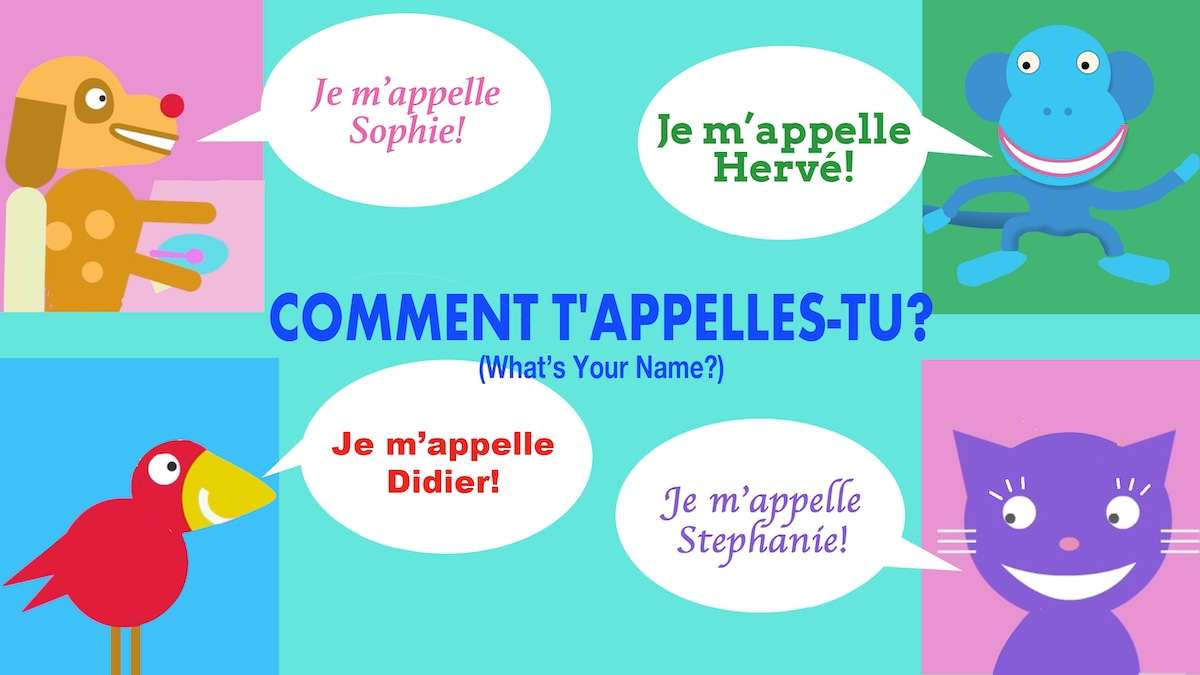
The most straightforward and universally accepted translation of Comment Tu T'Appelles is, quite simply: "What's your name?"
Simple, elegant, and gets the job done. But, hey, we have options! English is a wonderfully flexible language. Let's explore a few other possibilities:

- "What is your name?" (Slightly more formal, but perfectly acceptable.)
- "May I ask your name?" (Definitely formal and polite - perhaps for a business setting or meeting someone important.)
- "And you are?" (A bit more subtle, often used when you suspect you should know the person's name but have forgotten.)
See? Plenty of choices! It all depends on the context and the impression you want to make.
Deconstructing the French: Why "Tu" Matters!
Now, let's delve a little deeper into the French phrase itself. You might be wondering, what's the deal with that "Tu?"
In French, there are different ways to say "you." "Tu" is the informal, familiar "you," used with friends, family, and people you know well. The formal "you" is "Vous."
So, Comment Tu T'Appelles is inherently an informal question. It suggests a level of familiarity, or at least a desire for it.
If you wanted to be more formal, you would say: "Comment Vous Vous Appelez?" Notice the difference? The "Tu" becomes "Vous," reflecting a greater degree of respect and distance.
Think of it like this: "Tu" is like using someone's first name, while "Vous" is like using their last name and title.

Choosing the right form is important in French culture. Using "Tu" with someone you should address as "Vous" could be seen as rude or disrespectful. Be mindful of the social cues!
The Verb "S'Appeler": A Little Linguistic Gem!
Let's not forget the star of the show, the verb "S'Appeler." This is a reflexive verb, which means it involves the subject acting upon itself.
Think of it as "to call oneself." So, literally, Comment Tu T'Appelles is asking "How do you call yourself?"
Reflexive verbs are common in French, and they add a certain elegance and expressiveness to the language. They're one of the things that make French sound so…well, French!
Beyond the Words: The Cultural Context
Understanding the words is one thing, but understanding the cultural context is another. Comment Tu T'Appelles is more than just a question; it's an invitation to connect.
In France, taking the time to learn someone's name is considered polite and respectful. It shows that you're interested in getting to know them as an individual.

The simple act of asking "Comment Tu T'Appelles?" can open doors to conversations, friendships, and even romance! (Ooh la la!)
It’s about creating a small human connection. It's a little bridge across a language barrier (if there is one!).
A Few Tips for Introducing Yourself in French
So, you're ready to put your newfound knowledge to the test? Excellent! Here are a few tips for introducing yourself in French:
- Start with a friendly greeting: Bonjour! (Hello/Good day) or Bonsoir! (Good evening).
- Ask their name: Comment Tu T'Appelles? (informal) or Comment Vous Vous Appelez? (formal).
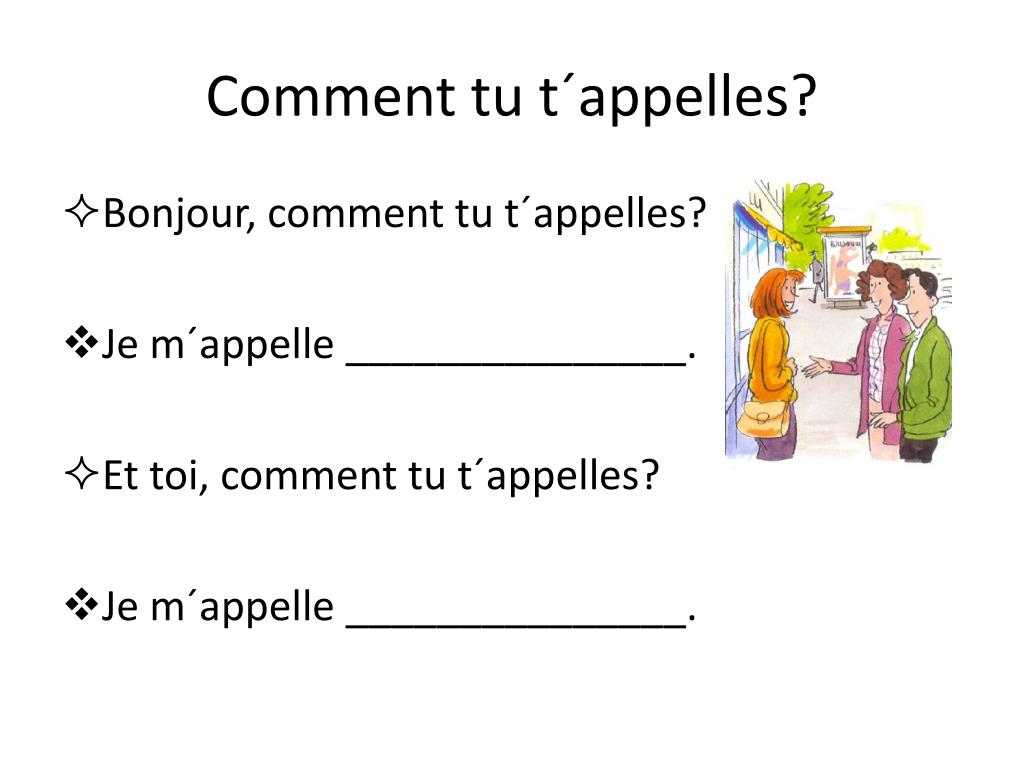
- Introduce yourself: Je m'appelle [your name]. (My name is [your name].)
- Add a pleasantry: Enchanté(e)! (Pleased to meet you! - add an "e" if you're female).
Practice these phrases, and you'll be chatting away in French in no time!
Don't be afraid to make mistakes! Native speakers appreciate the effort, and they're usually happy to help you learn.
And remember to smile! A genuine smile goes a long way in any language.

So, Next Time...
The next time you hear someone say Comment Tu T'Appelles, you'll know exactly what they mean. You’ll understand the nuance, the implication of the "Tu," and the cultural significance.
You can even impress your friends with your newfound knowledge of French reflexive verbs! (They'll think you're incredibly sophisticated.)
But more importantly, you'll have a deeper appreciation for the beauty and expressiveness of the French language. And who knows? Maybe you'll even be inspired to learn more!
Learning a new language is like opening a door to a whole new world. It broadens your horizons, deepens your understanding of different cultures, and makes you a more well-rounded person.
So, embrace the challenge, have fun with it, and don't be afraid to make mistakes. After all, that's how we learn! And who knows, maybe one day you'll be fluent in French, sipping coffee in a Parisian café, and confidently asking someone, "Comment Tu T'Appelles?"
And if you do, remember this little conversation we had. I hope it brought a bit of joy to your day. À bientôt! (See you soon!)