Ah, le passé simple! Just the name can send shivers down the spines of even seasoned French learners. It sounds intimidating, like something you’d only encounter in dusty tomes or a Molière play. But fear not, mes amis! While it might not be the conversational darling of modern France, understanding the passé simple, particularly the conjugation of the verb "vouloir" (to want), opens a window into a richer understanding of the French language and its literary heritage.
Vouloir Au Passé Simple: A Quick Refresher
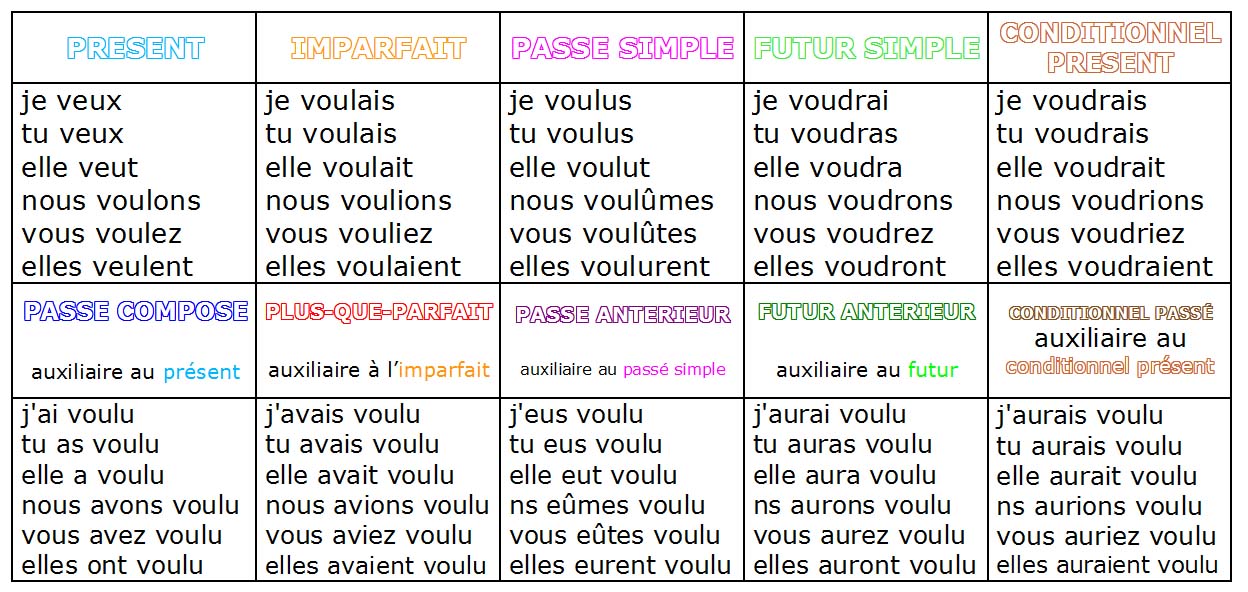
Let's get straight to it. "Vouloir" in the passé simple looks like this:
- Je voulus – I wanted
- Tu voulus – You wanted
- Il/Elle/On voulut – He/She/One wanted
- Nous voulûmes – We wanted
- Vous voulûtes – You wanted
- Ils/Elles voulurent – They wanted
See? Not so scary! The key is to remember that "vouloir" is an irregular verb, and these forms don't follow the standard -er, -ir, or -re patterns. Just like remembering the lyrics to your favorite 80s power ballad, memorization is key here.
When Do We Even Use This?
Okay, so you've mastered the conjugations. But when do you actually use the passé simple? This is where things get interesting. The passé simple is primarily a literary tense. You’ll find it in novels, historical accounts, fables, and formal narratives. It's used to describe completed actions in the past, often emphasizing the beginning and end of the event.
Think of it as the tense a narrator uses when setting the scene in a gripping historical drama. "Napoléon voulut conquérir l'Europe" (Napoleon wanted to conquer Europe). It sounds much more dramatic and definitive than saying "Napoléon voulait conquérir l'Europe" (Napoleon wanted to conquer Europe – in the imperfect tense), which implies a more ongoing or habitual desire.

Practical Tip: Don’t try to slip the passé simple into your everyday conversations with French speakers. You’ll likely be met with amusement or confusion. Stick to the passé composé (avoir/être + past participle) for general past events in spoken French. Think of it as wearing a tuxedo to a casual brunch – technically correct, but a bit…much.
Delving Deeper: Vouloir in Literature
To truly appreciate "vouloir" in the passé simple, you need to see it in action. Imagine reading a French novel. You might encounter sentences like:
- "Elle voulut s'échapper de sa prison dorée" (She wanted to escape from her gilded cage).
- "Il voulut prouver sa valeur à son père" (He wanted to prove his worth to his father).
- "Nous voulûmes explorer les ruines antiques" (We wanted to explore the ancient ruins).
These sentences evoke a sense of closure and finality. The characters' desires are presented as decisive actions, driving the plot forward. The passé simple adds a layer of formality and historical weight to the narrative. The choice of this tense is rarely arbitrary. Authors use it to transport the reader to another time or to emphasize the importance of the events unfolding.
Cultural Context: Why It Matters
Understanding the passé simple is also crucial for appreciating French culture and literature. Imagine trying to read classic French literature without knowing this tense. It would be like trying to understand Shakespeare without knowing what "thee" and "thou" mean. You’d miss a significant part of the meaning and nuance.
Consider classic fairy tales. They often begin with "Il était une fois…" (Once upon a time…). But as the story unfolds, the passé simple takes over, narrating the pivotal moments: "Cendrillon voulut aller au bal" (Cinderella wanted to go to the ball). This tense change signals a shift to the main events of the story, highlighting Cinderella's burning desire and the actions she takes to fulfill it.
Fun Fact: Did you know that the passé simple is sometimes referred to as the "historical past" (passé historique)? This name reflects its primary use in historical narratives and literary works. It's a bit like the verb tense equivalent of sepia-toned photographs – instantly giving a sense of the past.

Tips and Tricks for Mastery
So, how can you improve your understanding of "vouloir" and the passé simple? Here are a few practical tips:
- Read, Read, Read! The more you expose yourself to French literature, the more comfortable you’ll become with recognizing and understanding the passé simple. Start with short stories or excerpts from novels.
- Focus on Context. Pay attention to the context in which the passé simple is used. Is it a historical account? A fairy tale? A formal narrative? This will help you understand why the author chose this tense.
- Create Flashcards. Flashcards are a great way to memorize the conjugations of irregular verbs like "vouloir." Write the infinitive on one side and the passé simple forms on the other.
- Don't Be Afraid to Ask! If you’re unsure about the meaning of a sentence with the passé simple, ask a native speaker or consult a grammar resource.
- Think of it as a Puzzle. Learning the passé simple is like solving a puzzle. It requires patience, attention to detail, and a willingness to experiment.
Beyond the Textbook: Engaging with French Culture
Learning French isn’t just about grammar rules and vocabulary lists. It’s about immersing yourself in the culture. Here are some fun ways to engage with French culture and practice your French skills:
- Watch French Films. Choose classic films with subtitles (at first!). Pay attention to the language used by the characters and the narrator.
- Listen to French Music. Explore different genres of French music, from Edith Piaf to Daft Punk. Pay attention to the lyrics and try to understand the meaning.
- Read French Comics (bandes dessinées). Comics are a fun and accessible way to learn French. They often use simple language and visual cues to help you understand the story.
- Cook French Recipes. Cooking is a great way to learn new vocabulary and experience French culture firsthand. Plus, you get to eat delicious food!
Bonus Challenge: Try rewriting a short story or a news article in the passé simple. This exercise will force you to think critically about the tense and how it affects the meaning of the text.

A Moment of Reflection
While the passé simple might not be the most practical tense for everyday conversations, understanding it offers a profound connection to the history and culture of the French language. It reminds us that language is not just a tool for communication but also a living artifact, shaped by centuries of literature and tradition.
Even if you never find yourself using "je voulus" in a sentence, the knowledge that it exists and the ability to recognize it will enrich your understanding of French and your appreciation for its literary heritage. And who knows, maybe one day you'll find yourself writing your own epic saga, filled with heroes, villains, and plenty of passé simple!
So, embrace the challenge, explore the past, and voulez (want) to learn! Because in the end, the journey of learning a language is just as rewarding as reaching the destination.



![[Learn French] Le verbe vouloir - YouTube](https://i.ytimg.com/vi/uOQE-1eHqHw/maxresdefault.jpg)