Ah, le passé composé! Two words that strike fear into the hearts of many a French learner. But hold on, pas de panique! It's not nearly as daunting as it seems. Think of it as unlocking a treasure chest of stories – all the things you've already done, eaten, seen, and experienced. And trust me, the French love talking about their past!
Demythifying the Passé Composé: It’s Simpler Than You Think
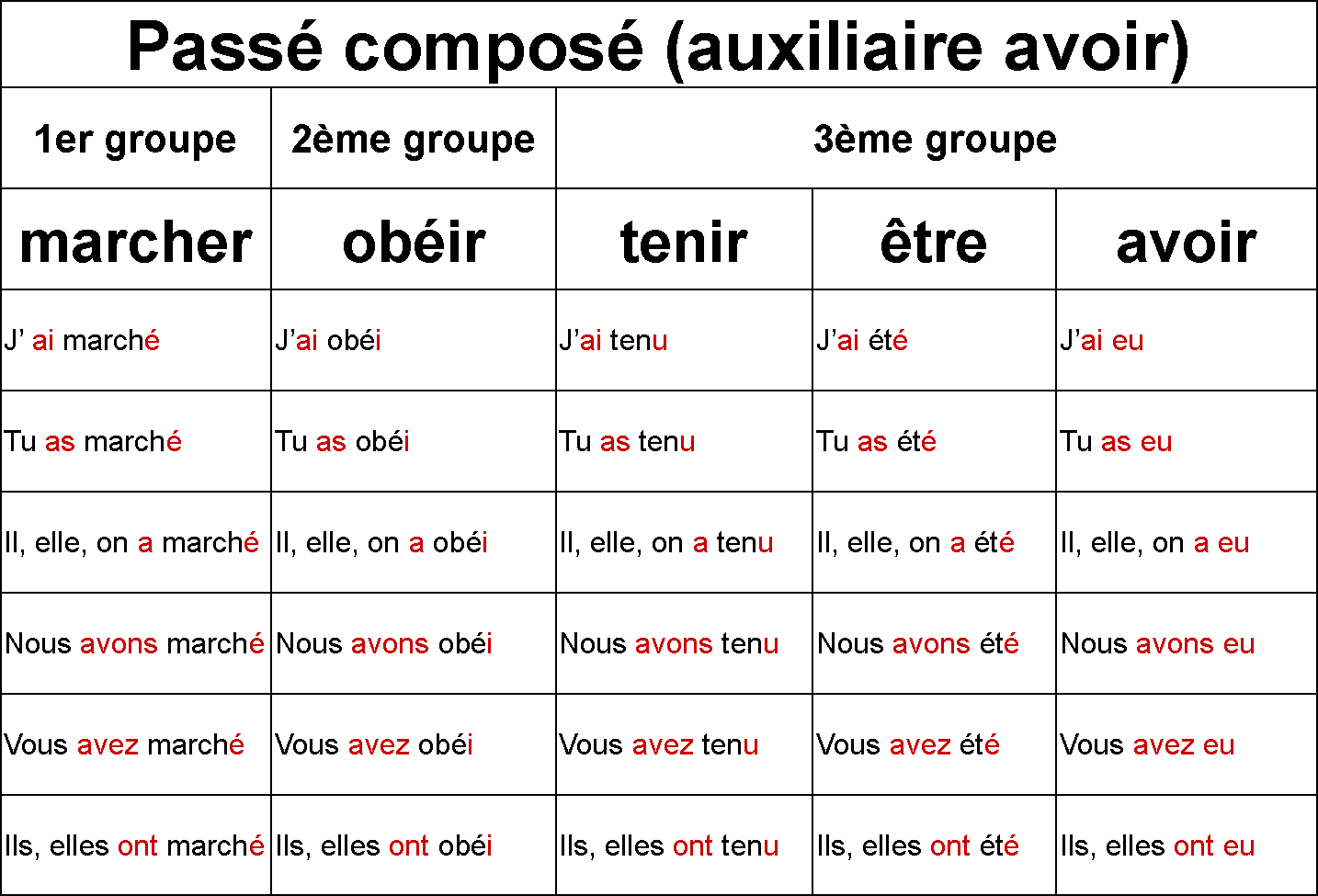
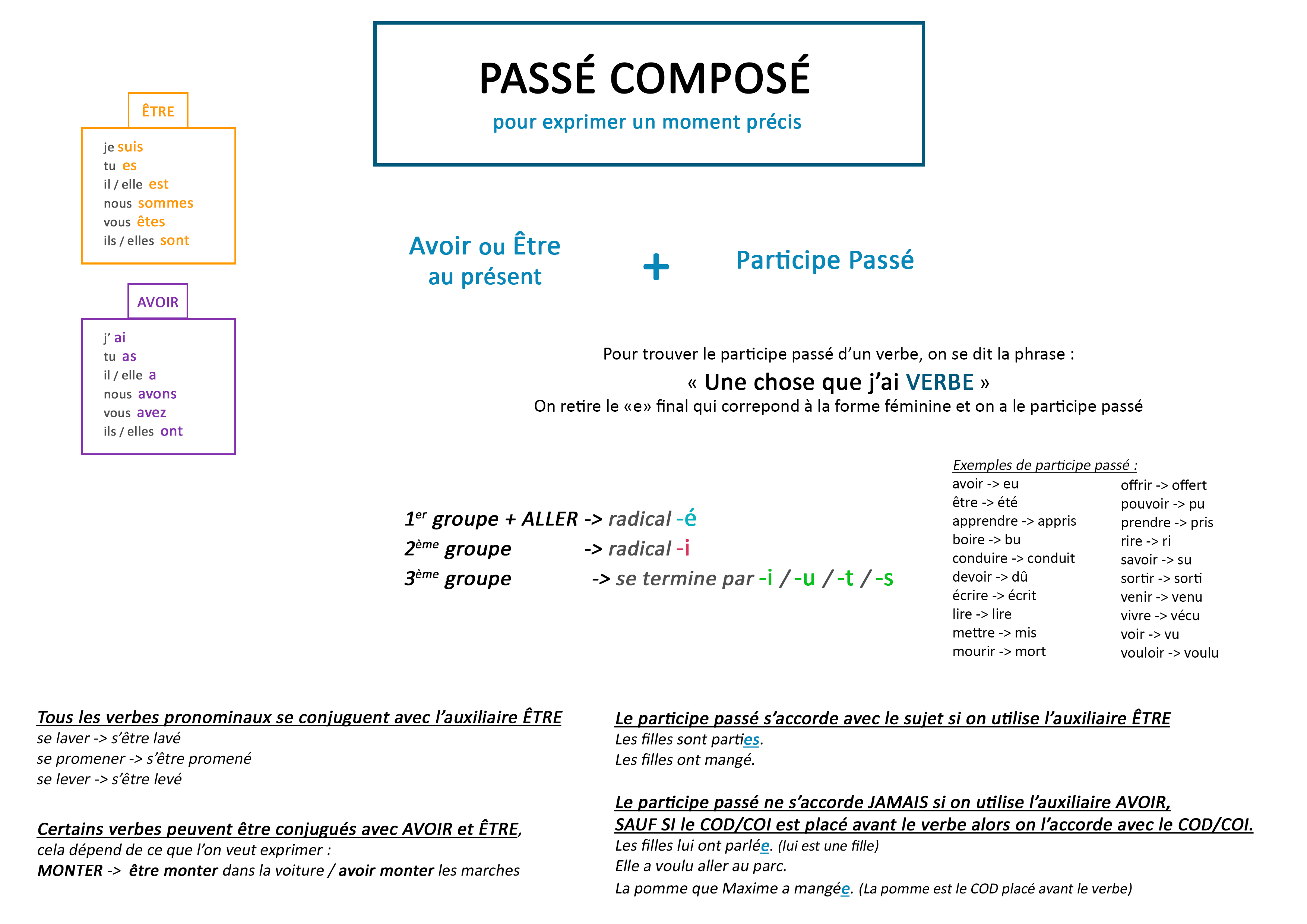
Let’s break it down. The passé composé is the most common way to express the past in French. Forget agonizing over imperfect or plus-que-parfait for now – this is your workhorse verb tense. Essentially, it's formed with two parts:
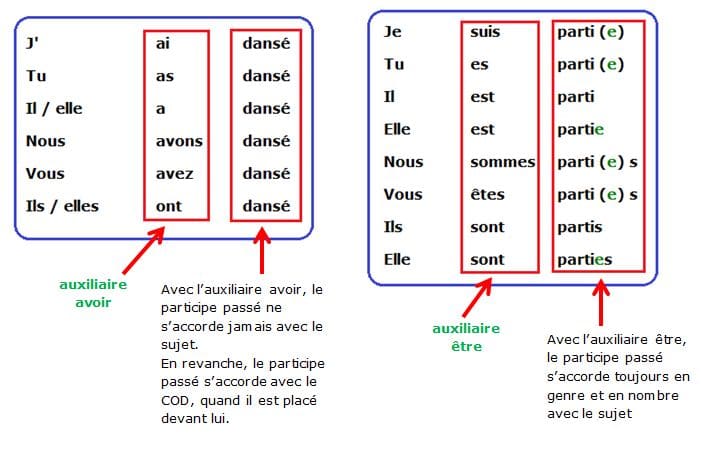
- An auxiliary verb (either avoir or être) conjugated in the present tense. Think of it as your "helping verb."
- The past participle of the main verb (the action you're describing).
So, it’s like saying "I have eaten," or "She has gone." Notice the parallel to English? Boom. You're already halfway there.
Choosing Your Auxiliary: Avoir vs. Être
This is where things get a little tricky, but nothing a few mental post-it notes can't handle. Most verbs use avoir as their auxiliary. Think of it as your default setting. J'ai mangé (I have eaten), Tu as vu (You have seen), Il a lu (He has read). Easy peasy.
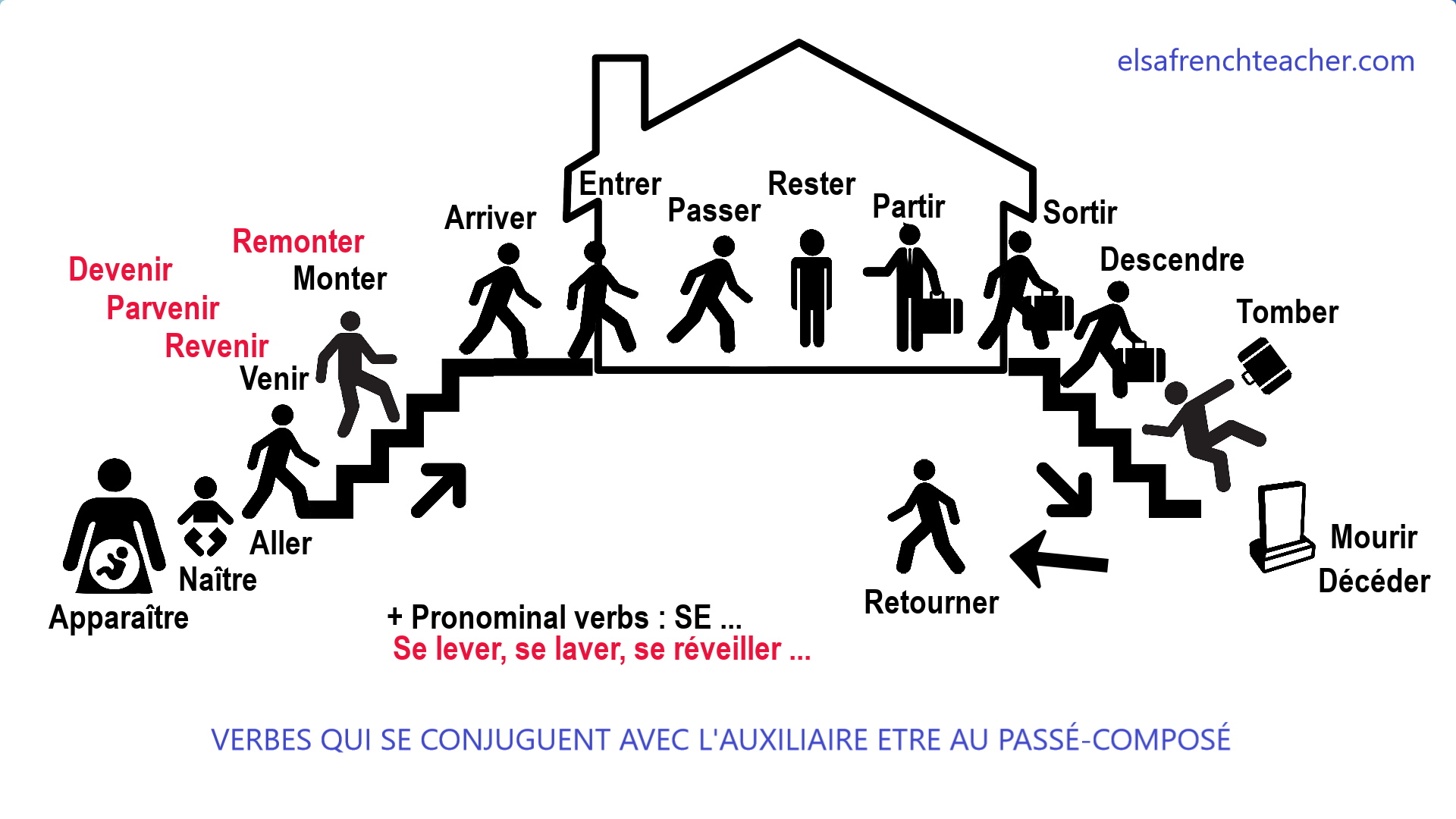
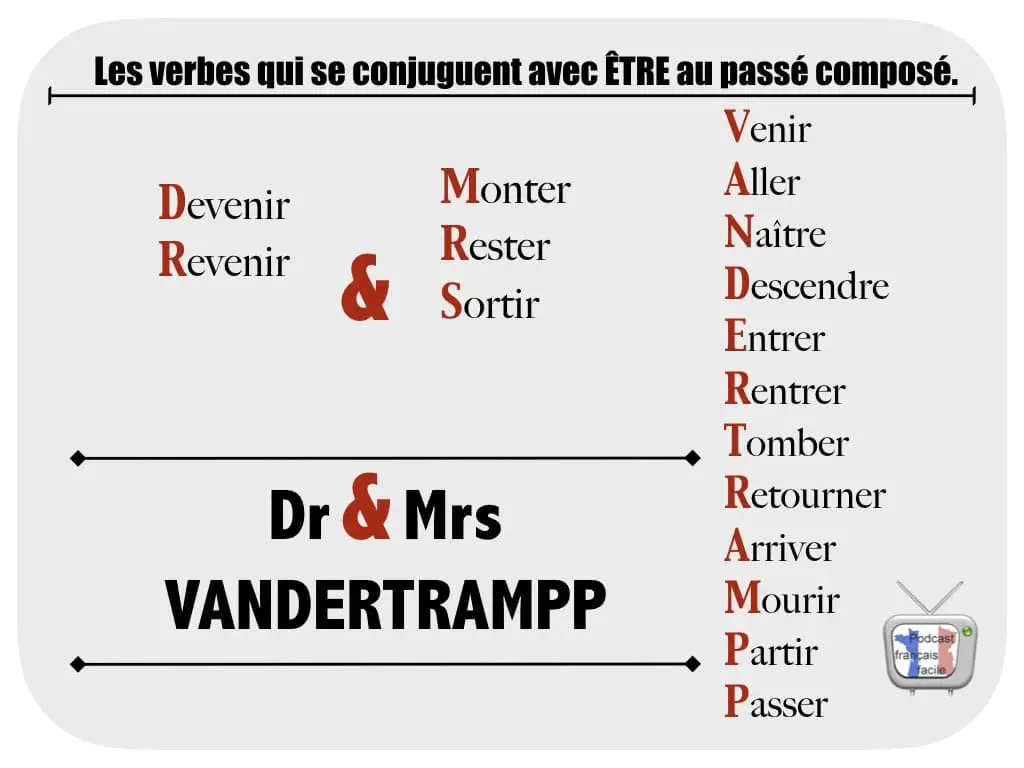
However, a select group of verbs take être. These are often verbs of motion or state, and they are a bit like the VIP section of the passé composé club. A classic mnemonic is the "Dr. & Mrs. Vandertramp" acronym.
Dr. & Mrs. Vandertramp represents these verbs:
- Devenir (to become)
- Revenir (to come back)
- Monter (to go up)
- Rester (to stay)
- Sortir (to go out)
- Venir (to come)
- Aller (to go)
- Naître (to be born)
- Descendre (to go down)
- Entrer (to enter)
- Rentrer (to re-enter)
- Tomber (to fall)
- Retourner (to return)
- Arriver (to arrive)
- Mourir (to die)
- Partir (to leave)
And don't forget their pronominal (reflexive) forms! Se lever (to get up), Se coucher (to go to bed), etc., always use être.
Elle est allée au cinéma (She went to the cinema). Nous sommes partis en vacances (We went on vacation). Notice anything different? That brings us to the next point… agreement!
Agreement with Être: Making It Match
When using être as the auxiliary verb, the past participle must agree in gender and number with the subject. This means adding an "e" for feminine subjects and an "s" for plural subjects.
- Il est allé (He went)
- Elle est allée (She went)
- Ils sont allés (They went – masculine or mixed group)
- Elles sont allées (They went – feminine)
Think of it as a little French grammar love story. The past participle and the subject are getting to know each other and making sure they're a perfect match!
Forming the Past Participle: The Magic Formula
Now for the fun part: creating the past participle itself! Luckily, there's a predictable pattern for regular verbs:

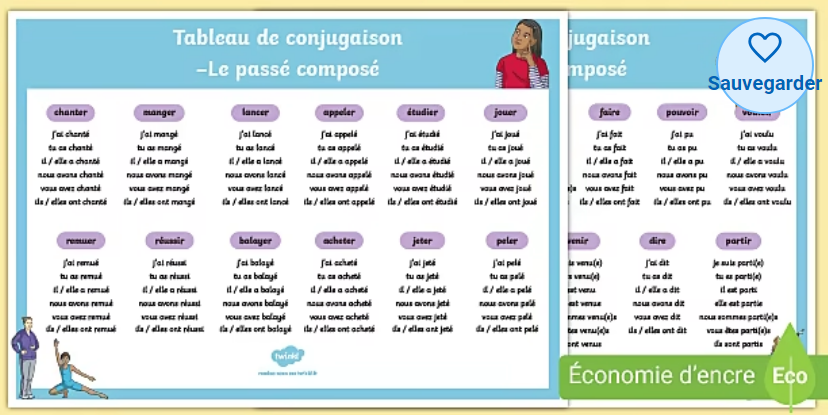
- -er verbs (like manger): Drop the -er and add -é. Manger becomes mangé.
- -ir verbs (like finir): Drop the -ir and add -i. Finir becomes fini.
- -re verbs (like vendre): Drop the -re and add -u. Vendre becomes vendu.
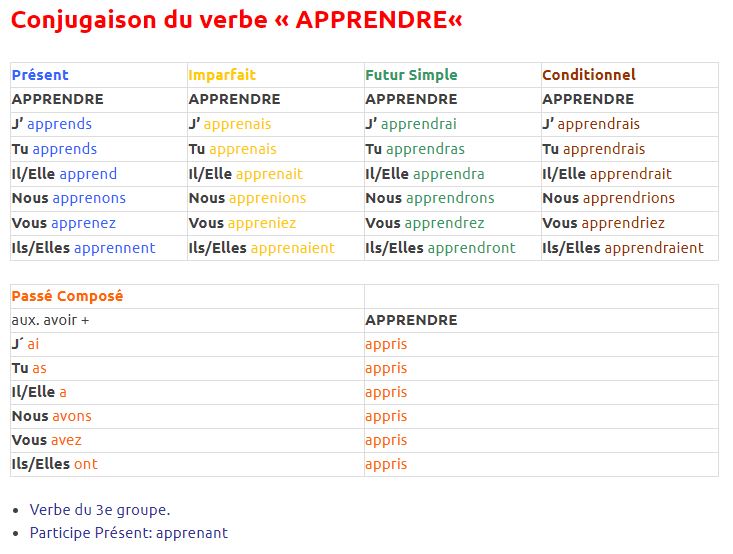
So, j'ai mangé (I ate), tu as fini (You finished), il a vendu (He sold).
Irregular Past Participles: Embrace the Chaos (or Just Memorize Them)
Of course, French wouldn't be French without its fair share of irregularities. Some verbs have past participles that completely ignore the rules. These are the ones you'll need to memorize. Here are a few common ones:
- Avoir (to have) – eu
- Être (to be) – été
- Faire (to do/make) – fait
- Prendre (to take) – pris
- Voir (to see) – vu
- Boire (to drink) – bu
- Lire (to read) – lu
- Écrire (to write) – écrit
Don’t get discouraged! Think of them as charmingly rebellious verbs. The more you encounter them, the easier they will become.
Putting It All Together: From Theory to Conversation
Okay, so you know the rules. Now, let's put it into practice. Imagine you’re at a Parisian café, catching up with a friend:

"Salut! Comment ça va ?" (Hi! How's it going?)
"Ça va bien, merci! Devine quoi? Je suis allée au Louvre hier!" (It's going well, thanks! Guess what? I went to the Louvre yesterday!) (Note the feminine agreement with "je" as a woman.)
"Ah bon? Qu'est-ce que tu as vu?" (Really? What did you see?)
"J'ai vu la Joconde, bien sûr! Et j'ai pris beaucoup de photos." (I saw the Mona Lisa, of course! And I took lots of photos.)
"Génial! Moi, j'ai mangé une délicieuse crêpe au chocolat." (Great! Me, I ate a delicious chocolate crepe.)
See? Easy as tarte au citron! You’re already using the passé composé to share your experiences.
Tips and Tricks for Mastering the Passé Composé
- Practice, practice, practice! Write sentences about your day, tell stories to a friend, or use online exercises.
- Flashcards are your friend. Especially for those pesky irregular past participles.
- Listen to French conversations. Pay attention to how native speakers use the passé composé. Podcasts, movies (with subtitles!), and music are all great resources.
- Don't be afraid to make mistakes. It's part of the learning process. French speakers are usually very forgiving.
- Find a language partner. Practicing with someone else can be incredibly motivating and helpful.
- Use online resources: Sites like Lawless French and Kwiziq French offer excellent explanations and practice exercises.
A Final Thought: Connecting to Daily Life
Learning the passé composé isn't just about grammar rules; it's about connecting with the French language and culture on a deeper level. It's about being able to share your stories, your experiences, and your memories. Think about all the amazing things you've already done – the places you've traveled, the people you've met, the challenges you've overcome. Now, you have the tools to express all of that in French!
So, go forth and conjugate! Don't be afraid to embrace the imperfections, celebrate the small victories, and most importantly, have fun along the way. After all, learning a language is a journey, not a destination. And who knows? Maybe one day, you'll be telling your stories in perfect French to someone in a Parisian café.