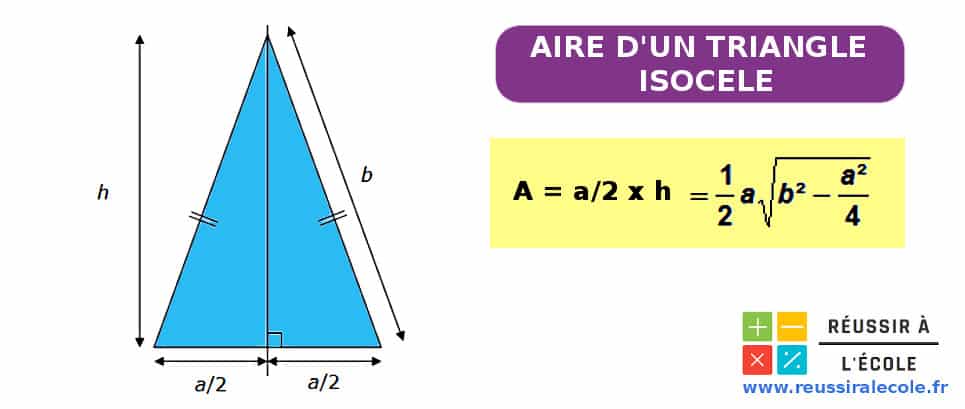
Bonjour, mes amis! Let's talk triangles. Not just any triangles, mind you, but the elegant, balanced, and slightly mysterious triangle isocèle – the isosceles triangle. It's a shape that pops up everywhere, from architectural marvels to your favorite piece of brie, and understanding its secrets can unlock a little bit of geometric zen in your life. Today, we're diving deep into calculating its surface area, but we'll do it with style, panache, and maybe a little bit of Edith Piaf playing in the background.
Decoding the Isosceles: More Than Just Two Equal Sides
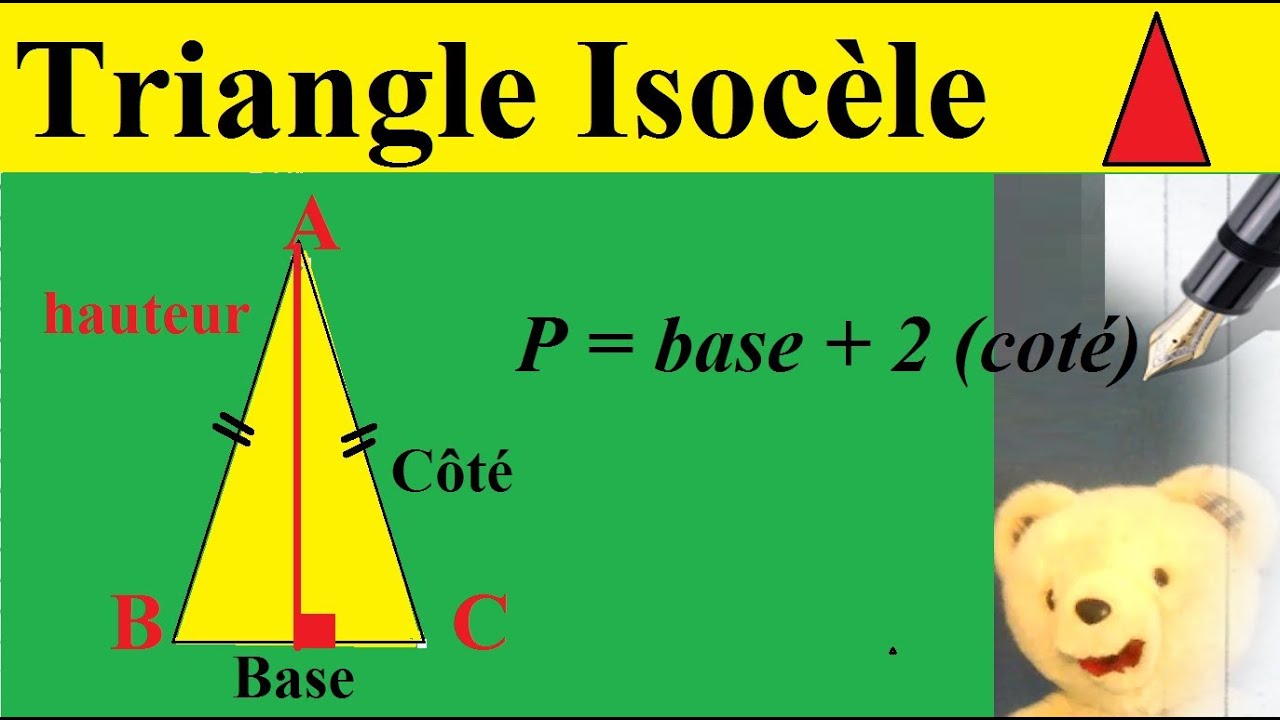
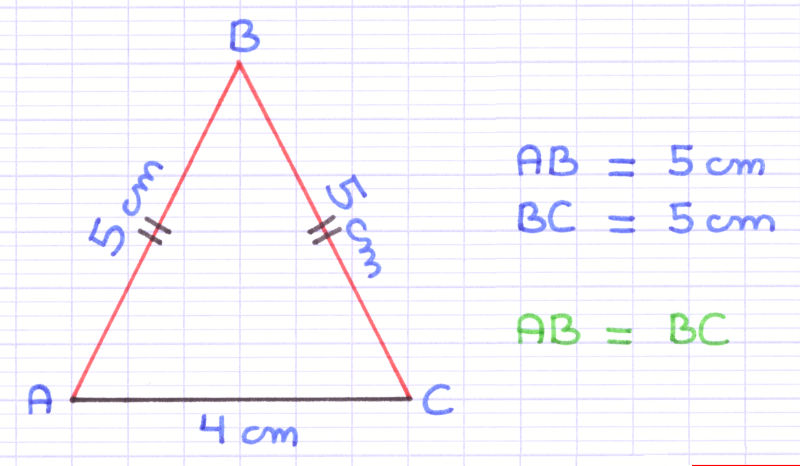
So, what exactly makes a triangle isocèle? Well, it's all about balance. Think of it as the yoga guru of the triangle world. It boasts two sides of equal length, a trait that automatically grants it some pretty neat characteristics.
- Two sides are congruent (equal in length): This is the defining characteristic.
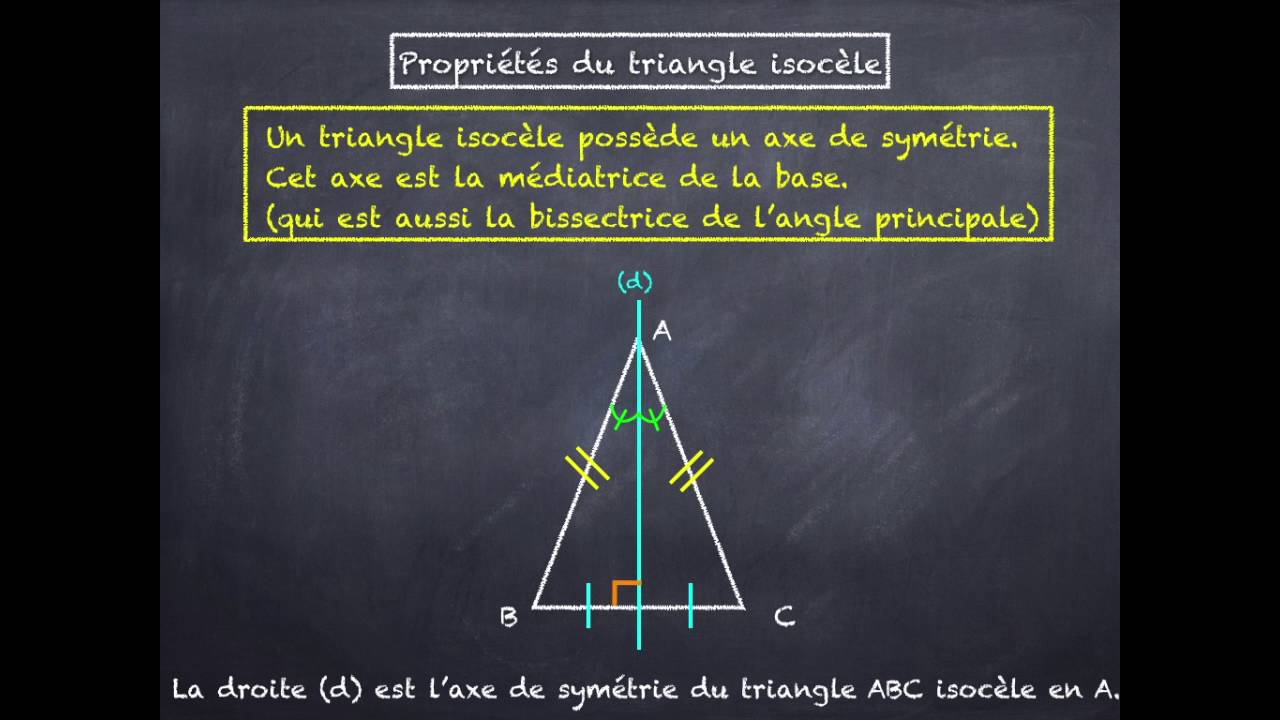
- Two angles are congruent: The angles opposite the equal sides are also equal. These are called the base angles.
- Line of Symmetry: It possesses a line of symmetry that bisects the base and the vertex angle.
Think of the Egyptian pyramids. Okay, they're not perfectly isosceles triangles, but the triangular faces give you the general idea. The isosceles triangle screams strength, stability, and a certain visual harmony that the ancient Egyptians clearly understood.
Finding the Surface Area: Several Paths to Geometric Glory
Now, for the juicy part: calculating the surface area (l'aire) of our beloved triangle isocèle. There isn’t just one way to skin this cat, so to speak! We'll explore a few different approaches, depending on what information you have at your disposal.
Method 1: The Classic Base and Height Approach
This is your go-to method, the little black dress of geometry. You probably learned it in school, and for good reason: it's versatile and relatively straightforward.
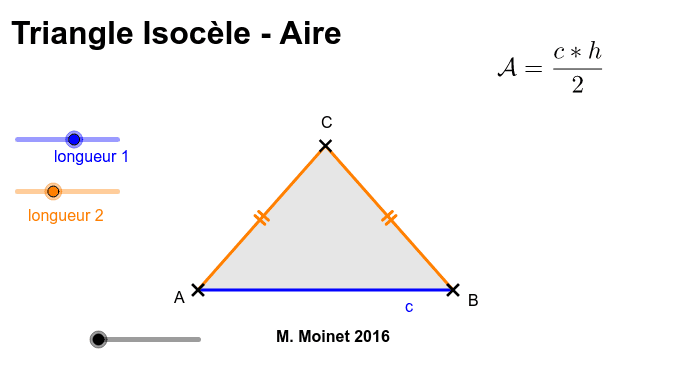
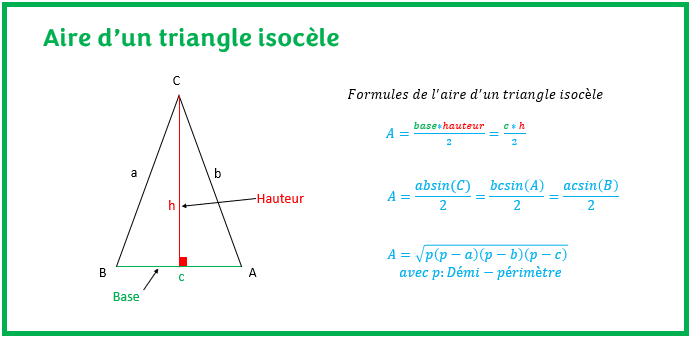
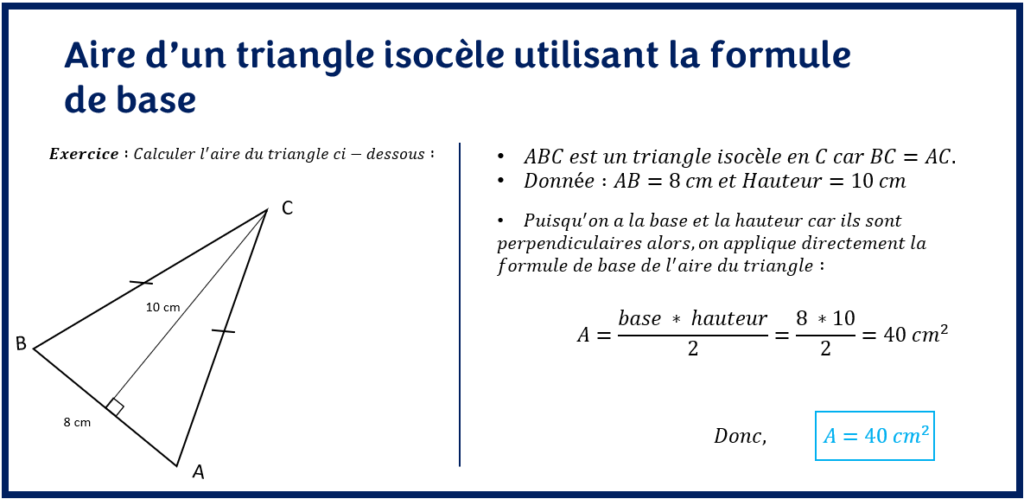
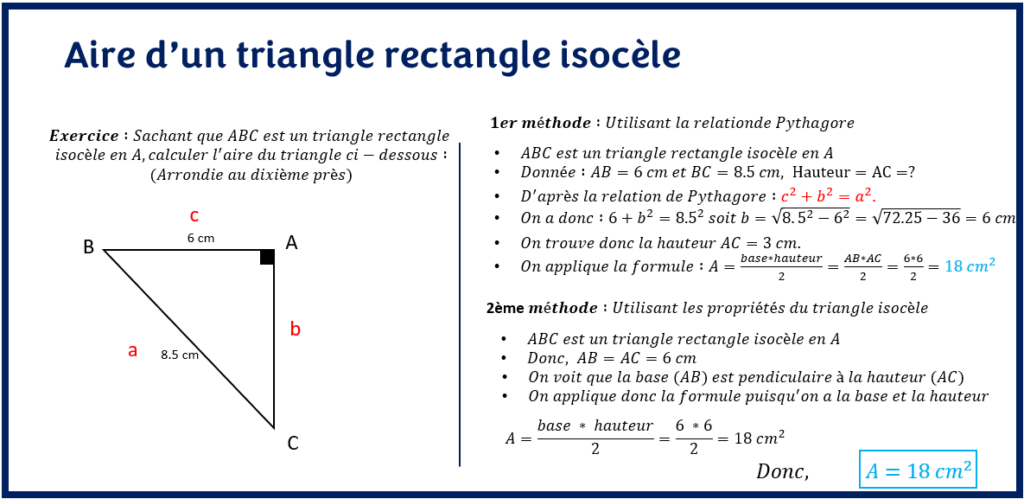
The formula is simple: Area = (1/2) * base * height, or more elegantly, A = ½ bh
Let's break that down:
- Base (b): The side that is not one of the two equal sides.
- Height (h): The perpendicular distance from the base to the opposite vertex (the point where the two equal sides meet). Think of it as a line that forms a perfect right angle with the base.
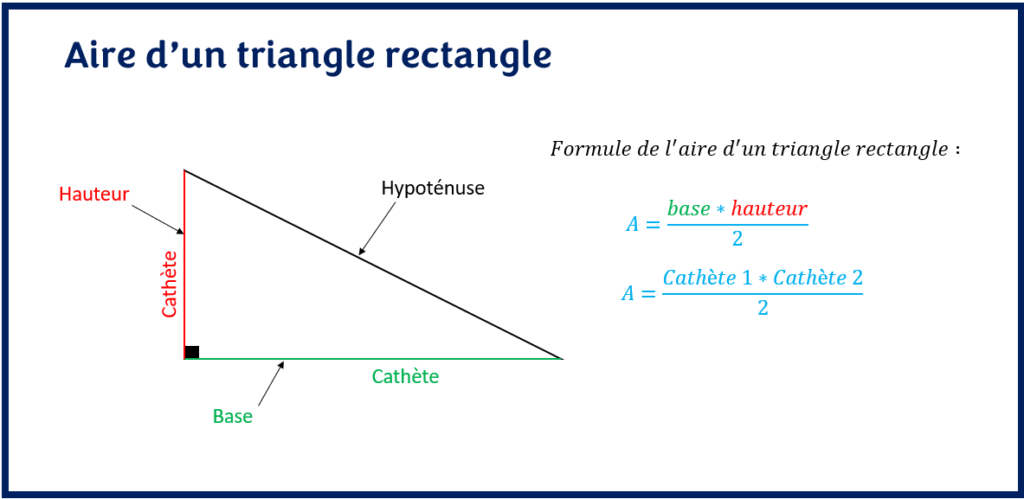
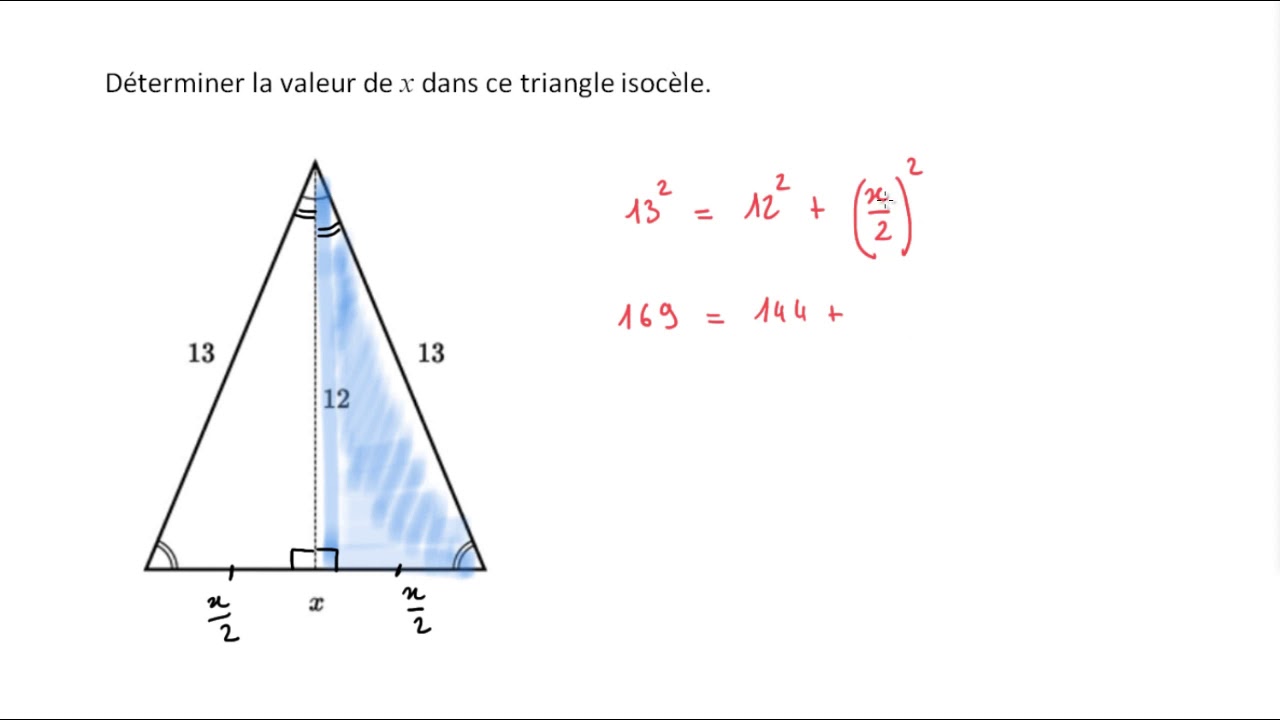
Practical Tip: If you only know the lengths of the sides, you might need to use the Pythagorean theorem to calculate the height. Remember a² + b² = c²? (where c is the hypotenuse – in this case, one of the equal sides of the isosceles triangle, and a is half the length of the base).
Method 2: Heron's Formula – When You Only Know the Sides
Feeling a little more adventurous? Heron's formula is your friend! It's a bit more involved but incredibly useful when you only know the lengths of all three sides (a, b, and c). Note that for an isoceles triangle, two of these sides are equal, a=b.
First, calculate the semi-perimeter (s): s = (a + b + c) / 2
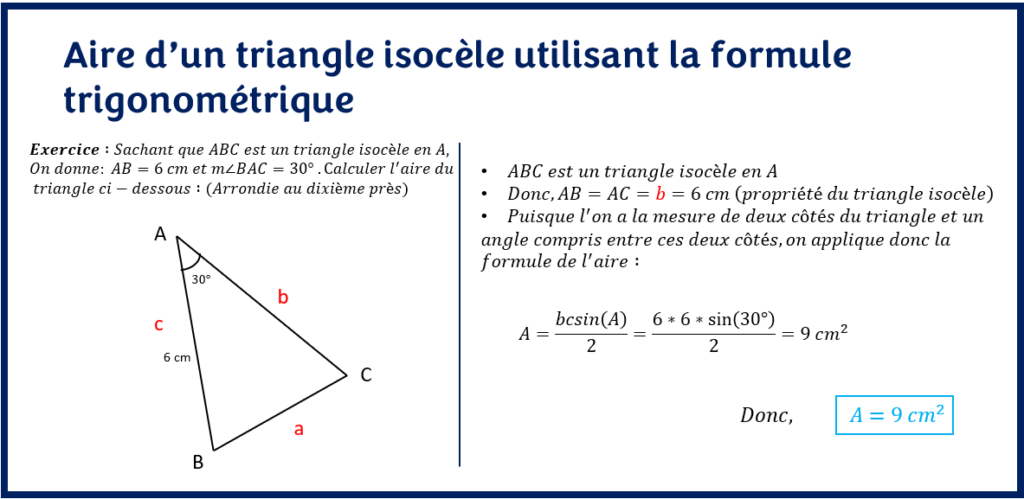
Then, plug that value into Heron's formula: Area = √[s(s - a)(s - b)(s - c)]
Think of it like this: It’s like baking a complicated cake. A few more steps, but the result is a delicious calculation of area!
Example: Imagine an isosceles triangle with sides a=5cm, b=5cm, and c=6cm. The semi-perimeter is s=(5+5+6)/2=8. So, the area is √[8(8-5)(8-5)(8-6)] = √(833*2) = √144 = 12 cm².
Method 3: Using Trigonometry (For the Math Maestros)
If you're comfortable with trigonometry, you can leverage the power of sines to find the area. This is particularly helpful if you know the lengths of two sides and the included angle (the angle between those two sides).
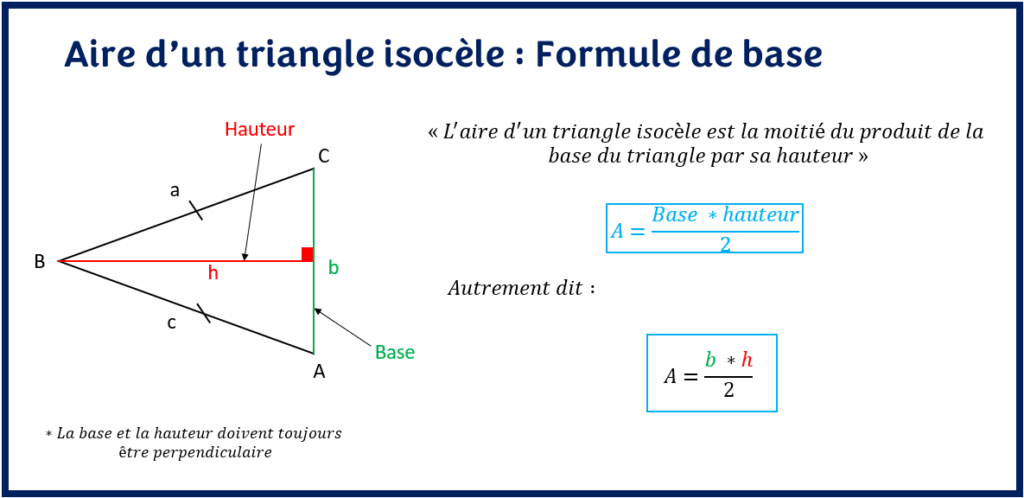
The formula is: Area = (1/2) * a * b * sin(C)
Where:
- a and b are the lengths of two sides (remember, in an isosceles triangle, two sides are equal).
- C is the angle between sides a and b.
A Word of Caution: Make sure your calculator is in the correct mode (degrees or radians) depending on how the angle is given!
Isosceles Triangles in Everyday Life: A Geometric Safari
Now, let’s pull back from the formulas and explore where these elegant triangles pop up in the world around us. You might be surprised!

- Architecture: Roofs of houses, bridges, and even the Eiffel Tower incorporate isosceles triangles for their structural integrity and visual appeal.
- Design: Logos, flags, and artwork often utilize isosceles triangles to create balanced and visually appealing compositions. Consider the Toblerone chocolate bar!
- Nature: Certain leaf shapes, mountain peaks, and even the cross-section of some carrots can approximate an isosceles triangle.
- Food: Slices of pizza, wedges of cheese (yes, our beloved brie!), and even some cleverly cut sandwiches can be thought of as isosceles triangles.
So, the next time you're munching on a slice of pizza or admiring a building, take a moment to appreciate the humble isosceles triangle working its magic behind the scenes.
A Final Thought: Geometry and the Art of Seeing
Learning to calculate the surface area of an isosceles triangle isn't just about mastering a mathematical formula. It's about developing a new way of seeing the world. It's about noticing the geometric patterns that surround us, appreciating the elegance of shapes, and understanding the underlying principles that govern our physical reality.
Think about it: when you understand the principles of geometry, you can better understand how things are built, how they function, and why they look the way they do. This knowledge can empower you to be more creative, more analytical, and more appreciative of the world around you.
So, go forth and embrace the beauty of the triangle isocèle! Let its balanced form and mathematical elegance inspire you to see the world with fresh eyes and a newfound appreciation for the hidden geometry that shapes our lives. À bientôt!