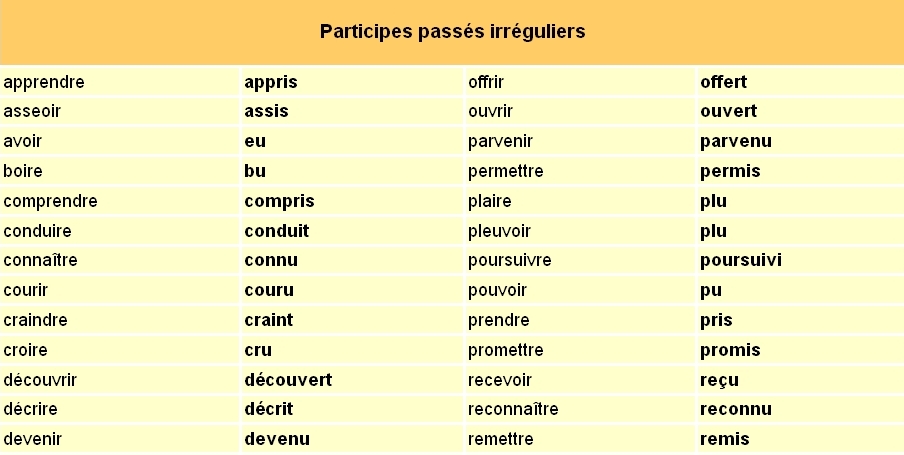
Salut, toi ! Ever feel like French grammar is a giant, delicious but slightly intimidating pastry? Don't worry, we've all been there. Today, let's tackle a seemingly scary ingredient: le participe passé. But trust me, it's less "scary monster" and more "secret weapon" for making your French sound super fluent and impressive. Ready to dive in?
What Exactly Is a Participe Passé?
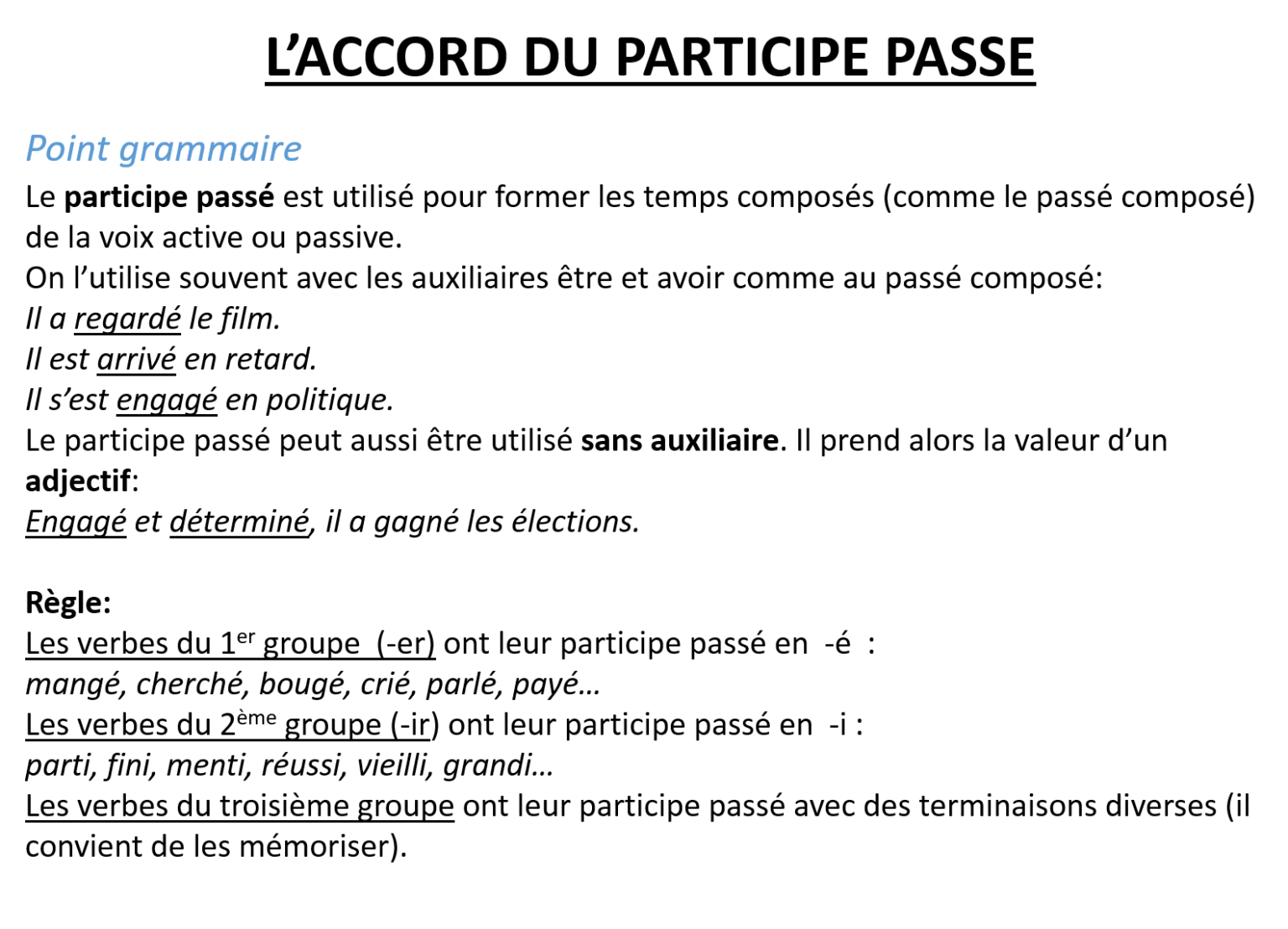
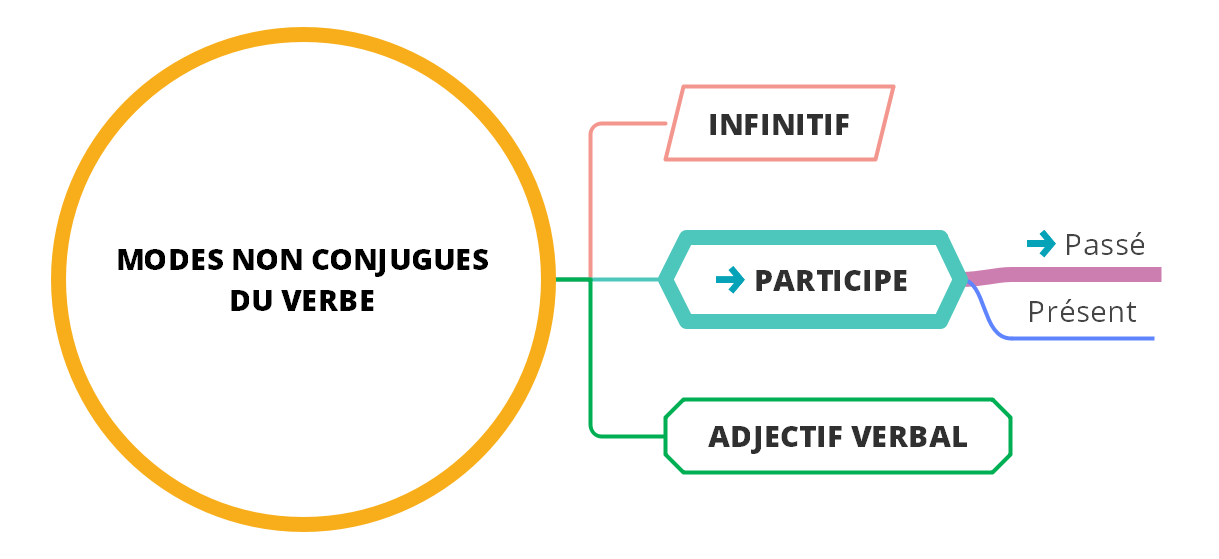
Okay, so "participe passé" sounds fancy, right? But at its heart, it's just a verbal adjective! Think of it as the past participle version of a verb. It describes something that has been done. It's like the "–ed" ending in English verbs, but... well, it's French, so naturally, it's a little more colorful. Mais oui!
Let's look at some examples. The verb "manger" (to eat) has a participe passé of "mangé" (eaten). "Parler" (to speak) becomes "parlé" (spoken). See a pattern emerging? Usually (but not always!), it involves adding an accent to the 'e' at the end. We'll get to the exceptions later – because, you know, French. ;)
Why Should You Care?
Great question! You might be thinking, "Okay, that's cool, but why bother learning this stuff?" Here’s why: The participe passé is the building block for so many essential French tenses and structures.
- Composed Tenses: It's absolutely crucial for forming the passé composé (the most common past tense) and other compound tenses like the plus-que-parfait and the futur antérieur. Without it, you're stuck in the present! (Which is nice, but sometimes you want to talk about what happened!)
- Passive Voice: Need to express "The cake was eaten by the cat"? Yep, you need the participe passé for that. (Poor cake!)
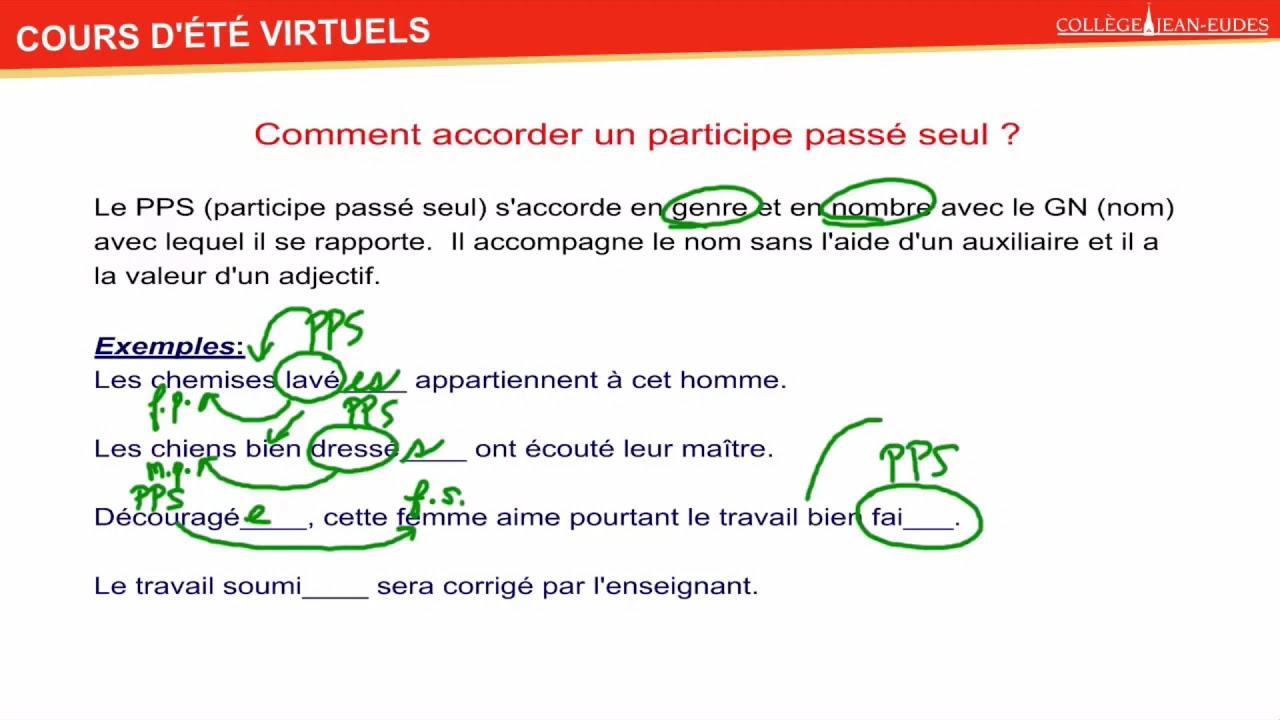
- Adjectives: As mentioned, the participe passé can also function as an adjective, directly describing a noun. "Une porte fermée" (a closed door). Suddenly, you're adding nuance and detail to your descriptions.
Basically, mastering the participe passé unlocks a whole new level of fluency and expressiveness. You can talk about past events, describe things in more detail, and sound super sophisticated. Imagine impressing your friends with your knowledge of the passé composé! They'll be so jealous!

How to Form the Participe Passé: The Quick and Dirty Guide
Alright, let's get practical. There are a few different ways to form the participe passé, depending on the verb's ending.
- -er verbs: These are the easiest! Just drop the "-er" and add "-é". So, "parler" becomes "parlé," "chanter" becomes "chanté," and "aimer" becomes "aimé." Facile, non?
- -ir verbs: Usually, you just drop the "-r" and add "-i". So, "finir" becomes "fini," "choisir" becomes "choisi," and "remplir" becomes "rempli."
- -re verbs: Drop the "-re" and add "-u". "Vendre" becomes "vendu," "attendre" becomes "attendu," and "perdre" becomes "perdu."
See? Not so scary! But... (there's always a but, isn't there?) ...there are irregular verbs. Sigh. They don't follow these nice, neat patterns. You just have to learn them. Think of them as quirky little rebels.
Irregular Verbs: Embrace the Chaos!
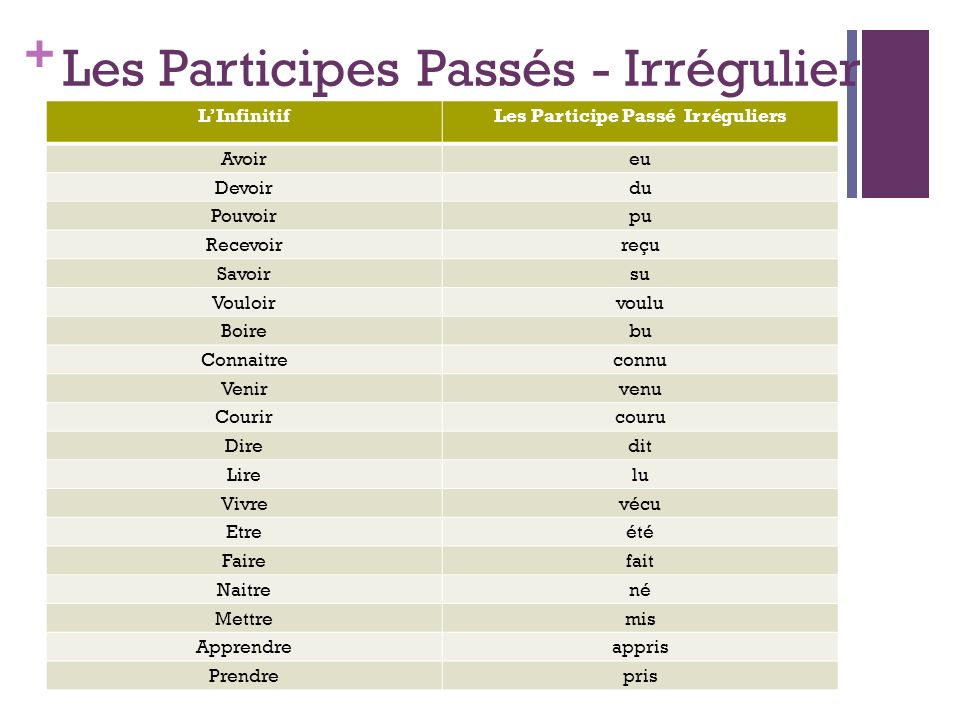
Yes, irregular verbs are the bane of every French learner's existence. But don't despair! They're also what makes the language so rich and interesting. Here are some of the most common irregular participe passés:
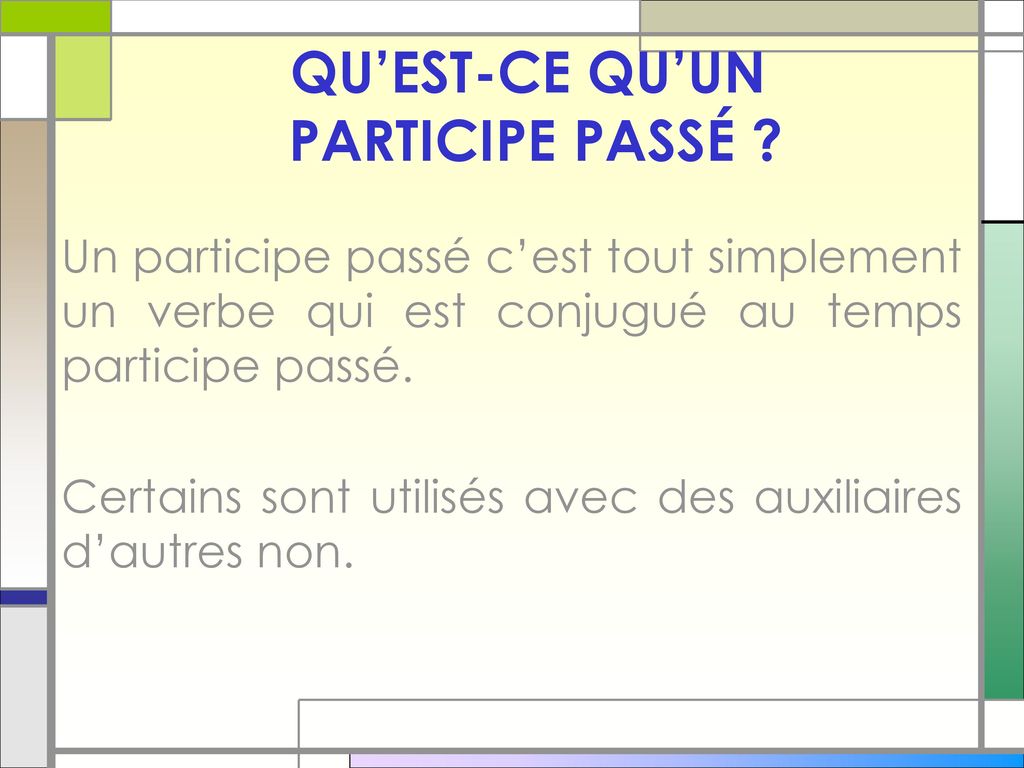
- Être: été (been)
- Avoir: eu (had)
- Faire: fait (done, made)
- Prendre: pris (taken)
- Voir: vu (seen)
- Boire: bu (drunk)
- Lire: lu (read)
- Écrire: écrit (written)
- Mettre: mis (put)
The best way to learn these is through repetition and practice. Use flashcards, write sentences, and listen to French conversations. Eventually, they'll become second nature. Promise!
Agreement: Making It Match!
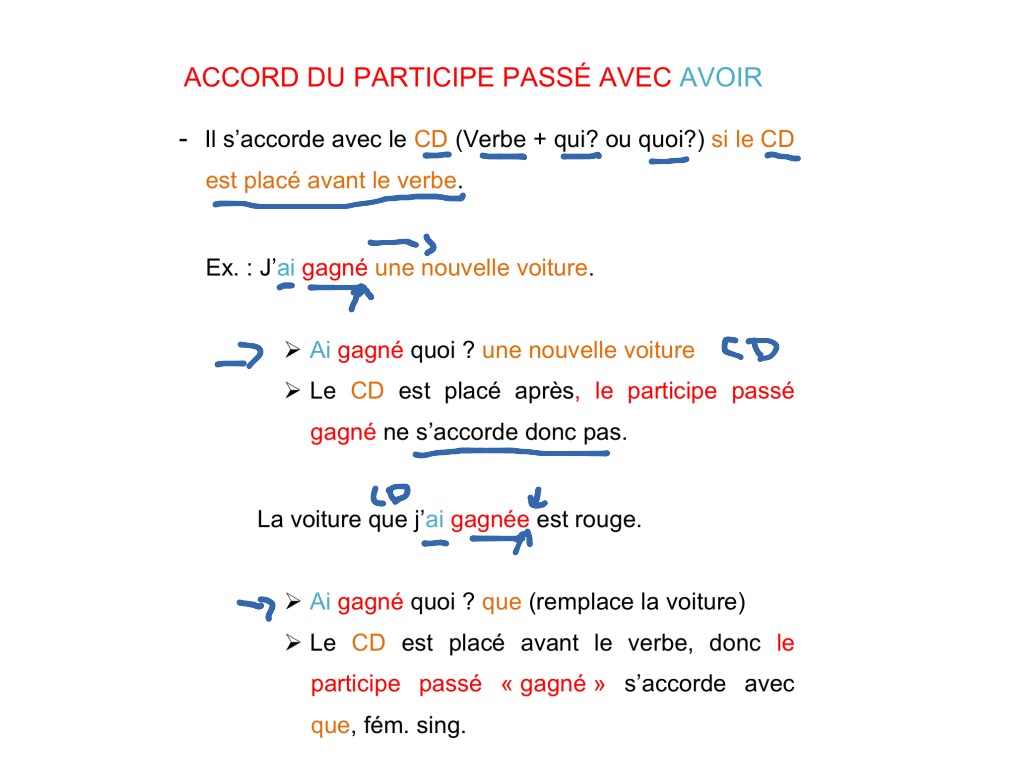
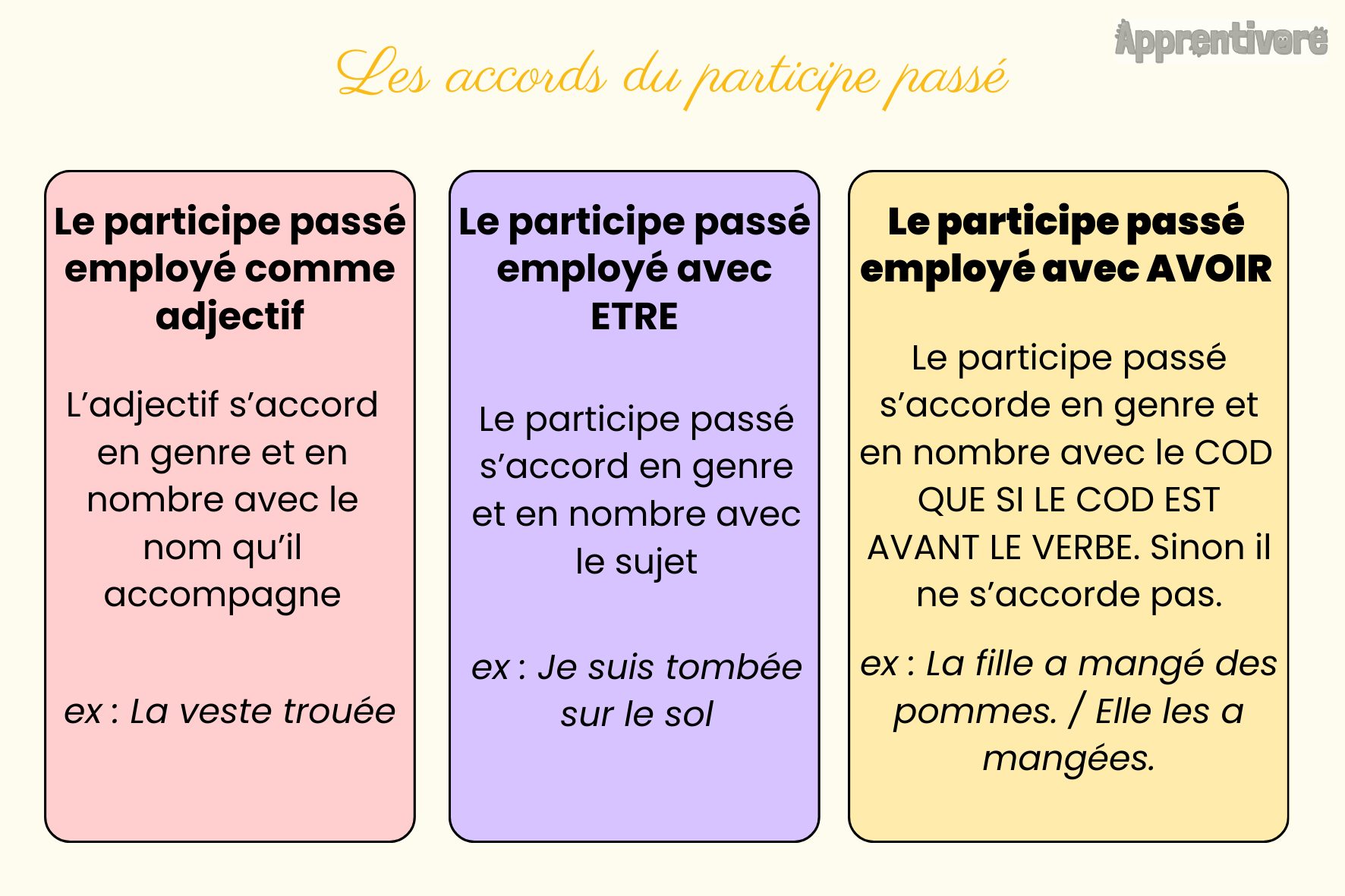
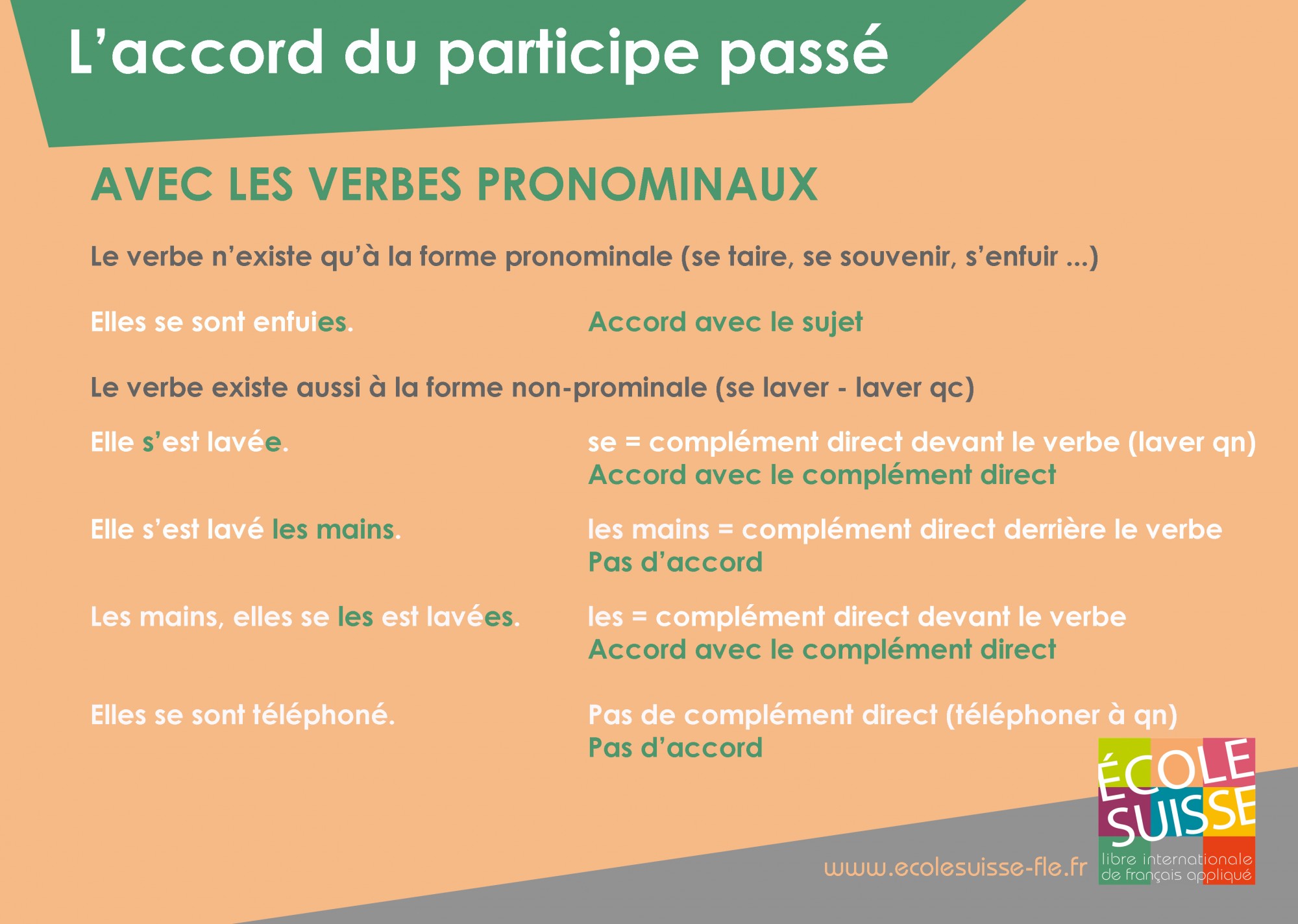
Okay, now for the really fun part: agreement! In some cases, the participe passé needs to agree in gender and number with the noun or pronoun it refers to. This happens primarily when using the auxiliary verb être or when the direct object precedes the verb in the passé composé.
- With "Être": When using être (to be) as the auxiliary verb, the participe passé always agrees with the subject of the verb. So, "Elle est allée au cinéma" (She went to the cinema). "Allée" gets an extra "e" because "elle" is feminine singular. If it were "Ils sont allés au cinéma," "allés" would get an "s" because "ils" is masculine plural. Compris?
- With Direct Object Pronouns: If the direct object pronoun (like "le," "la," "les") comes before the verb, the participe passé agrees with it. For example, "Je l'ai vue" (I saw her). "Vue" gets an extra "e" because "la" (which is shortened to "l'") refers to a feminine singular noun.
Agreement can be tricky, but don't let it intimidate you. Start by focusing on the basic rules and practice with simple sentences. Over time, it will become more intuitive. C'est promis!

Common Mistakes (and How to Avoid Them!)
Everyone makes mistakes when learning a new language. It's part of the process! Here are some common pitfalls to watch out for:
- Forgetting the auxiliary verb: Remember, you need either avoir or être to form the passé composé. Don't just say "J'mangé!" It needs to be "J'ai mangé!"
- Using the wrong auxiliary verb: Some verbs take être, and others take avoir. There are patterns (verbs of motion and reflexive verbs usually take être), but you'll need to learn them.
- Ignoring agreement: Pay attention to gender and number! It can make a big difference in meaning.
- Mixing up irregular participles: Double-check those irregular verbs! It's easy to get them confused.
The key is practice, practice, practice! The more you use the participe passé, the more comfortable you'll become with it. Don't be afraid to make mistakes – that's how you learn!
Practice Makes Perfect: Putting It All Together
Ready to put your newfound knowledge to the test? Here are a few simple exercises to get you started:
- Translate the following sentences into French, using the passé composé:
- I ate the apple.
- She went to the store.
- We saw the movie.
- Fill in the blanks with the correct form of the participe passé:
- Ils sont _______ (aller) au restaurant.
- Elle a _______ (lire) le livre.
- Nous avons _______ (finir) le travail.
- Write a short paragraph about something you did yesterday, using at least five verbs in the passé composé.
Don't be afraid to experiment and have fun! The more you engage with the language, the faster you'll learn. Amuse-toi bien!
Le Mot de la Fin: You Got This!
Learning the participe passé might seem daunting at first, but it's totally achievable. Break it down into smaller steps, focus on the basics, and don't be afraid to make mistakes. With a little practice and perseverance, you'll be using the participe passé like a pro in no time!
Remember, learning a language is a journey, not a destination. Enjoy the process, celebrate your progress, and never stop exploring the beautiful world of French. You've got this! Allez, on y va! Now go forth and conquer that French grammar! You've deffinitely got this.



![[Carte mentale] L'accord du participe passé | Participe passé, Carte](https://i.pinimg.com/originals/68/e8/af/68e8af8dfa76286874ef220d0cbe2912.png)