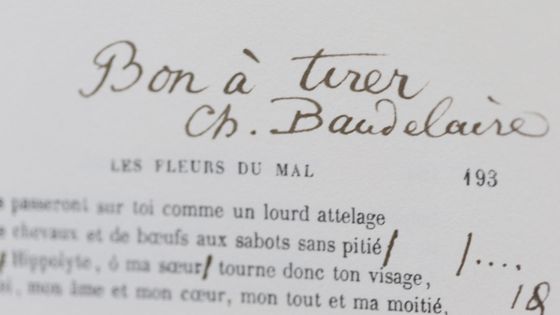
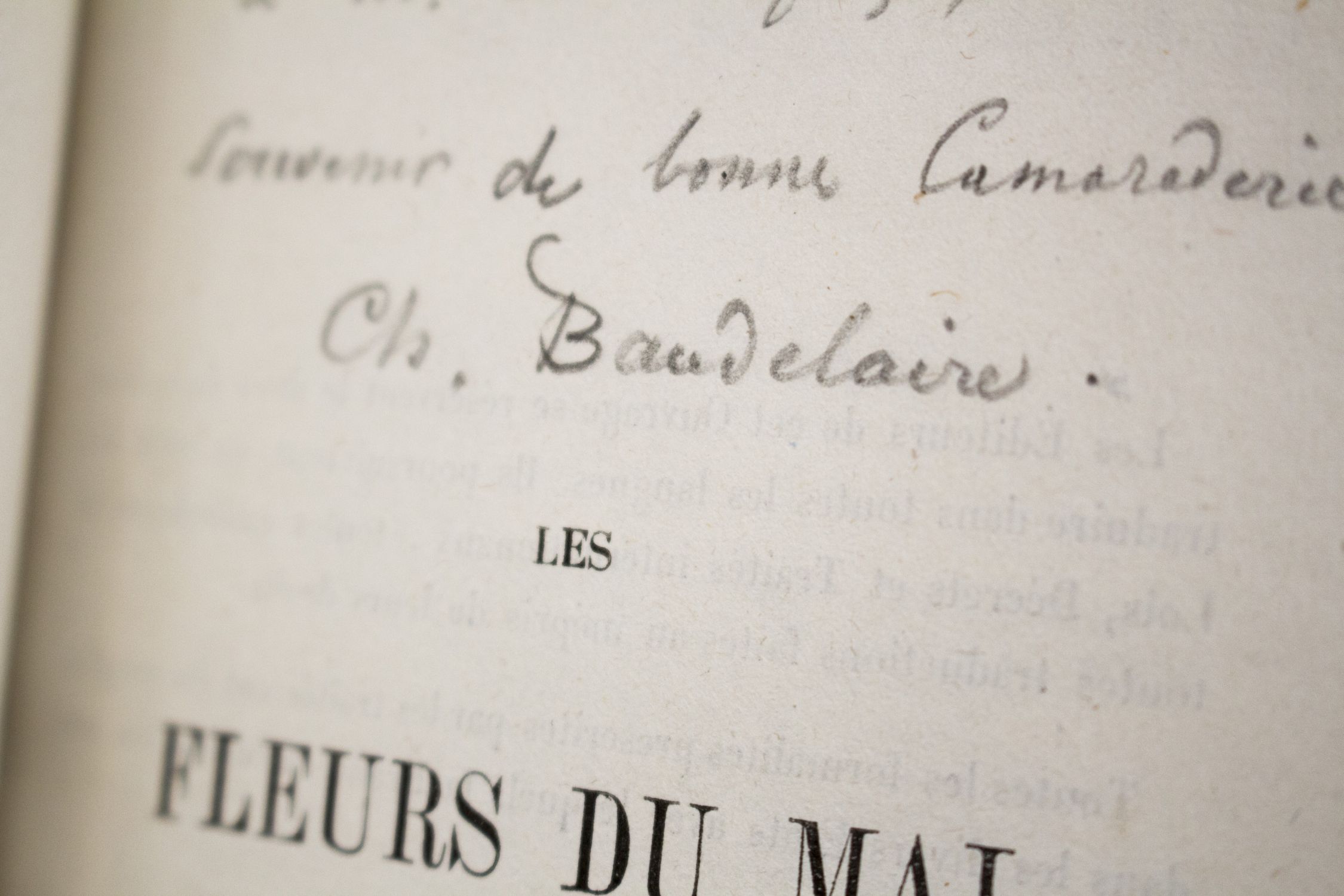
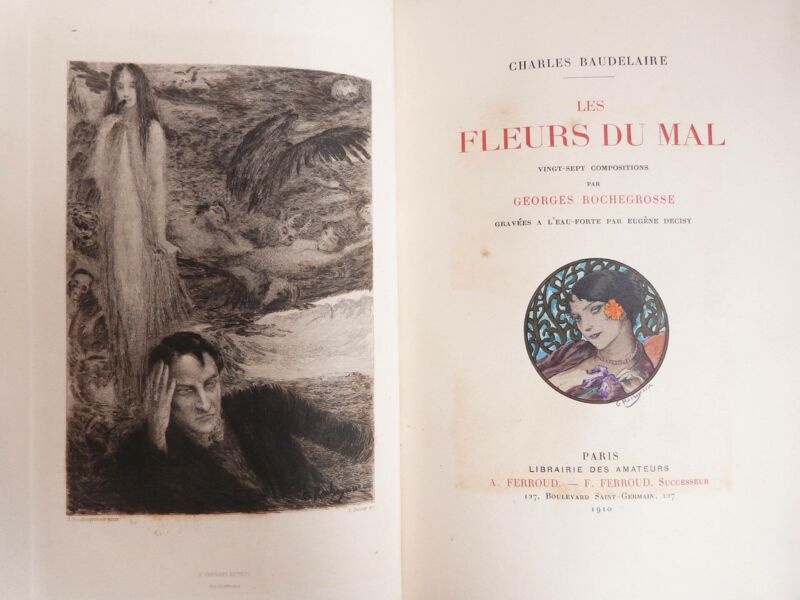
Bonjour, mes chéris! Ever feel like life is a little… much? Like, one minute you're sipping rosé in the sunshine, the next you're contemplating the existential dread of a particularly aggressive dust bunny? If so, you might just be ready for a rendezvous with Charles Baudelaire and his delightfully dark collection, Les Fleurs du Mal (The Flowers of Evil). Now, don't let the "evil" part scare you off. We're not talking demonic possessions or summoning rituals (although, frankly, with Baudelaire, you never quite know). Instead, think of it as a beautifully morbid exploration of the human condition, seasoned with a generous dose of Parisian ennui.
Think of it like this: your average poet writes about roses and sunshine. Baudelaire? He's all about the roses after they've been trampled, left to rot, and are probably being eaten by aesthetically pleasing insects. He's the patron saint of dramatic sighs and eyeliner that's just a tad too smudged.
Why Should You Subject Yourself to Such Melancholy?
Good question! I mean, there's Netflix, right? But hear me out. Les Fleurs du Mal isn't just a collection of depressing poems. It's a stylish collection of depressing poems. It's like wearing a black turtleneck – eternally chic, even when you're feeling a bit…existential. And honestly, isn't it comforting to know that someone else, like, a hundred and fifty years ago, also felt like the world was a giant, confusing mess?
Besides, reading Baudelaire is practically a cultural prerequisite for understanding half the art, music, and angst that came after him. Think of it as your passport to intellectual coolness. Plus, you'll have some seriously impressive quotes to drop at your next dinner party. Imagine casually saying, "Ah yes, Baudelaire. His exploration of the grotesque beauty of urban decay truly resonates with my soul." Instant intellectual cred. You're welcome.
So, Who Was This Baudelaire Guy, Anyway?
Ah, Charles! A true original, a rebel, and a master of the dramatic eye-roll. Imagine a Victorian-era rock star, only instead of smashing guitars, he smashed societal norms. He was born in 1821, and from the get-go, he was destined for greatness… or at least, destined to cause a lot of trouble. His stepfather, a military man with a penchant for order, clashed spectacularly with young Charles' artistic sensibilities. Let's just say, it wasn't a match made in heaven. More like a clash of titans, only one titan was wearing a cravat and the other was writing poetry about decaying corpses.
Baudelaire lived a life of bohemian excess, racking up debts, experimenting with drugs (laudanum, anyone?), and generally scandalizing polite society. He was the literary equivalent of a really cool, really troubled cat. He hung out in cafes, debated art, and generally cultivated an air of profound disillusionment. He was, in short, the ultimate tortured artist. And, let's be honest, who doesn't love a good tortured artist?
He also had a fascinating relationship with Jeanne Duval, a mixed-race actress who became his muse and his mistress. Their relationship was tumultuous, passionate, and undeniably complicated. She was the inspiration for many of his poems, and let's just say, she wasn't exactly depicted as a Disney princess. More like a captivating siren, luring sailors to their doom with her dark beauty and intoxicating allure. Ooh la la!
The Shocking Scandal (and Why It Matters)
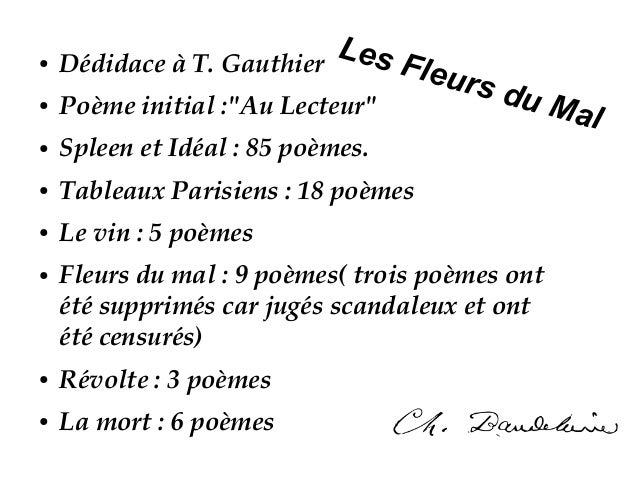
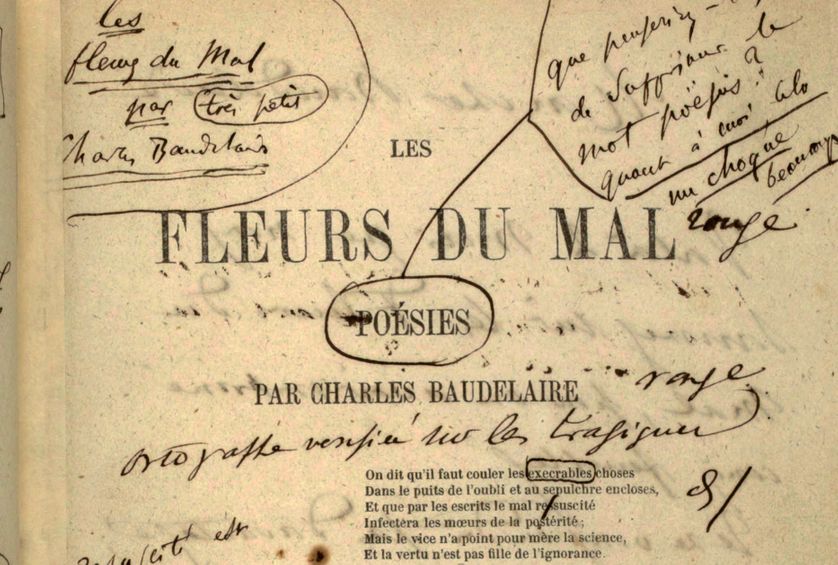
Les Fleurs du Mal was published in 1857 and caused an immediate uproar. It was deemed obscene, immoral, and generally unfit for polite consumption. Six poems were banned, and Baudelaire was prosecuted for "outraging public morals." Can you imagine? These days, you can find worse things on the back of a cereal box. But back then, Baudelaire was pushing boundaries and challenging the very definition of beauty. He dared to find beauty in the ugly, the perverse, and the forbidden.
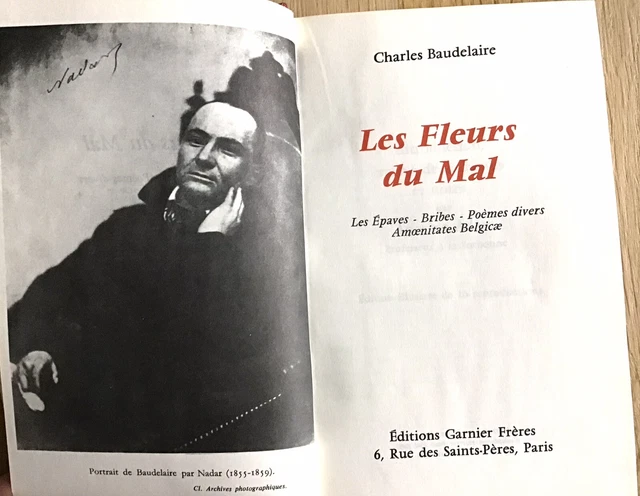
The scandal is important because it highlights Baudelaire's revolutionary approach to poetry. He wasn't just writing about pretty flowers and babbling brooks. He was exploring the dark underbelly of modern life, the alienation, the despair, and the moral decay that lurked beneath the surface of Parisian society. He was holding up a mirror to society and saying, "Look! This is what we've become!" And, understandably, society didn't like what it saw.
Think of it like this: imagine if your grandma accidentally stumbled upon a death metal concert. That's pretty much what it was like when the French bourgeoisie encountered Les Fleurs du Mal. Pearls were clutched, fainting couches were utilized, and the literary world was forever changed.
Diving into the Depths: Key Themes
Okay, enough with the historical context. Let's get down to the nitty-gritty. What's Les Fleurs du Mal actually about? Buckle up, mes amis, because we're about to take a deep dive into the dark and delicious depths of Baudelaire's mind.
- Spleen and Ideal: This is the big one. Spleen refers to a profound sense of boredom, melancholy, and existential angst. It's that feeling you get when you realize that life is ultimately meaningless and that all your efforts are ultimately futile. Cheerful, right? Ideal, on the other hand, represents the yearning for beauty, transcendence, and spiritual fulfillment. Baudelaire constantly grapples with these two opposing forces, forever caught between the desire for something better and the crushing reality of the present. He perfectly captures that feeling of wanting to escape, of wanting to be transported to somewhere… else. But where is that 'else'? That's the burning question.
- The City as a Source of Alienation: Baudelaire was fascinated (and repulsed) by the modern city, particularly Paris. He saw it as a place of both incredible beauty and profound alienation. The crowds, the noise, the anonymity – it all contributed to a sense of isolation and despair. He wanders the streets, a solitary figure, observing the chaos and squalor with a detached, almost clinical eye. Think of it as the poetic equivalent of people-watching at a particularly depressing bus stop.
- The Power of Sensuality and Decadence: Baudelaire was a master of sensual imagery. He wrote about beauty, perfume, and the intoxicating power of the senses with a kind of feverish intensity. But this sensuality is often intertwined with a sense of decadence and decay. He finds beauty in the grotesque, the morbid, and the forbidden. It's like he's saying, "Yes, beauty is fleeting and ultimately meaningless, so let's indulge in it while we can!"
- The Search for Transcendence: Despite his cynicism and despair, Baudelaire was also searching for something more. He yearned for transcendence, for a way to escape the limitations of the human condition. He explored various avenues – art, love, drugs, even death – in his quest for the sublime. But ultimately, he remained trapped in his own inner turmoil. He's basically the literary embodiment of that feeling when you think you've found enlightenment, but then you realize you just ate too much pizza.
Famous Poems (and Why They're Awesome)
Alright, let's talk specifics. Here are a few of the most famous poems from Les Fleurs du Mal, along with my highly subjective and delightfully biased commentary:
- "À une passante" ("To a Passerby"): This poem is a classic example of Baudelaire's urban alienation and his fascination with fleeting beauty. He sees a beautiful woman passing by in the street, and he's instantly captivated. But she disappears as quickly as she appears, leaving him with a sense of longing and regret. It's like that moment when you see a really cute dog and you want to pet it, but then it walks away and you're left with nothing but unrequited puppy love. Pure heartbreak, folks.
- "L'Albatros" ("The Albatross"): This poem is an allegory for the poet himself. The albatross, a majestic bird in flight, becomes clumsy and awkward when it's captured and brought on board a ship. Similarly, the poet, a visionary in his own world, is often mocked and misunderstood by society. It's basically the ultimate "I'm too good for this world" anthem. Except, you know, with more seabirds.
- "Correspondances" ("Correspondences"): This poem explores the idea that everything in the universe is interconnected. Colors, sounds, and scents all correspond to each other, creating a kind of synesthetic experience. It's like when you listen to a certain song and it makes you think of a certain smell, which makes you think of a certain person, which makes you want to cry into your pillow. Only, you know, way more poetic.
- "Une Charogne" ("A Carcass"): Okay, this one's not for the faint of heart. It's about, well, a rotting carcass. But bear with me! Baudelaire finds a strange kind of beauty in the decaying corpse, seeing it as a reminder of the transience of life and the inevitability of death. It's like when you accidentally step on a bug and you're horrified, but also kind of fascinated by its little bug guts. Dark, I know. But that's Baudelaire for you. Magnifique!
- "Le Vin des chiffonniers" ("The Ragpicker's Wine"): This poem is an ode to the working class, the outcasts, and the marginalized members of society. Baudelaire celebrates their resilience and their ability to find joy in the midst of hardship. It's like that feeling when you see a homeless person singing in the street and you're struck by their humanity and their indomitable spirit. It’s a reminder that even in the darkest corners of society, there is still hope, still beauty, still something worth celebrating.
- "Spleen" (IV): Ah, the quintessential Baudelairean spleen. This poem paints a vivid picture of oppressive boredom and existential despair. Time stretches out endlessly, hope fades away, and the speaker feels trapped in a suffocating atmosphere. It’s like that feeling when you’re stuck in a never-ending meeting, and you’re convinced that your soul is slowly withering away. Pure, unadulterated ennui.
- "La Chevelure" ("The Head of Hair"): This poem explores the intoxicating power of memory and the sensual allure of a woman’s hair. The speaker is transported back to a past love affair by the scent and texture of the hair, evoking a flood of emotions and desires. It's like when you smell an old perfume and it instantly transports you back to a specific moment in time, triggering a wave of nostalgia and longing.
- "Le Chat" ("The Cat"): Baudelaire often uses animals as symbols in his poetry, and the cat is a recurring motif. In this poem, the cat represents a mysterious and enigmatic force, both alluring and dangerous. It embodies the poet's own fascination with the darker aspects of human nature. It's like that feeling when you're drawn to someone who's a little bit edgy and unpredictable, even though you know they might break your heart.
Why It Still Matters Today (and How to Fake It 'Til You Make It)
So, why should you care about a collection of poems written in the 19th century? Because Les Fleurs du Mal is surprisingly relevant to our modern world. Baudelaire's themes of alienation, despair, and the search for meaning still resonate with us today. We live in a world that is increasingly complex, chaotic, and overwhelming. It's easy to feel lost, disconnected, and disillusioned. Baudelaire understood these feelings, and he gave them a voice. He reminds us that we're not alone in our struggles, and that even in the darkest of times, there is still beauty to be found.
Plus, let's be honest, knowing a little Baudelaire can seriously impress your friends. Imagine being able to casually quote "La Beauté, sur son noir throne, verse un poison qui rend toujours plus aimable" ("Beauty, on her black throne, pours a poison that makes her forever more lovable") at a party. Instant intellectual street cred! Even if you don't fully understand what you're saying, just deliver it with enough gravitas and a knowing wink, and you'll be fine. Fake it 'til you make it, my friends!
To truly seem like you know what you are talking about, try these:
- Sprinkle your conversations with words like "ennui," "spleen," and "decadence."
- Wear all black. It's the official uniform of Baudelaire enthusiasts.
- Carry a small, leather-bound copy of Les Fleurs du Mal with you at all times. (Bonus points if it's in French.)
- Perfect the art of the dramatic sigh.
- Develop a profound sense of disillusionment with modern society.
- Write poetry about rotting flowers and dead animals.
- Complain about the bourgeoisie.
- Listen to The Cure. A lot.
If you follow these simple steps, you'll be mistaken for a Baudelaire scholar in no time! And even if you're not, you'll at least have a good time pretending. After all, isn't that what life is all about? A little bit of pretending, a little bit of poetry, and a whole lot of existential angst?
Okay, Where Do I Start?
Ready to dive in? Excellent! Here are a few tips for tackling Les Fleurs du Mal:
- Start with the translations: Unless you're fluent in French (and let's be honest, most of us aren't), you'll want to read a translation. There are many good translations available, so find one that speaks to you. I personally recommend the Richard Howard translation, but feel free to explore.
- Don't try to understand everything: Baudelaire's poetry can be dense and complex. Don't get bogged down trying to analyze every single line. Just let the words wash over you and see what resonates.
- Read it slowly: This isn't a book you can skim. Take your time, savor the language, and let the images sink in.
- Read it aloud: Poetry is meant to be heard. Reading it aloud can help you appreciate the rhythm and the sound of the words.
- Don't be afraid to be confused: Baudelaire is supposed to make you feel a little bit uncomfortable. Embrace the ambiguity and the uncertainty.
- Pair it with a glass of wine (or two): Let's be real, reading Baudelaire is best enjoyed with a little bit of liquid courage. A nice red wine pairs particularly well with the themes of decadence and despair.
A Final Word (and a Wink)
So there you have it, mes amis! Your crash course in Baudelaire and Les Fleurs du Mal. Hopefully, I've convinced you that this collection of poems is not just a bunch of depressing verses, but a powerful and enduring work of art that continues to resonate with readers today. So go forth, read some Baudelaire, embrace your inner angst, and remember: even in the darkest of times, there is always beauty to be found. Even if that beauty is a little bit…rotten.
Now, if you'll excuse me, I'm going to go put on some eyeliner, listen to some melancholic music, and contemplate the meaninglessness of existence. À bientôt!
P.S. If anyone asks you what Les Fleurs du Mal is about, just say "It's a profound exploration of the human condition, juxtaposing the beauty of the ideal with the harsh realities of spleen." Then wink knowingly. They'll be so impressed, they won't even realize you're bluffing.
The Baudelaire Drinking Game (For Extra Fun!)
Okay, I'm only half kidding about this. But if you want to really immerse yourself in the world of Baudelaire, why not try this drinking game? (Please drink responsibly, and don't blame me if you end up reciting poetry naked in the street.)
- Take a sip whenever:
- Baudelaire mentions death.
- He describes something decaying or rotten.
- He expresses feelings of ennui or despair.
- He mentions a woman.
- He uses the word "spleen."
- Take a shot whenever:
- He uses a metaphor that makes absolutely no sense.
- He references classical mythology.
- He expresses a desire to escape.
- He mentions Paris.
- You actually understand what he's talking about.
- Finish your drink whenever:
- You have an existential crisis.
- You start writing your own poetry.
- You decide to move to Paris and become a tortured artist.
- You realize that Baudelaire was right about everything.
- You spontaneously burst into tears.
Remember, this game is meant to be fun! So drink responsibly, enjoy the poetry, and don't take yourself too seriously. After all, Baudelaire wouldn't want you to.
Baudelaire's Influence: Spreading the Darkness (and Beauty)
Baudelaire's impact on literature, art, and culture is immeasurable. He paved the way for the Symbolist and Modernist movements, influencing countless artists and writers who followed in his footsteps. His exploration of the dark side of human nature, his embrace of the grotesque, and his revolutionary use of language continue to inspire and challenge us today. He was the original emo kid, the godfather of goth, and the patron saint of all things dark and beautiful.

Here are just a few of the artists and writers who were influenced by Baudelaire:
- Arthur Rimbaud: The enfant terrible of French poetry, Rimbaud took Baudelaire's exploration of the subconscious to even greater extremes, pushing the boundaries of language and form.
- Stéphane Mallarmé: A key figure in the Symbolist movement, Mallarmé admired Baudelaire's use of symbolism and his focus on atmosphere and suggestion.
- Oscar Wilde: The witty and flamboyant Irish writer was heavily influenced by Baudelaire's aestheticism and his celebration of beauty and decadence.
- T.S. Eliot: The American-born poet and playwright drew inspiration from Baudelaire's exploration of urban alienation and his use of fragmented language.
- Marcel Proust: The French novelist and essayist shared Baudelaire's interest in memory, sensation, and the fleeting nature of beauty.
- The entire Goth subculture: Let's be honest, Baudelaire is basically the spiritual leader of the goth movement. Black clothing, dark eyeliner, a fascination with death and decay – it all comes back to Baudelaire.
- Pretty much every indie band that sings about heartbreak and despair: If you've ever listened to a song that made you want to cry into your pillow, chances are Baudelaire had something to do with it.
So, the next time you're feeling angsty, remember Baudelaire. He's been there, he's done that, and he wrote some pretty amazing poetry about it. And who knows, maybe you'll even be inspired to create your own dark and beautiful art.
Final Thoughts: Embrace the Absurdity
Life is messy, complicated, and often absurd. We're all just stumbling around in the dark, trying to make sense of it all. Baudelaire understood this, and he didn't shy away from the darkness. He embraced it, explored it, and found beauty in it. He reminds us that it's okay to feel lost, confused, and disillusioned. It's okay to question everything. It's okay to be a little bit weird.
So, go forth and embrace the absurdity of life. Read some poetry, listen to some music, and let yourself feel all the feels. And remember, even when things seem hopeless, there's always beauty to be found… even in the rotting flowers.
Now, if you'll excuse me, I'm going to go write a poem about a dead pigeon. Because, you know, Baudelaire would want me to.