Okay, so picture this: I'm at a très chic Parisian bistro (obviously), trying to impress someone with my French. I order, confidently, "Un café... sucré!" The waiter raises an eyebrow, ever so slightly. I think, "Nailed it!" But then, later, I overhear him talking to another waiter: "Elle dit 'sucré,' mais c'est pas suffisant!" Turns out, just saying "sucré" wasn't quite the full story. That’s when I started really thinking about past participles used as adjectives, and how easily you can trip up if you're not careful. (Has that ever happened to you? Tell me I'm not alone!)
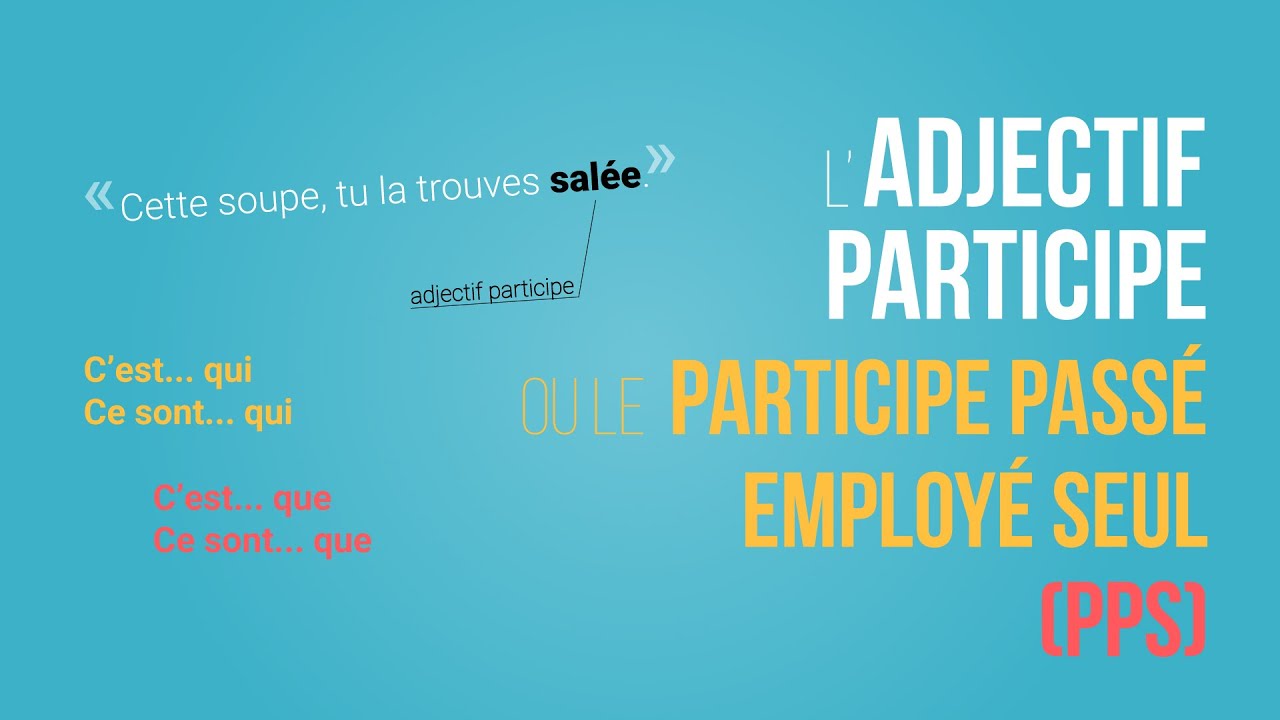
So, let's dive in, shall we? We're going to tackle the participe passé utilisé comme adjectif, which, fancy name aside, is actually a pretty useful concept. Think of it as the past participle stepping out of its verb role and putting on its adjective hat. It's all about describing nouns with action that's already happened. Sounds complex? Don't worry, we'll break it down.
What Exactly is a Participe Passé Utilisé Comme Adjectif?
Basically, it's a past participle that's being used like an adjective. Instead of being part of a compound tense (like the passé composé), it's modifying a noun, giving us more information about it. Think of it like this: the past participle is usually hanging out with an auxiliary verb (avoir or être), but here, it's decided to go solo and describe something. It's independent, you know?
Let's compare:
- Verb (Passé Composé): J'ai mangé une pomme. (I ate an apple.) Here, "mangé" is part of the passé composé.
- Adjective: Une pomme mangée. (A eaten apple – awkward in English, but it works in French!) Here, "mangée" is describing the apple.
See the difference? In the first example, "mangé" is part of the verb phrase. In the second, it's acting like an adjective, telling us something about the apple (namely, that it's been eaten). I know, I know, mind. blown. (Just kidding... kinda.)
How Do We Form These Adjectives?
Good news! Most past participles look exactly the same whether they're used in a compound tense or as an adjective. However, and this is a big however, they need to agree in gender and number with the noun they're modifying. This is where things can get a bit tricky (and where I likely stumbled in that bistro, trying to be all casual with my café sucré).

Here’s the basic agreement principle:
- Masculine singular: No extra ending (e.g., un livre lu - a read book)
- Feminine singular: Add an "e" (e.g., une lettre lue - a read letter)
- Masculine plural: Add an "s" (e.g., des livres lus - read books)
- Feminine plural: Add "es" (e.g., des lettres lues - read letters)
Easy, right? Just remember to pay attention to the noun you're describing. If it’s feminine, add an "e". If it's plural, add an "s" (or "es" if it’s feminine plural). Don't skip this step, or you'll end up saying something like "une maison cassé" instead of "une maison cassée" (a broken house), and that just sounds... wrong.
Examples to Make it Stick
Let’s look at some more examples to really solidify this:
.jpg)
- Le gâteau est fait. (The cake is made.) – Here, "fait" is part of the passé composé.
- Un gâteau fait maison. (A homemade cake.) – Here, "fait" is an adjective describing the cake.
- La porte est fermée. (The door is closed.) – Again, "fermée" is part of the passé composé.
- Une porte fermée. (A closed door.) – "Fermée" is an adjective.
- Des fenêtres cassées. (Broken windows.) – "Cassées" is an adjective, agreeing with "fenêtres" (feminine plural).
- Un homme blessé. (A wounded man.) – "Blessé" is an adjective describing the man.
- Une femme blessée. (A wounded woman.) – "Blessée" is an adjective, agreeing with "femme."
- Des soldats blessés. (Wounded soldiers.) – "Blessés" is an adjective, agreeing with "soldats."
- Des infirmières blessées. (Wounded nurses.) – "Blessées" is an adjective, agreeing with "infirmières."
Notice how the past participle changes to agree with the noun it's describing? That’s the key! Pay close attention to the gender and number of the noun, and you'll be golden.
Irregular Past Participles to Watch Out For
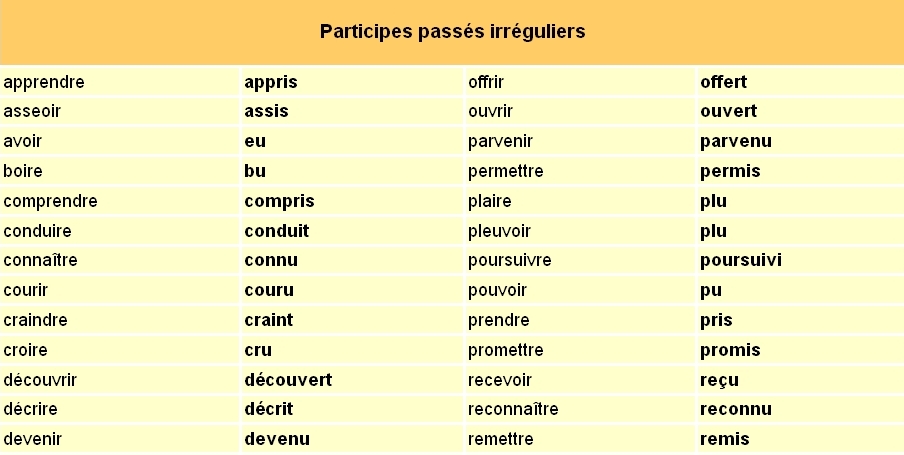
Of course, French wouldn't be French without a few exceptions and irregularities. Some verbs have irregular past participles that you just need to memorize. Here are a few common ones:
- Faire (to do/make) – fait
- Prendre (to take) – pris
- Écrire (to write) – écrit
- Ouvrir (to open) – ouvert
- Offrir (to offer) – offert
- Dire (to say) – dit
- Voir (to see) – vu
So, you might have un livre écrit (a written book), une lettre ouverte (an open letter), or un film vu (a seen film). Again, remember to make them agree with the noun. It might seem like a lot to memorize, but with practice, it'll become second nature. (Or at least, you won't get a raised eyebrow from a Parisian waiter.)
Where Does it Go in the Sentence?
Typically, the participe passé utilisé comme adjectif comes after the noun it modifies. This is the most common and natural word order. For instance:

- Une fleur fanée (A faded flower)
- Un arbre abattu (A felled tree)
- Une chanson chantée (A sung song)
However (yes, there's always a "however" in French, isn't there?), there are a few situations where you might see it before the noun, especially in more literary or poetic contexts. This is less common in everyday speech, so I'd recommend sticking to the noun-first order for now. Think of it as "advanced French." (We'll get there eventually!)
Common Mistakes to Avoid (and How to Fix Them)
Here are a few common pitfalls to watch out for:
- Forgetting to agree: This is the biggest mistake. Always double-check the gender and number of the noun and make sure the past participle agrees.
- Confusing it with the gérondif: The gérondif (ending in -ant) is different! It describes how something is done, not the state of something.
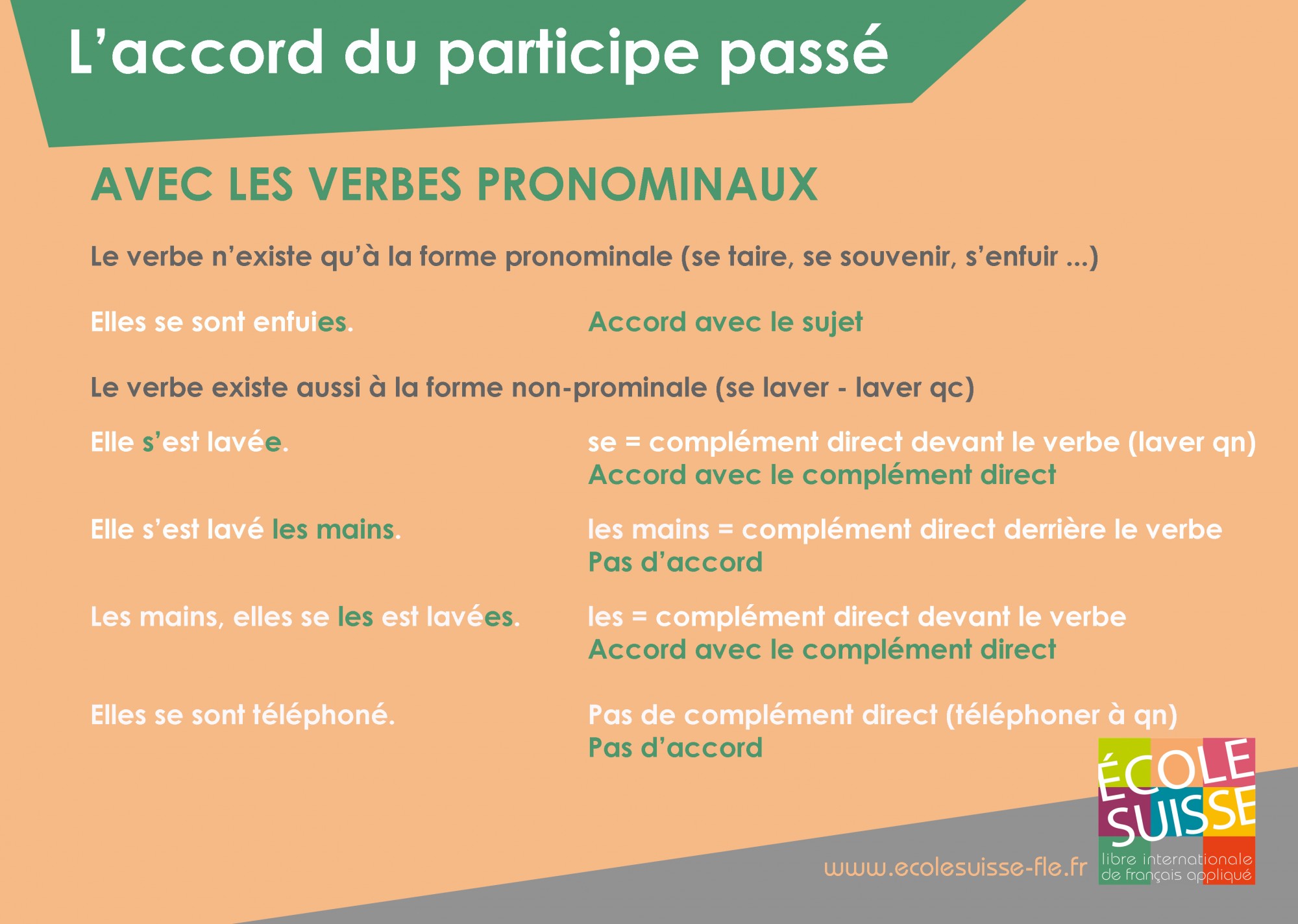
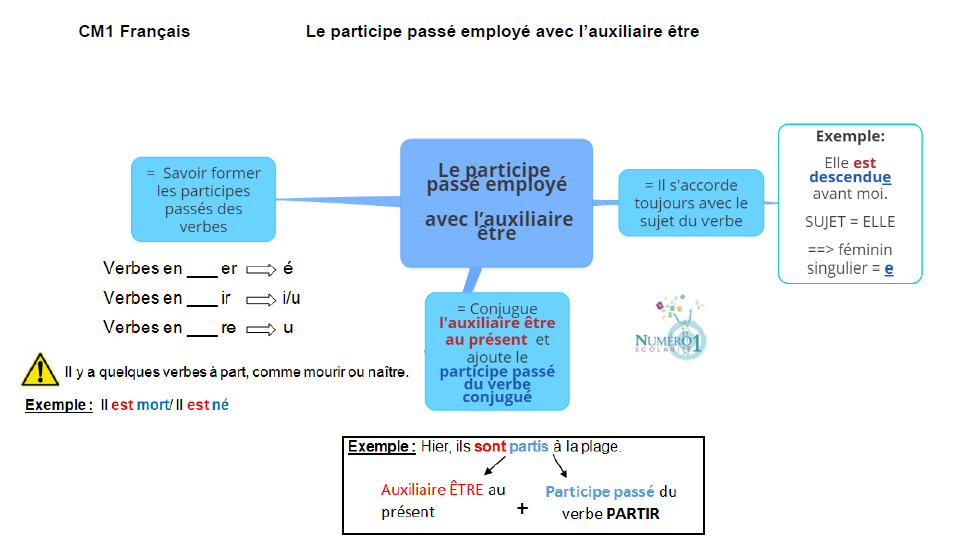
- Using the wrong auxiliary verb (avoir vs. être): This is more relevant when using the passé composé, but it's still good to be aware of. As a general rule, verbs of motion and reflexive verbs use être. (But there are, of course, exceptions...)
To avoid these mistakes, practice, practice, practice! Write sentences, read French texts, and pay attention to how the participe passé is used. And don't be afraid to make mistakes! That’s how you learn. (Trust me, I've made my fair share.)

Why Bother Learning This?
Okay, so you might be thinking, "Why do I even need to know this?" Well, using the participe passé comme adjectif will make your French sound much more natural and sophisticated. It allows you to describe things in a more nuanced and interesting way. Plus, it's essential for understanding more complex sentence structures and literary texts.
Think of it this way: instead of just saying "La porte est fermée" (The door is closed), you can say "Une porte fermée mène à un jardin secret" (A closed door leads to a secret garden). See how much more evocative that is? It adds a layer of detail and imagery to your language. So, mastering this concept is a really worthwhile investment in your French skills.
So, Back to My Café...
Thinking back to my Parisian café adventure, I now realize my mistake. While saying "un café sucré" isn't wrong (it literally means "a sugared coffee"), it's a bit too simplistic. What I probably should have said was something like "un café bien sucré" (a well-sugared coffee) to emphasize the degree of sweetness, or maybe even use a different adjective altogether, depending on what I was really trying to convey.
The moral of the story? Don't be afraid to experiment with the participe passé utilisé comme adjectif. It's a powerful tool for expressing yourself in French. Just remember to pay attention to agreement, practice regularly, and don't be afraid to make mistakes. And who knows, maybe you'll even impress a Parisian waiter (or at least avoid a raised eyebrow!). Bonne chance!