Okay, imagine this: you've spent weeks (or months, quelle horreur!) slaving away at your internship. You've learned stuff, probably spilled coffee on yourself at least once, and maybe even managed to impress your boss. Now, the dreaded moment arrives: you have to write about it. And the first page staring back at you? The dreaded page de garde. I remember staring blankly at a Word document, utterly confused. It felt like the academic equivalent of trying to parallel park in front of a crowd. Anxiety-inducing, to say the least! But fear not, mes amis, because we're diving in to demystify this essential document.
The page de garde, or cover page, of your internship report (compte rendu de stage) is like the carefully chosen outfit you wear to a job interview. It’s your first impression, so you want it to be polished, professional, and accurately represent what's inside. Think of it as your internship report's online dating profile – you want it to grab attention, but in a sophisticated, non-creepy way. (Okay, maybe that analogy went a little too far...)
What Should Be On It?
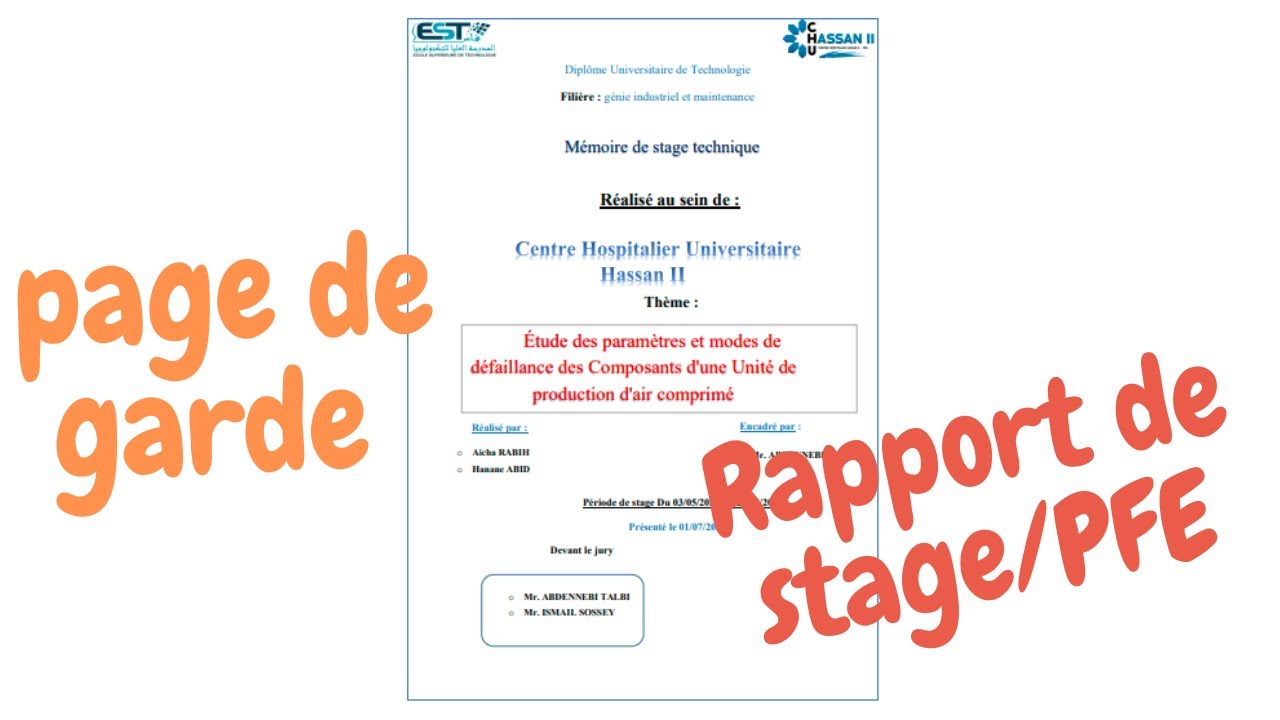
Generally, a page de garde needs to include specific information. Think of it as a checklist to avoid the dreaded "needs improvement" feedback from your professor.
- Your Name: Obviously, don't forget this one! (You'd be surprised how many people do.)
- Your Student Number: Schools love their numbers. Show them you care.
- The Name of Your Institution: Université de la Sorbonne Nouvelle? Make it look good!
- The Department/Program: Are you studying Applied Linguistics or Underwater Basket Weaving? (Okay, probably not the latter).
- The Title of the Report: Something like "Internship Report at [Company Name]" is perfectly acceptable. Be specific!
- The Name of the Company Where You Interned: And their address, just in case.
- The Dates of Your Internship: Start and end date, crystal clear.
- The Name of Your Internship Supervisor (at the Company): Show some respect for the person who put up with you for weeks.
- The Name of Your Academic Supervisor (at Your Institution): The person grading your hard work!
- The Academic Year: Because context matters.
Pro-tip: Always double-check the specific requirements of your university or program. They might have a very particular template they want you to use.
Formatting Tips
Now that you know what to include, let's talk about how to include it. Remember, presentation is key!
- Keep it Clean and Simple: Avoid clutter! No need for crazy fonts or distracting backgrounds. (Unless your internship was at a circus, maybe then...)
- Use a Professional Font: Times New Roman or Arial are safe bets. (Boring, I know, but professional!)
- Proper Alignment: Use consistent alignment (centered or left-aligned) for a polished look.
- Use a Template (If Available): If your school provides a template, USE IT! It will save you a lot of time and frustration.
Side note: Proofread, proofread, PROOFREAD! Typos on your cover page are a terrible look.

Why Does it Matter?
You might be thinking, "It's just a cover page! Does it really matter?" And the answer is, yes, it does! It's your chance to show that you're organized, detail-oriented, and capable of presenting information in a professional manner. A well-designed page de garde tells your reader that you take your work seriously. It might seem like a small detail, but it can make a big difference in how your report is received.
So, go forth and create a page de garde that you can be proud of! You've got this! And if you're still struggling, don't hesitate to ask for help from your professors or career services department. They're there to support you!