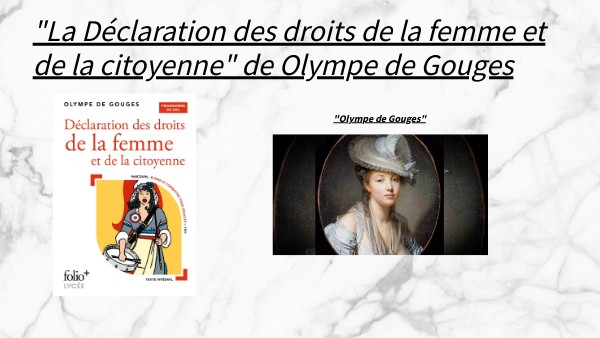
Ok, imagine this: you're at a party, the French Revolution is the topic of conversation (because, you know, it just happened), and everyone's all excited about the "Declaration of the Rights of Man and of the Citizen." Liberty! Equality! Fraternity! You're feeling pretty good... until you realize, hang on a minute, where are we in all of this? Are women supposed to just, like, stand around and look pretty while men decide the fate of the nation? That's pretty much the vibe Olympe de Gouges was picking up, and let's just say, she wasn't thrilled.
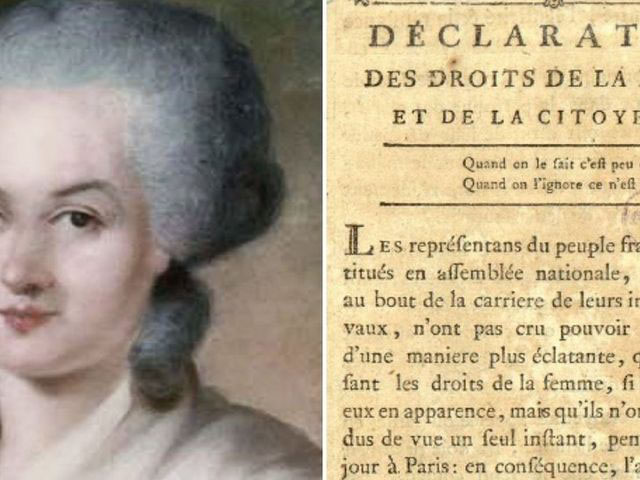
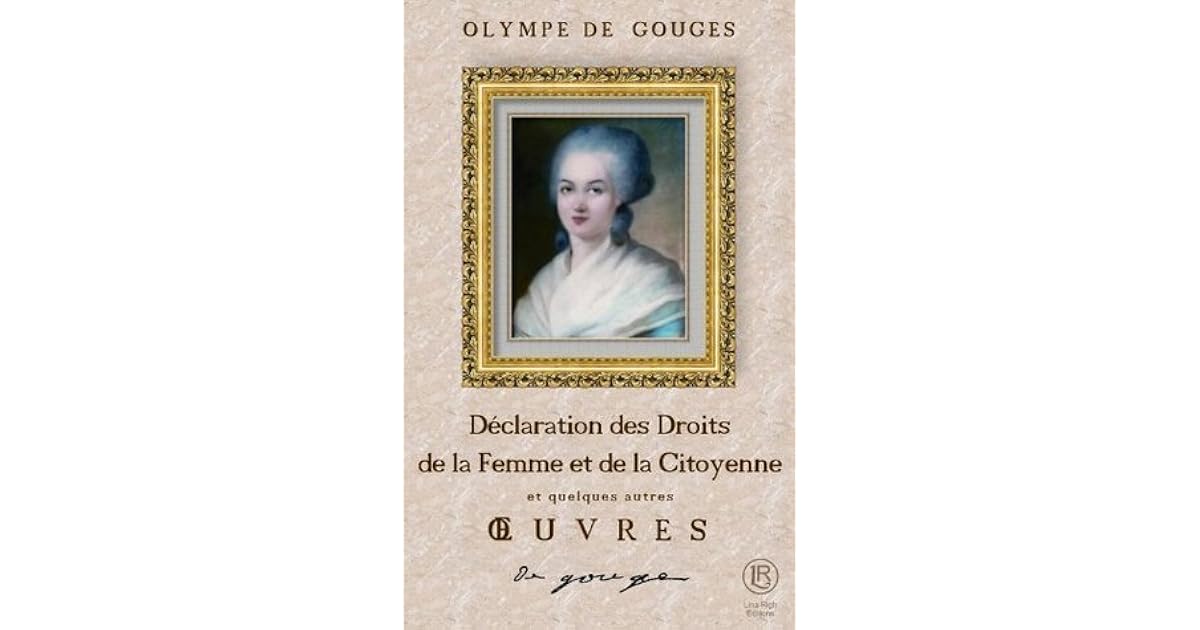
And that, my friends, is where the Declaration des Droits de la Femme et de la Citoyenne comes in. Think of it as the ultimate mic drop in the face of patriarchal revolutionary fervor.
Olympe de Gouges: Not Your Average Revolutionary
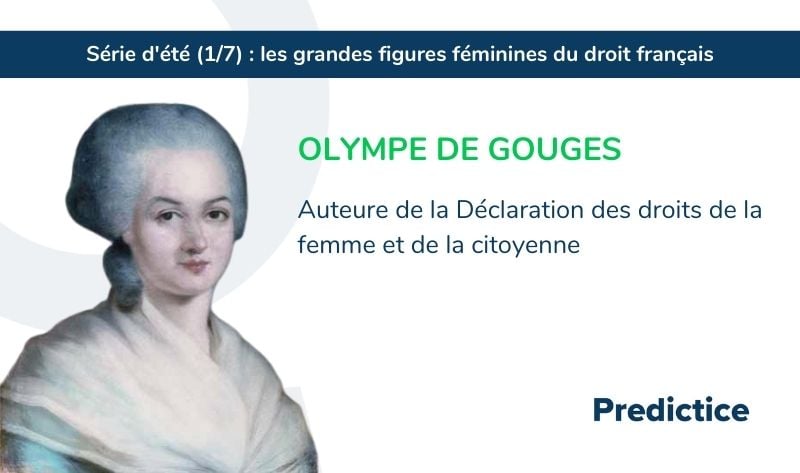
First things first, who was Olympe de Gouges? Not a household name, I know, which is a crying shame. She wasn't some aristocrat playing dress-up as a revolutionary. She was a self-educated playwright and political activist who got it. She saw the hypocrisy bubbling under the surface of the revolution: all this talk of rights, but only for certain people. Sound familiar? (Seriously, think about it. How often do we see revolutions that promise the world, but only deliver for a select few?)
De Gouges wasn't afraid to speak her mind, and boy, did she ever. She wrote plays, pamphlets, and even political treatises, all advocating for social justice, abolition of slavery (huge props for that!), and, of course, women's rights. She was a total badass, and, spoiler alert, that's probably why she ended up losing her head during the Reign of Terror. But more on that later.
The Declaration: A Point-by-Point Rebuttal (and So Much More)
So, what's so special about this Declaration? Well, it's essentially a point-by-point revision of the original "Declaration of the Rights of Man and of the Citizen," only this time, it includes women. Imagine someone taking the original document, crossing out "man" and writing in "woman" (or, you know, "woman and man") wherever necessary. That's the basic idea, but it goes much deeper than that. Let's break it down:

Key Ideas and Articles:
- Article 1: "Woman is born free and remains equal to man in rights." BOOM. Right off the bat, she's challenging the entire foundation of the social order. No more "separate but equal" nonsense.
- Sovereignty: The declaration emphasizes that sovereignty resides in the nation, which is the union of woman and man. This cleverly redefines the nation as an inclusive entity, not just a male domain.
- Laws and Rights: Laws should be the expression of the general will – but that general will must include women! If women can be punished under the law, they should also have the right to participate in its creation. Makes sense, right?
- Property Rights: Women have the right to own property. This seems obvious now, but back then? Revolutionary. Especially since, without property rights, women had very little economic independence.
- Motherhood and Illegitimacy: This is where De Gouges gets really interesting. She addresses the issue of illegitimate children, advocating for men to take responsibility for the children they fathered, even outside of marriage. She even suggests a "national decree" to require men to acknowledge their paternity and contribute to the child's upbringing. Talk about shaking things up!
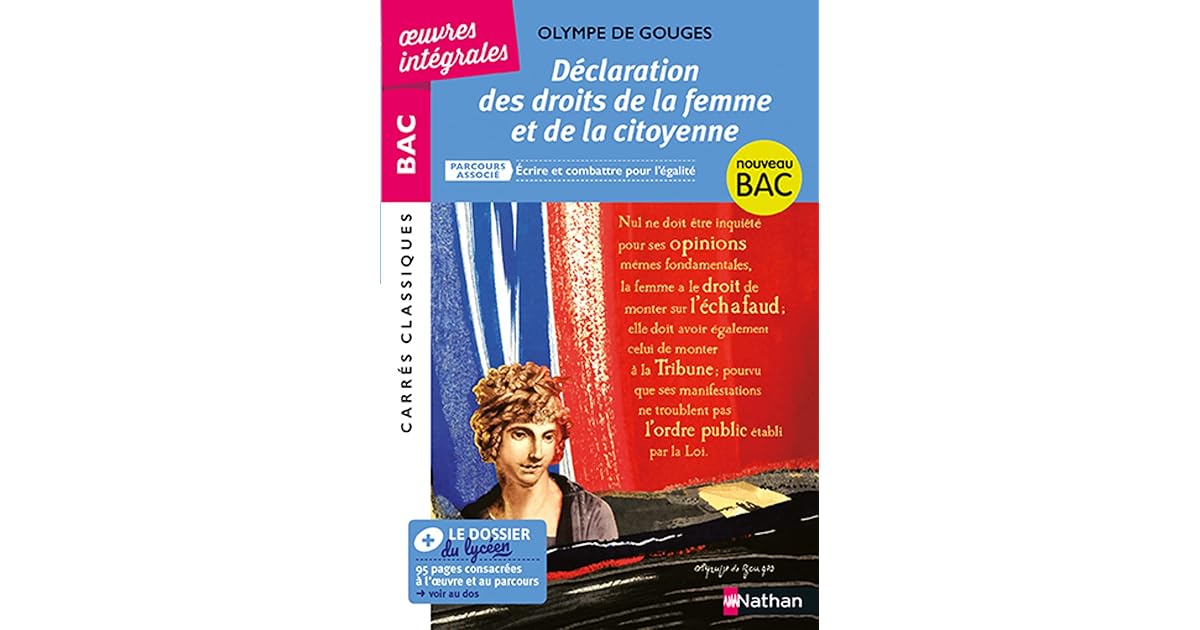
- Freedom of Speech: Article 10 is powerful: "Woman has the right to mount the scaffold; she must equally have the right to mount the rostrum." In other words, if women are willing to be punished for their actions, they should also have the right to express their opinions publicly. This directly foreshadows de Gouges' own fate.
Notice a theme here? De Gouges isn't just asking for equal rights; she's demanding equal responsibilities. She's saying, "If we're going to be part of society, we need to be part of all of it, the good and the bad." She recognized that genuine equality isn't about being treated better than men, but being treated the same. (And frankly, that's still a lesson we're learning today.)
The "Postamble": Where Things Get REALLY Interesting
After the main declaration, de Gouges includes a "Postamble," which is basically her chance to address women directly. This is where she gets even more blunt and passionate. She challenges women to wake up and demand their rights. She criticizes them for being too easily swayed by men and for focusing on frivolous things like fashion instead of fighting for their freedom.
But she also offers a vision of a better future: a future where women are educated, empowered, and able to participate fully in society. She envisions a society where marriage is based on mutual respect and equality, not on male domination. She suggests a "social contract" between men and women that would guarantee the rights and protections of both parties.

It's pretty radical stuff, even by today's standards. I mean, imagine reading this in 1791! It would have been like a nuclear bomb going off in the drawing rooms of Paris.
The Legacy (or Lack Thereof)
So, what happened? Did the Declaration des Droits de la Femme et de la Citoyenne spark a feminist revolution? Sadly, no. The French Revolution, despite all its talk of liberty and equality, wasn't exactly keen on extending those ideals to women. De Gouges' declaration was largely ignored, and she herself was eventually arrested and executed in 1793 for treason. (Basically, she criticized Robespierre, and that was a big no-no.)
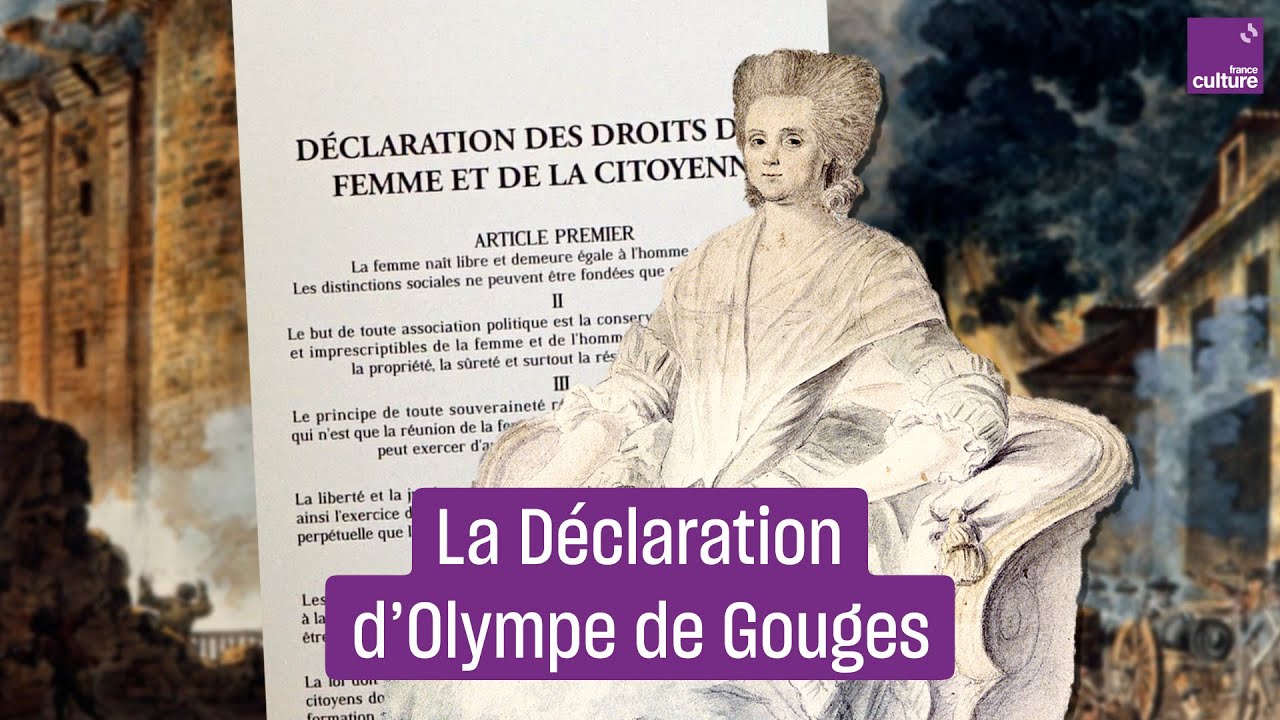
Her work faded into obscurity for a long time. For centuries, the official narrative of the French Revolution conveniently forgot about the women who fought for it, wrote about it, and even died for it. Isn't that always the way? History tends to be written by the victors…and usually, those victors are men.
Why Olympe de Gouges Still Matters
But here's the thing: Olympe de Gouges' work is more relevant than ever. Her Declaration is a powerful reminder that the fight for equality is never truly over. It's a reminder that we need to constantly question the assumptions and power structures that perpetuate injustice. It's a reminder that revolutions, even the most well-intentioned ones, can easily leave people behind.
And, perhaps most importantly, it's a reminder that one person can make a difference. De Gouges didn't have power, wealth, or status, but she had a voice, and she used it fearlessly. She challenged the status quo, spoke truth to power, and dared to imagine a world where women were truly free and equal. That's a legacy worth remembering, and a fight worth continuing. So next time you hear someone talking about the French Revolution, remember Olympe de Gouges, and ask, "But what about the women?" You might be surprised by the answers you get. And if not, maybe it's time to write your own declaration.