Ah, Le Bal des Folles! Or, as I like to call it, "Ladies Gone Slightly Mad (Allegedly)." Let's dive into this whirlwind of corsets, questionable diagnoses, and societal judgment, shall we? Grab your smelling salts, darling, because we're about to dissect this novel like a particularly juicy melon.
The Asylum: Where "Crazy" Went to Vacation (and Never Left)
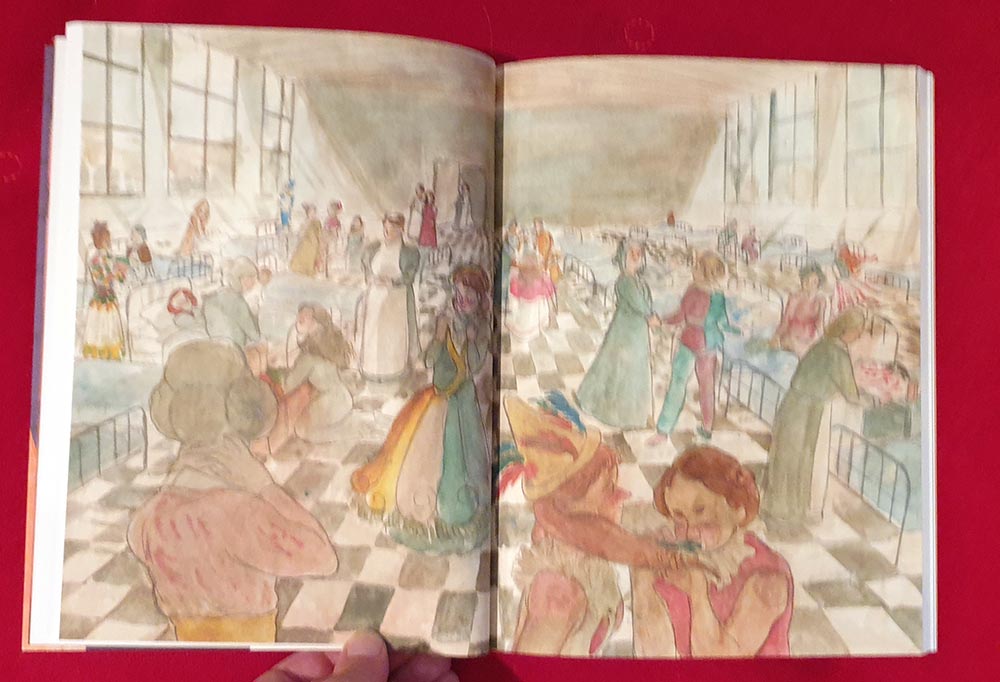
First things first, let's talk about La Salpêtrière. It wasn't exactly the Ritz-Carlton, was it? More like a very, very large and drafty dormitory with questionable healthcare practices. Picture this: instead of fluffy robes and cucumber water, you get ill-fitting gowns and a hearty dose of... well, whatever Dr. Charcot was dishing out that day.
This asylum, my friends, becomes the stage for our drama. It's a microcosm of 19th-century Parisian society, where women who dared to be anything other than perfectly docile and agreeable were conveniently labeled "hysterical" and locked away. Think of it as the ultimate time-out corner, only with more straitjackets and fewer juice boxes.
But what exactly qualified someone for a Salpêtrière stay? Buckle up, because the criteria were... shall we say, flexible. Here's a taste:
- Reading too many books: Apparently, independent thought was a sign of impending doom. Who knew libraries were so dangerous?
- Being a bit too opinionated: Heaven forbid a woman have an opinion! It clearly meant she was possessed by demons... or just really, really wanted to vote.
- Having a husband who wanted you gone: Ah, the classic. "She's hysterical, I swear! It's not because I'm having an affair with the maid, no siree!"
- Being poor and unmarried: Because obviously, struggling to survive is a mental illness. Makes perfect sense. (Wink, wink)
You see, the beauty of "hysteria" was its convenient ambiguity. It could be applied to virtually any woman who didn't fit the patriarchal mold. It was the ultimate catch-all diagnosis, a get-out-of-responsibility-free card for men who wanted to control the women in their lives. Clever, isn't it? (Evil, but clever.)
Enter the Players: A Cast of Characters (Mostly Mad… or Just Misunderstood)
Let's meet our protagonists, shall we? We've got a delightful mix of patients, doctors, and other assorted characters, each with their own agendas and secrets.
Eugénie: The Girl Who Saw Too Much
Our main character, Eugénie, is a fascinating case. She comes from a wealthy family, but unlike her peers, she possesses a rather inconvenient gift: she can see spirits. Now, in the 21st century, we might call her a psychic and give her a reality TV show. But in 19th-century Paris, she was labeled a hysteric and promptly shipped off to La Salpêtrière. Talk about a career change!
Eugénie is smart, independent, and deeply empathetic. She questions the world around her and refuses to blindly accept societal norms. This, of course, makes her a dangerous woman in the eyes of the establishment. Because what's scarier than a woman who thinks for herself? (The answer, according to 19th-century men: pretty much anything.)
Dr. Charcot: The Showman of Science
Ah, Dr. Charcot. The man, the myth, the neurologist with a flair for the dramatic. He's the head honcho at La Salpêtrière and a leading expert on… well, everything, apparently. He's famous for his public demonstrations of hypnosis, where he'd put patients into trances and have them perform various feats. Think of it as a 19th-century version of a magic show, only with more medical jargon and less rabbits.
Now, Charcot's intentions are… complicated. On the one hand, he genuinely seems interested in understanding hysteria and finding treatments for his patients. On the other hand, he's also a bit of a showman, eager to impress his colleagues and maintain his reputation. He's a product of his time, caught between scientific curiosity and societal expectations. In short, he's a fascinatingly flawed character.
The Other Inmates: A Chorus of Forgotten Voices
Beyond Eugénie, the asylum is populated by a diverse cast of women, each with their own stories and struggles. There's Thérèse, the former prostitute who's been driven mad by poverty and abuse. There's Louise, the young woman who was committed by her family after she became pregnant out of wedlock. And there's Henriette, the elderly woman who simply couldn't adjust to the changing times.
These women are the heart of the novel. They represent the countless forgotten voices of women who were silenced and marginalized by a patriarchal society. Their stories are heartbreaking, infuriating, and ultimately, incredibly powerful. They remind us that "madness" is often just a symptom of a society that refuses to listen.
The Bal des Folles: A Night of Masks and Madness (and Questionable Entertainment)
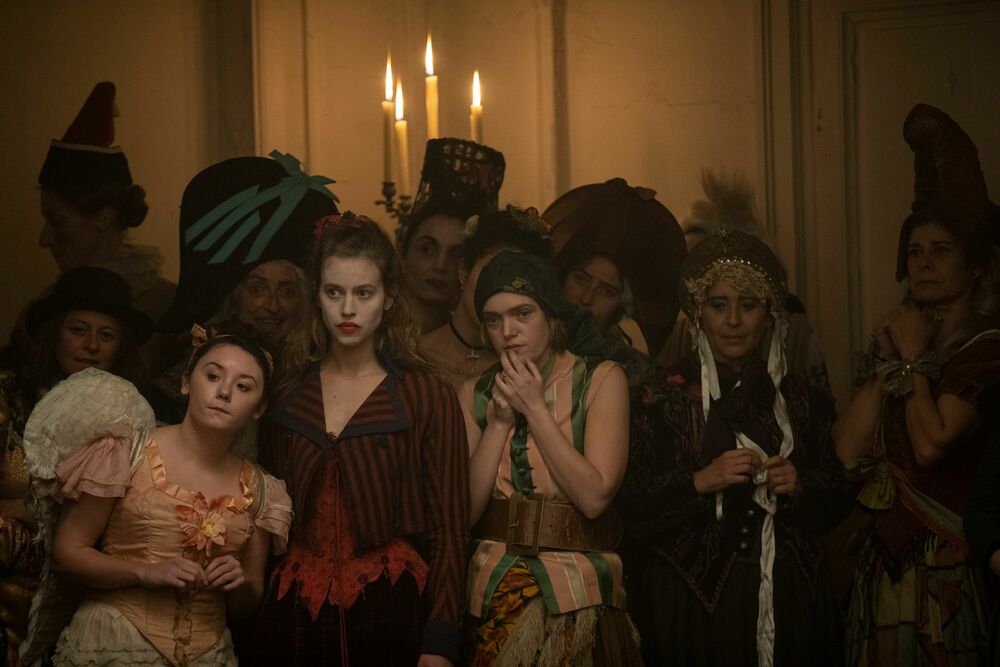
The titular "Bal des Folles" (the Ball of the Madwomen) is a key event in the novel. It's an annual masquerade ball held at La Salpêtrière, where Parisian society comes to gawk at the inmates and enjoy a night of… well, questionable entertainment. Think of it as a Victorian-era freak show, only with more champagne and fancy dresses.
The ball is supposed to be a charitable event, raising money for the asylum. But let's be honest, it's really just an excuse for the upper class to indulge in a bit of voyeuristic pleasure. They get to dress up in their finest clothes, dance to the music, and feel superior to the "crazies" on display. It's a truly grotesque spectacle, highlighting the vast social inequalities of the time.
For the inmates, the ball is a mixed bag. On the one hand, it's a chance to escape the monotony of their daily lives and experience a bit of glamour and excitement. On the other hand, it's also a humiliating reminder of their status as objects of curiosity and pity. They're paraded around like animals in a zoo, their dignity stripped away for the entertainment of the wealthy.
Themes and Motifs: Unpacking the Underlying Messages
Le Bal des Folles is more than just a historical drama. It's a novel that explores a number of important themes and motifs, including:

- The treatment of women in the 19th century: This is the big one. The novel is a scathing critique of the patriarchal society that confined women to narrow roles and punished them for daring to deviate from the norm.
- The definition of "madness": The novel challenges our understanding of mental illness and questions the criteria used to diagnose and treat it. Is "madness" a biological condition, or is it a social construct?
- The power of knowledge: Eugénie's ability to see spirits gives her a unique perspective on the world, but it also makes her a target for those who fear what they don't understand.
- The importance of empathy: The novel emphasizes the need to listen to and understand the experiences of others, especially those who are marginalized and oppressed.
- The dangers of societal expectations: The novel illustrates how societal pressures can drive people to madness, particularly women who are forced to conform to unrealistic ideals.
The motifs are equally telling:
- Confinement: The asylum itself is a symbol of confinement, both physical and metaphorical. The women are trapped within its walls, but they're also trapped by societal expectations and patriarchal control.
- Vision: Eugénie's ability to see spirits is a symbol of insight and understanding. But it also represents the dangers of seeing too much, of knowing things that others don't want to know.
- Masks: The masquerade ball is a literal representation of the masks that people wear to hide their true selves. The women at the asylum are forced to wear the mask of "madness," while the wealthy attendees wear the mask of respectability.
- Silence: The silence of the women at the asylum is a symbol of their oppression. They're not allowed to speak their minds, to share their stories, or to challenge the status quo.
Historical Accuracy: How Much of It is True?
Now, a word about historical accuracy. Le Bal des Folles is a work of fiction, but it's based on real events and historical figures. La Salpêtrière was a real asylum, and Dr. Charcot was a real neurologist who did indeed conduct public demonstrations of hypnosis. (Whether those demonstrations were ethical is another question entirely.)
The novel draws heavily on historical accounts of life inside the asylum, including patient records, medical journals, and eyewitness testimonies. The author, Victoria Mas, clearly did her research. However, she also took some liberties with the facts in order to create a compelling narrative. Eugénie, for example, is a fictional character, as are many of the other inmates.
So, how much of the novel is "true"? Well, it's impossible to say for sure. But what's important is that the novel captures the essence of the era and sheds light on the experiences of women who were marginalized and silenced. It's a fictional story, but it's rooted in historical reality.
The Ending: A Spark of Hope in the Darkness
I won't spoil the ending for you, but I will say that it's both bittersweet and hopeful. Eugénie finds a way to escape the asylum and reclaim her life, but not without a cost. She's forever changed by her experiences, but she emerges stronger and more determined than ever.
The ending is a reminder that even in the darkest of times, hope can still flicker. It's a testament to the resilience of the human spirit and the power of female solidarity. It's also a call to action, urging us to continue fighting for equality and justice for all.

Why Should You Read It? (Besides My Brilliant Analysis, Of Course)
So, why should you read Le Bal des Folles? Well, aside from the fact that I've just given you a truly spectacular analysis (humble brag!), here are a few more reasons:
- It's a gripping story: The novel is full of suspense, intrigue, and emotional drama. You'll be hooked from the first page to the last.
- It's historically informative: The novel provides a fascinating glimpse into 19th-century Parisian society and the treatment of women during that era.
- It's thought-provoking: The novel raises important questions about mental illness, gender inequality, and the power of societal expectations.
- It's beautifully written: Victoria Mas is a talented writer, and her prose is both elegant and evocative.
- It's a reminder that we've come a long way, but still have further to go: The themes explored in the novel are still relevant today, reminding us that the fight for equality is far from over.
Le Bal des Folles and Modern Relevance: Are We Really That Different?
It's easy to read Le Bal des Folles and think, "Wow, those Victorians were really messed up! Glad we're not like that anymore." But are we really that different? Let's be honest, societal expectations still play a huge role in shaping women's lives. And while we may not be locking women up in asylums for reading too many books, we still often judge and criticize them for deviating from the norm.
Think about the pressure women face to be thin, beautiful, and successful. Think about the double standards that exist in the workplace and in relationships. Think about the way women are often silenced and marginalized in public discourse. Are these not just modern-day forms of "hysteria"?
Le Bal des Folles reminds us that the fight for female empowerment is an ongoing battle. We may have made progress, but we still have a long way to go before women are truly equal. The book's exploration of mental health stigma is also incredibly relevant. We've come a long way in understanding mental illness, but stigma persists. The novel's depiction of how societal pressures can exacerbate mental health issues is a timely reminder of the need for empathy and support.
Dr. Charcot's Hypnosis: Science or Spectacle?
Dr. Charcot's use of hypnosis is a central element of the novel, and it raises some interesting questions about the nature of science and spectacle. Was Charcot genuinely trying to understand and treat hysteria, or was he simply exploiting his patients for personal gain? The answer, as with most things, is probably somewhere in between.
On the one hand, Charcot was a pioneering neurologist who made significant contributions to our understanding of the brain. He was one of the first to recognize that hysteria was a legitimate medical condition, and he developed new methods for diagnosing and treating it. On the other hand, he was also a bit of a showman who enjoyed the attention and admiration that came with his public demonstrations. He sometimes seemed more interested in impressing his colleagues than in actually helping his patients.
The novel doesn't shy away from depicting the ethical complexities of Charcot's work. It shows how his methods could be both helpful and harmful, and it raises questions about the power dynamics between doctor and patient. It also highlights the dangers of reducing complex human experiences to simple medical diagnoses.

Charcot's hypnosis demonstrations, with their theatricality and performative aspects, blur the lines between science and spectacle. The patients, under hypnosis, become performers, their bodies and minds on display for the audience's entertainment. This raises ethical concerns about consent, exploitation, and the potential for harm. The novel challenges us to consider the ways in which science can be used for both good and ill, and to be critical of those who wield power in the name of science.
Beyond the Book: Further Exploration of the Era
If Le Bal des Folles has piqued your interest in 19th-century Parisian society and the history of women's mental health, there are plenty of other resources you can explore. Here are a few suggestions:
- Read historical accounts of life inside La Salpêtrière: There are a number of books and articles that provide first-hand accounts of what it was like to be a patient at the asylum. These accounts can offer valuable insights into the experiences of the women who were confined there.
- Learn more about Dr. Charcot and his work: There are biographies of Charcot that delve into his life, his career, and his contributions to neurology. You can also find articles and essays that analyze his methods and his ethical dilemmas.
- Explore the history of women's mental health: There are many books and articles that trace the evolution of our understanding of women's mental health and the ways in which women have been treated for mental illness throughout history.
- Watch documentaries or films about 19th-century Paris: There are a number of documentaries and films that bring the world of 19th-century Paris to life. These can help you to visualize the setting of Le Bal des Folles and to understand the social and cultural context of the novel.
- Visit museums and historical sites: If you have the opportunity, consider visiting museums and historical sites that are related to 19th-century Paris and the history of medicine. These can provide a tangible connection to the past and help you to deepen your understanding of the era.
By exploring these resources, you can gain a richer and more nuanced understanding of the world of Le Bal des Folles and the issues it raises.
The Enduring Power of Le Bal des Folles
Le Bal des Folles is a novel that stays with you long after you've finished reading it. Its powerful story, compelling characters, and thought-provoking themes make it a truly unforgettable experience. It's a book that challenges us to question our assumptions, to empathize with others, and to fight for a more just and equitable world.
The novel's enduring power lies in its ability to connect with readers on a deep emotional level. It's a story about women who were silenced and marginalized, but it's also a story about hope, resilience, and the power of the human spirit. It's a story that reminds us that even in the darkest of times, we can find strength in each other and fight for a better future.
So, go ahead, read Le Bal des Folles. You might just find yourself a little bit mad... about how good it is! And if anyone asks why you're suddenly obsessed with 19th-century Parisian asylums, just tell them you're doing it for the sake of literary analysis. (And blame me, of course.)
In Conclusion: Was it all just a bit… Hysterical?
So, after all this deep diving and witty banter, what's the final verdict on Le Bal des Folles? Is it a profound commentary on societal injustice and the plight of women, or just a melodramatic romp through an asylum? Well, my dear reader, it's both! It's a brilliantly crafted novel that manages to be both entertaining and thought-provoking, a historical drama with a distinctly modern edge. And if that doesn't make you want to read it, I don't know what will. Now, if you'll excuse me, I'm off to practice my fainting spells. You know, for research purposes. wink