Bonjour mes amis! Let's chat about a play, shall we? A rather…unsettling one. We're diving into Ionesco's La Leçon (The Lesson). Ever heard of it? It's a wild ride, I promise you that!
Imagine this: a bright, eager student arrives for a tutoring session. Sounds innocent enough, right? Wrong! This isn't your typical algebra lesson.
Setting the Stage: An Ordinary Room Turned Strange
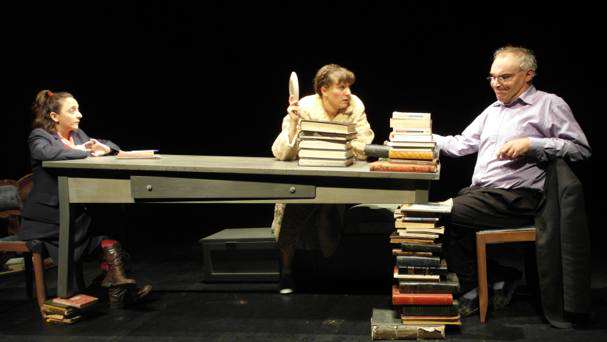
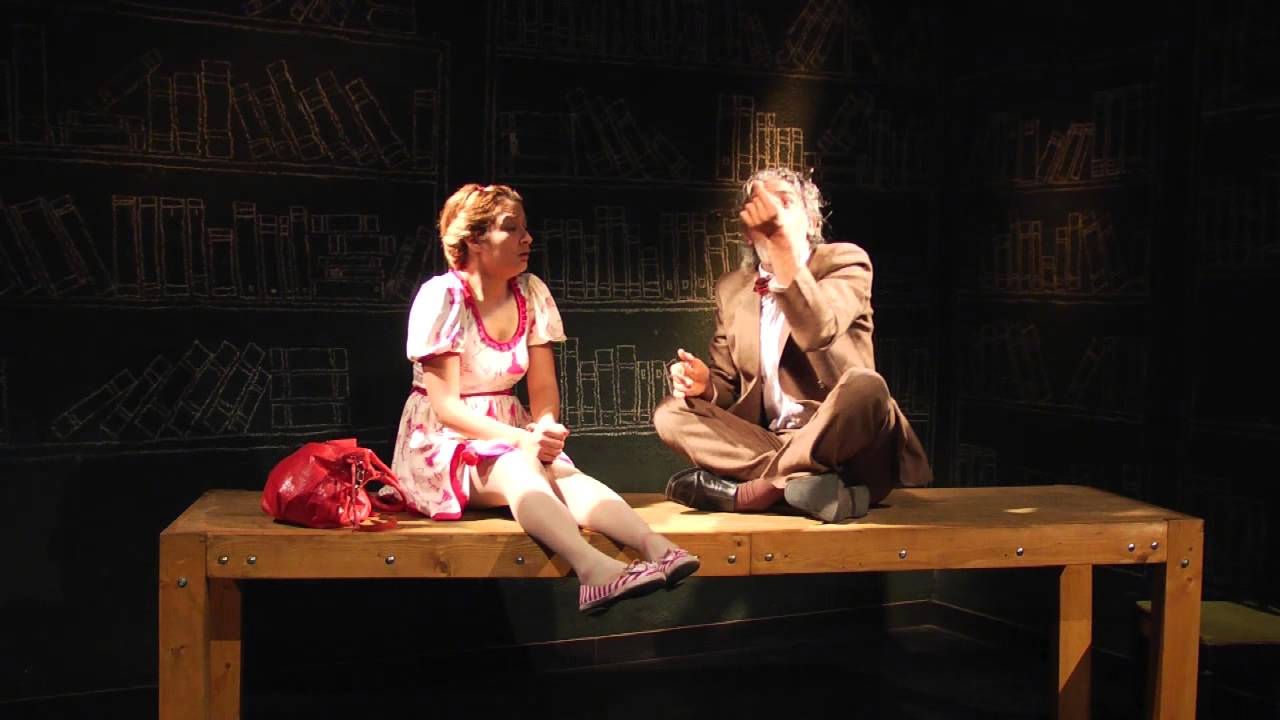
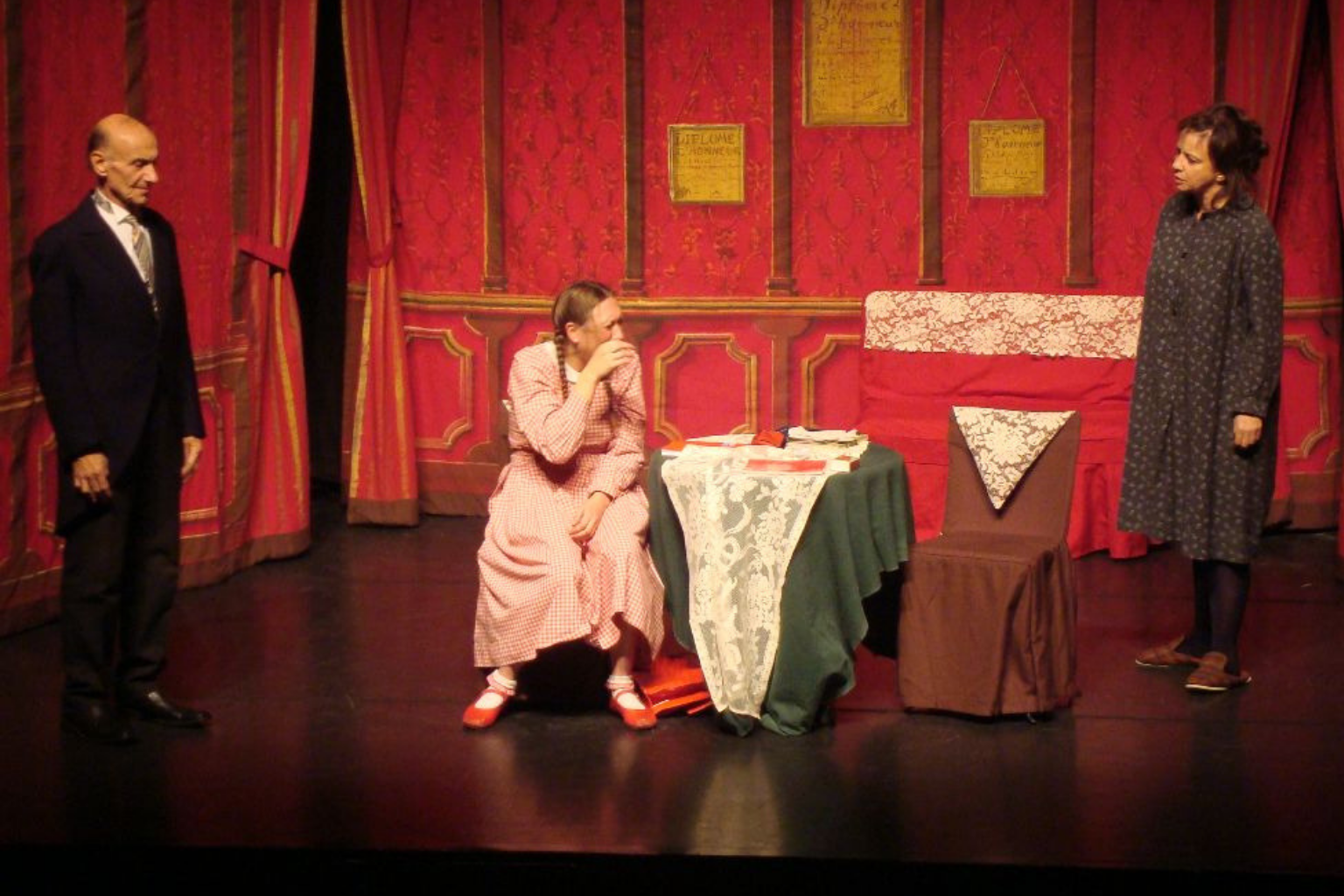
We’re in a rather ordinary room. Nothing special. Think of a slightly dusty study, perhaps. There's a teacher, old and seemingly harmless. And the student? Oh, she's full of optimism. Too much, perhaps? But that's part of the charm, isn't it?
The professor's house is ordinary. You know the kind: a bit cluttered, probably smells faintly of old books and maybe...a hint of something indefinable. The mundane amplifies the growing horror, n'est-ce pas?
The Lesson Begins: Math, Language, and Madness
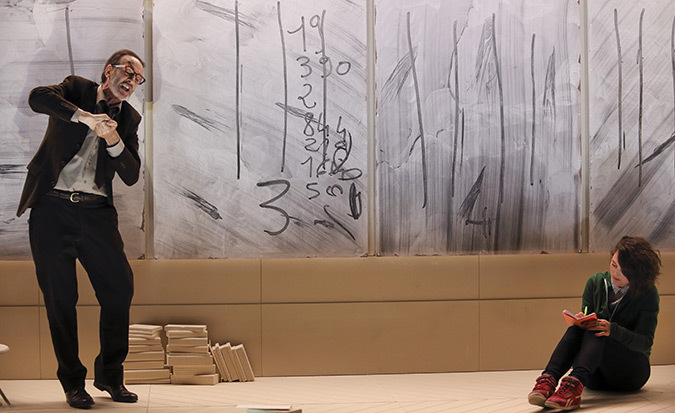
At first, the lesson focuses on simple arithmetic. Child's play! But things quickly take a turn. The professor starts to ask increasingly bizarre and illogical questions. Are we still talking math? It's debatable!
Then comes the linguistics lesson. Now, I love languages! But the way Ionesco twists and turns words...it's both fascinating and deeply disturbing. He invents words, messes with grammar, and generally throws logic out the window. Why? To show us the absurdity, bien sûr!
The Breakdown: A Descent into Chaos
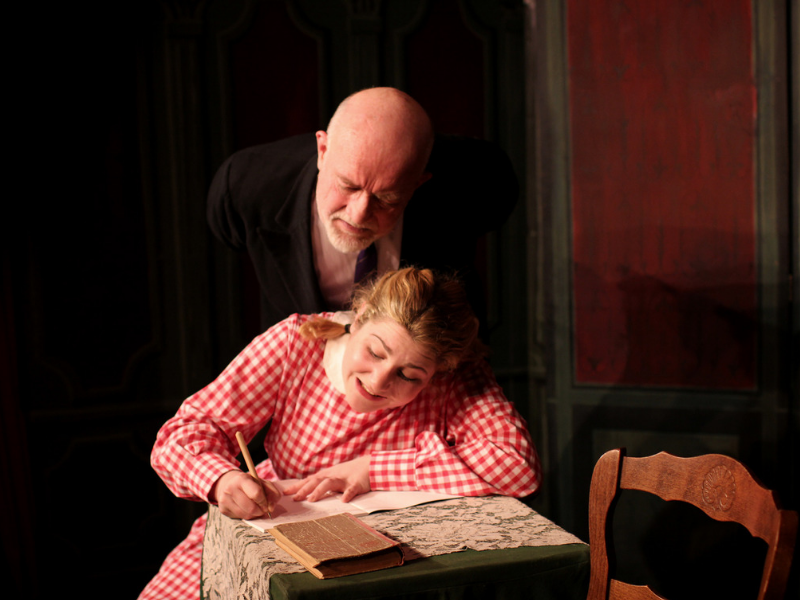
The student, initially so bright and enthusiastic, becomes increasingly confused and agitated. Can you blame her? The professor's ramblings are nonsensical. It's a systematic dismantling of her sanity. Bit by bit, the professor erodes her confidence, her understanding, her very being.
He overwhelms her with knowledge, or rather, what passes for knowledge in his world. It's a form of intellectual bullying, masked as education. A truly insidious form of power play, wouldn't you agree?
The Climax: A Violent End
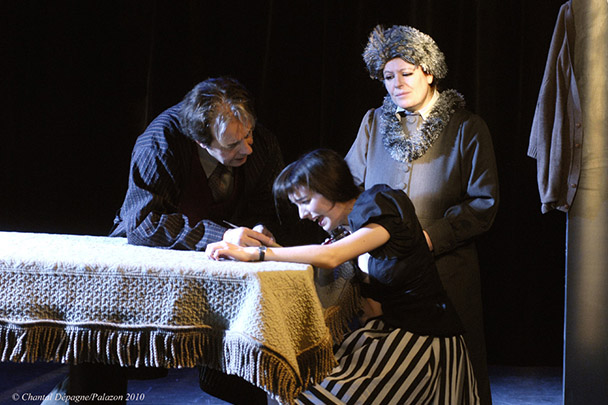
The lesson culminates in a horrifying crescendo. The professor, fueled by his own distorted logic, "kills" the student. Figuratively? Literally? Ionesco leaves it ambiguous, which, frankly, is even more unsettling. It’s implied that this has happened numerous times. How many students have suffered this fate? The play suggests countless.
Violence is central, but it's more than just physical. It's linguistic, psychological, and ultimately, existential. The professor doesn't just attack her body, he attacks her mind, her identity. He strips her bare, leaving her vulnerable and broken.
And the maid? She’s seen it all before. A silent witness to the cycle of abuse. She cleans up the mess, ready for the next unsuspecting student. A grim routine, indeed!
Themes Explored: Power, Language, and Absurdity
La Leçon isn't just a bizarre story; it's a powerful allegory. What's Ionesco really trying to say? Ah, that's the fun part! We get to interpret it!
Power dynamics are a central theme. The professor wields his knowledge (however warped) as a weapon. He exerts control over the student, manipulating her through language and intimidation. Does this remind you of anything in the real world?
The nature of language itself is questioned. Ionesco shows how language can be used to manipulate, to confuse, and even to destroy. Words can be weapons, after all.
And of course, there's the absurdity of existence. Ionesco was a master of the Theatre of the Absurd. He highlights the meaninglessness of life, the futility of human endeavors. It's dark, yes, but also strangely liberating. We’re all in this together, after all, trying to make sense of a world that often makes none!
This play makes one wonder: Is education always a force for good? Or can it be used as a tool for oppression? Does language enlighten, or does it obfuscate? Ionesco challenges us to consider these questions.
Why Should You Care? The Relevance Today
So, why bother with a play written decades ago? Because the themes are timeless! The abuse of power, the manipulation through language, the absurdity of it all...these are things we still see in the world today. In politics, in education, in everyday interactions.

La Leçon holds up a mirror to society, forcing us to confront uncomfortable truths. It's a reminder to be critical, to question authority, and to never blindly accept what we're told.
A Final Thought
Despite the darkness and the disturbing themes, La Leçon is also strangely funny. It's a dark humor, of course, but it's there. Ionesco's use of language is so absurd, so over-the-top, that it can't help but make you laugh. Maybe it's a nervous laugh, but a laugh nonetheless!
The experience of reading or watching La Leçon can be profoundly thought-provoking. Its lack of definitive resolution provides a lot of material to reflect on. It makes us ponder on the very nature of reality, communication, power, and even the validity of conventional knowledge. Isn't that a worthwhile endeavor?
So, next time you're looking for something a little different, a little challenging, give La Leçon a try. You might be surprised by what you discover. And who knows, maybe we can discuss it over coffee next time. À bientôt!