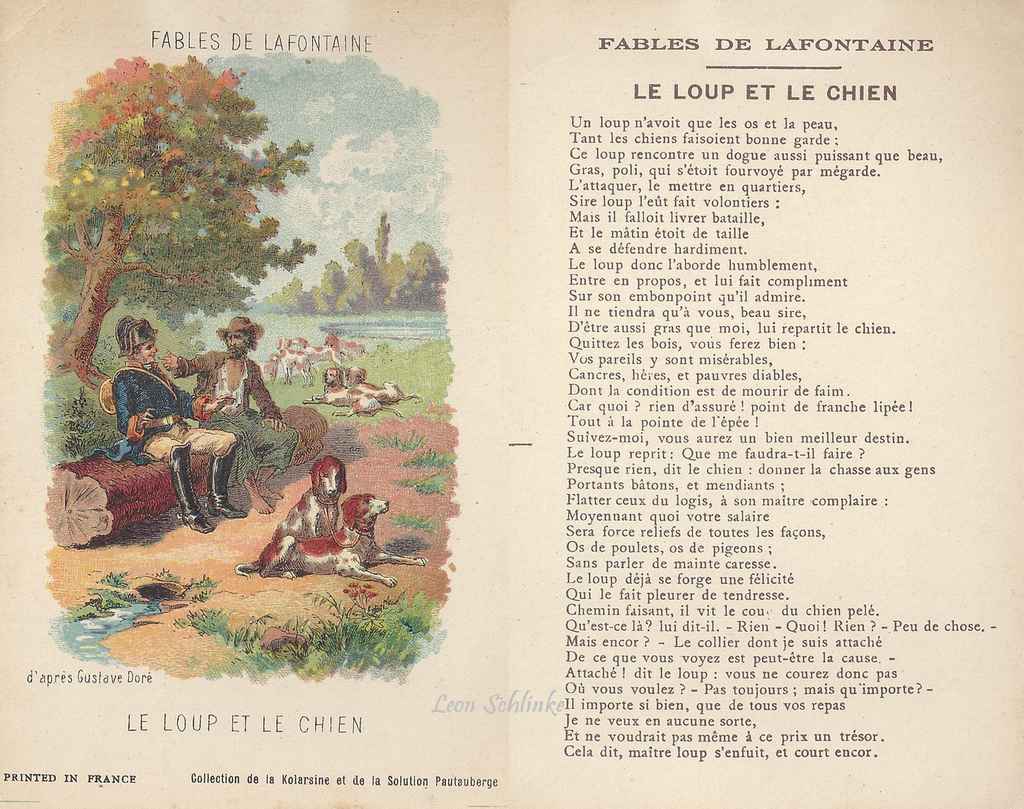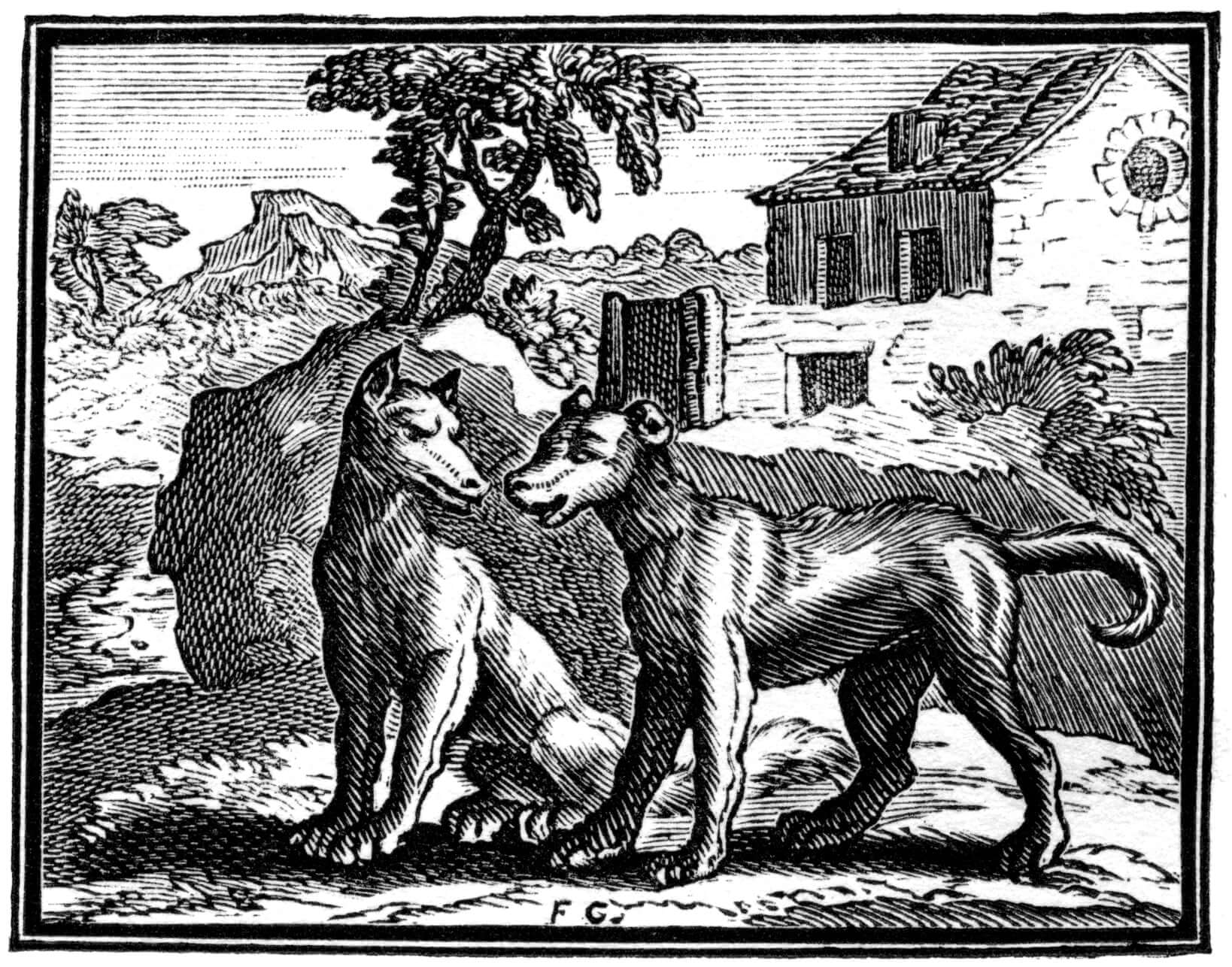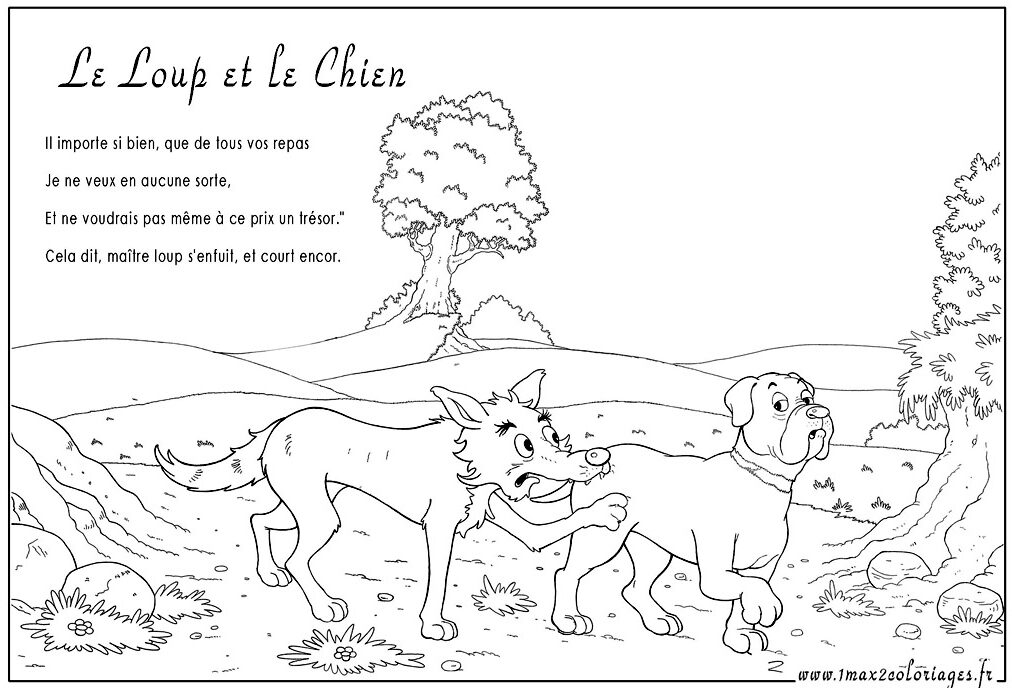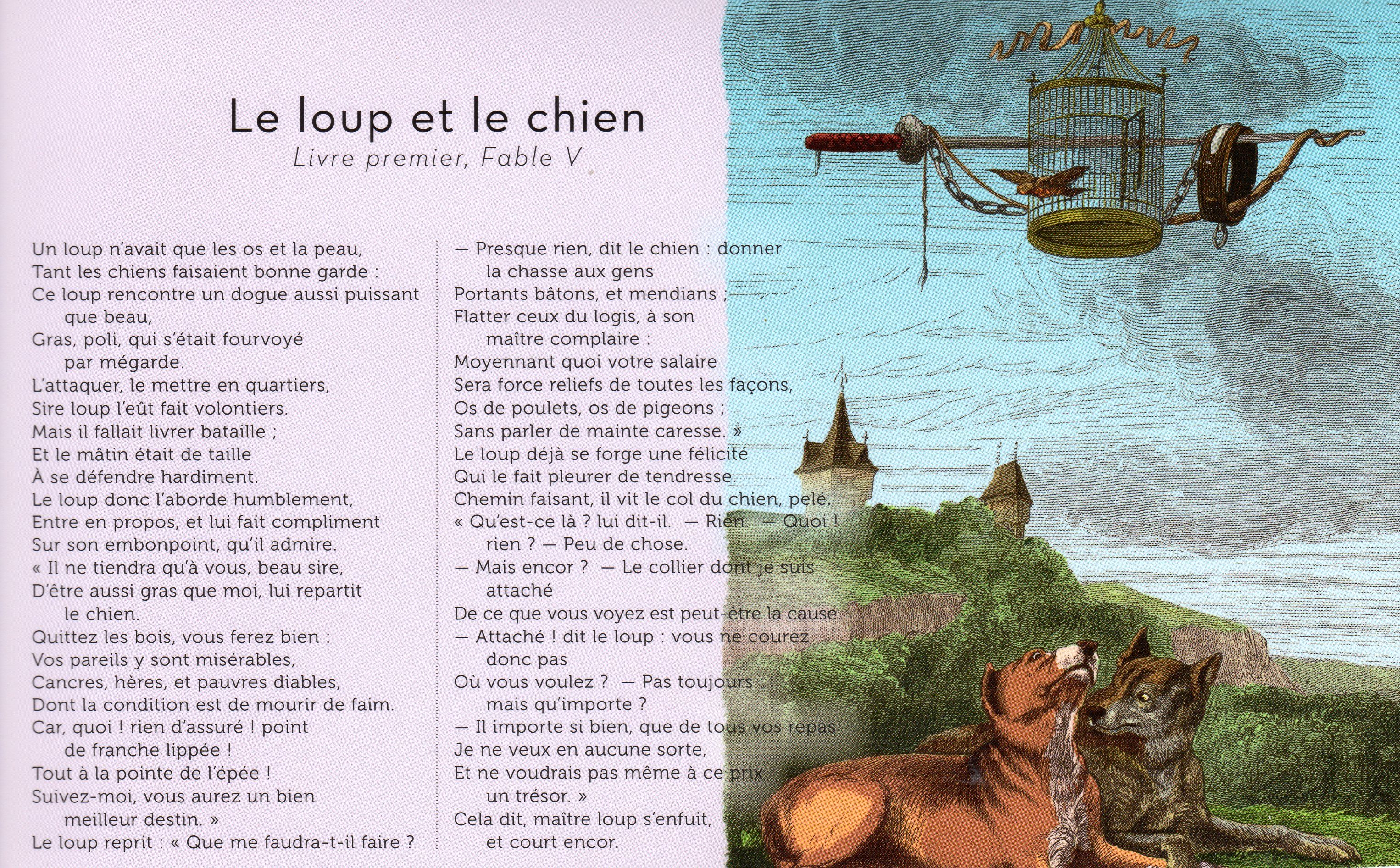
Bonjour, mes amis! Get ready for a tale as old as, well, probably slightly older than your grandma’s prized porcelain poodle. We're diving headfirst into the whimsical world of Jean de La Fontaine and his timeless fable, “Le Chien et le Loup” (The Dog and the Wolf). Don't worry if your French is a bit rusty; we'll navigate this together, armed with humor, helpful translations, and maybe a baguette or two (for sustenance, naturellement!).
The Setup: Ruff Times for a Ravenous Rogue
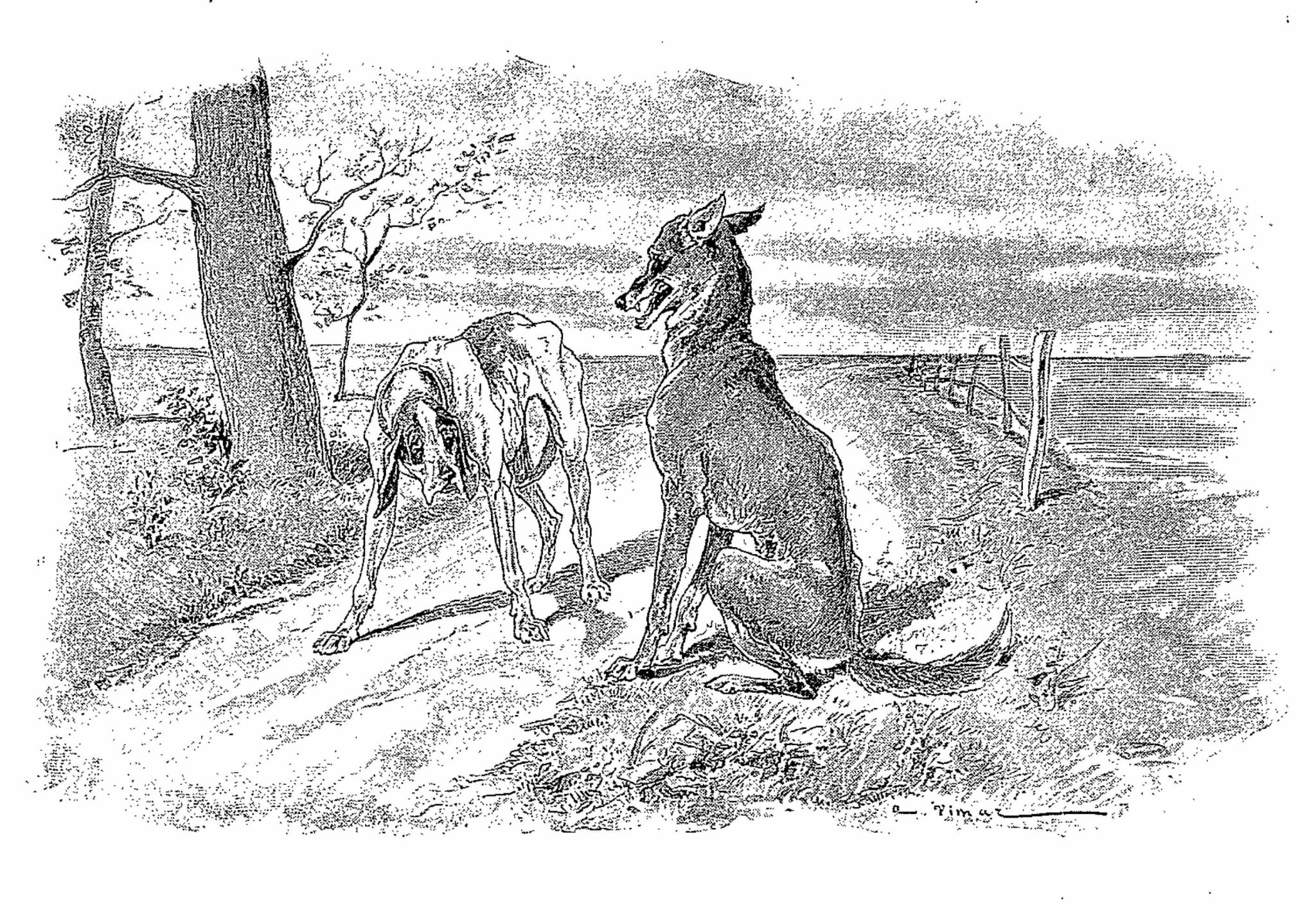
Our story kicks off with a wolf. Not just any wolf, mind you, but a seriously hangry wolf. Imagine that feeling you get when you've skipped lunch, accidentally eaten your coworker's yogurt, and then realized you forgot your wallet at home. Now amplify that by, oh, about a thousand. This wolf is starving.
He’s lean, mean, and probably dreaming of fluffy sheep and succulent rabbits. Let’s just say his stomach is singing the blues, and it’s not a pretty tune. He's on a mission, folks, a mission for sustenance! Survival of the fittest, and all that jazz. He's ready to rumble... or rather, chomp.
The Encounter: A Canine Coincidence?
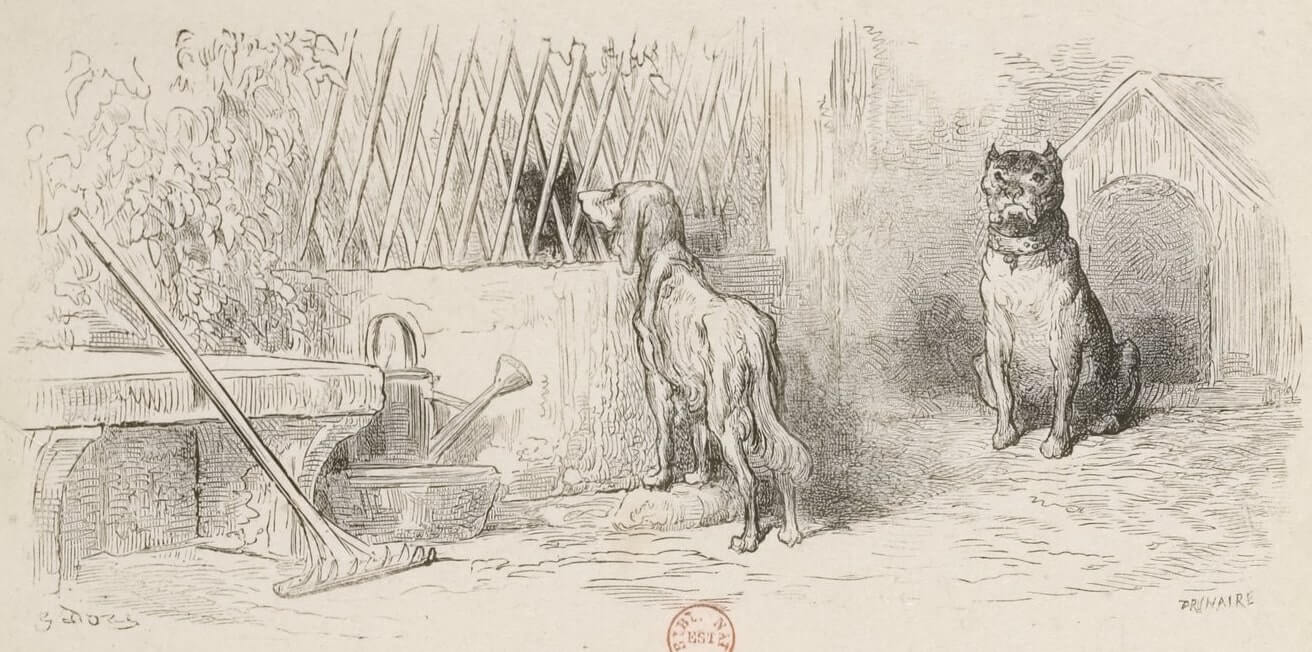
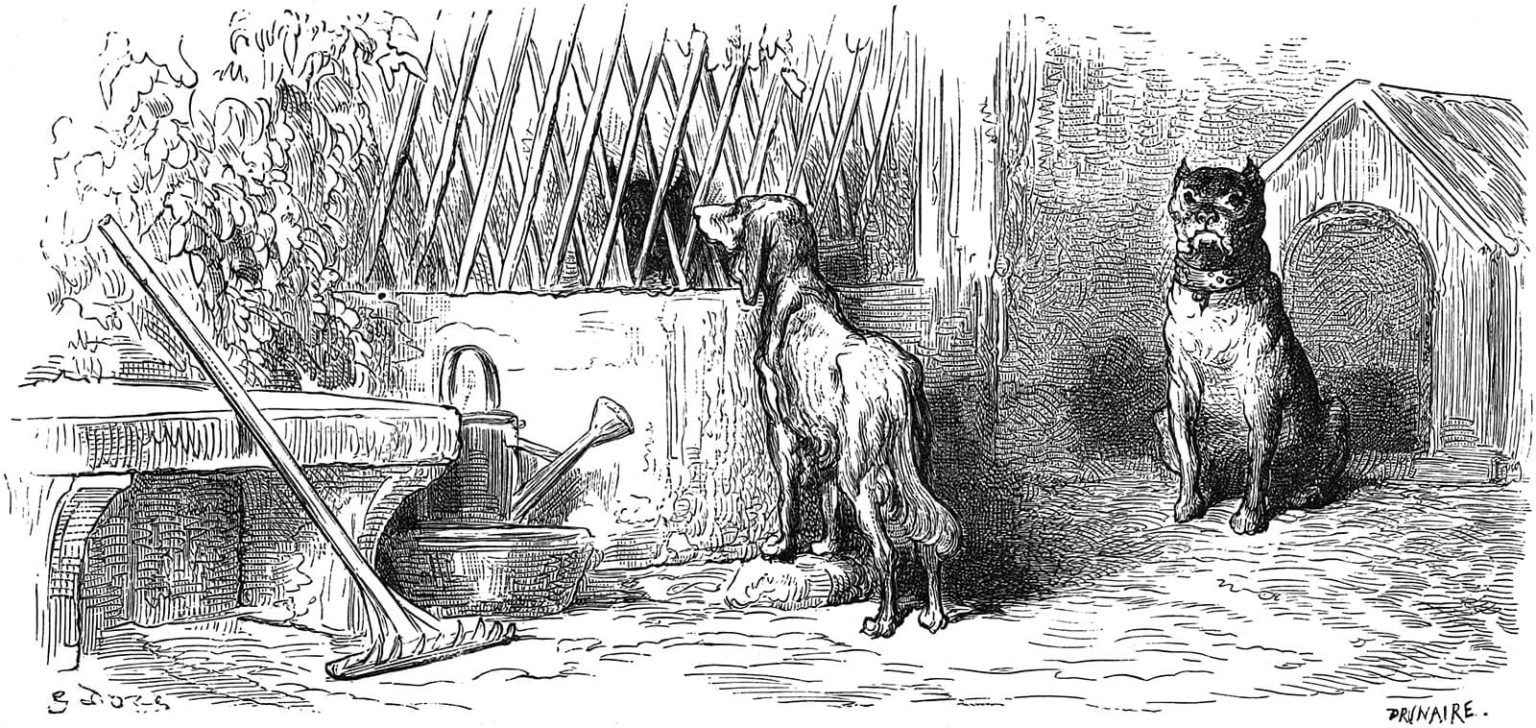
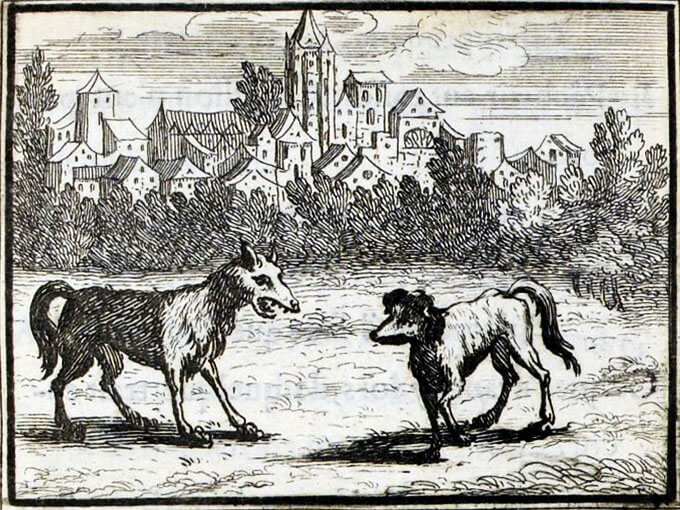
As luck (or perhaps La Fontaine’s narrative design) would have it, our famished friend stumbles upon a dog. Now, this isn't your average, run-of-the-mill mutt. This canine companion is, shall we say, well-fed. We're talking pampered pooch, the kind that probably gets gourmet kibble delivered to its doorstep. This dog is living the high life, the belle vie, if you will.
He's got a glossy coat, a wagging tail, and probably thinks belly rubs are a basic human right. In short, he's the antithesis of our scrawny, starving wolf. Think of it as a canine version of "The Prince and the Pauper," only with significantly more fur.
A Conversation Begins (with a Hint of Suspicion)
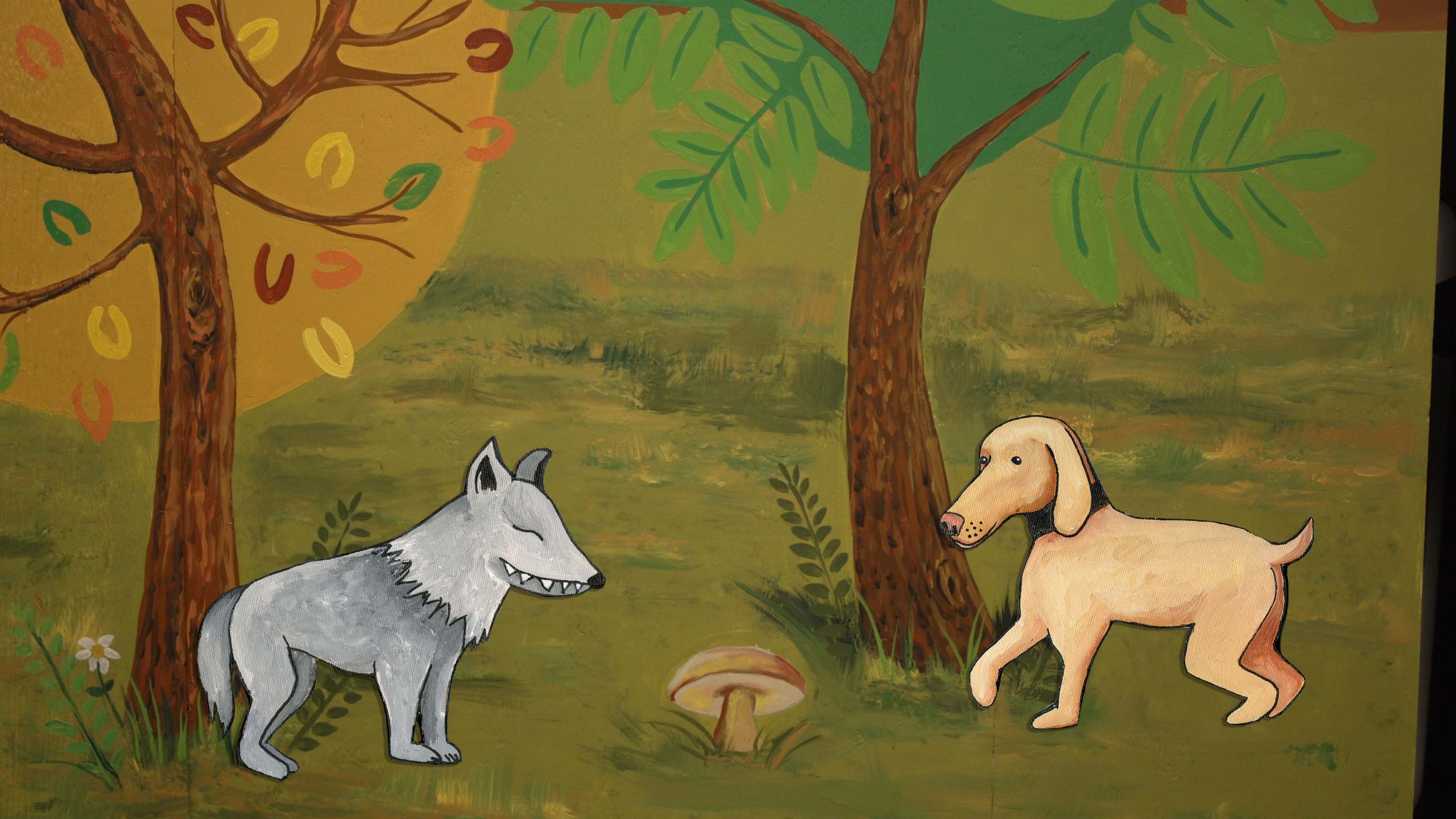
Naturally, the wolf is intrigued. "Who is this plump, pampered pooch?" he wonders (probably in very eloquent wolf-speak). He approaches the dog, perhaps with a slightly menacing glint in his eye, but masked with what he hopes is a charming smile. "Bonjour, monsieur le chien!" he might have said (or something to that effect). "You seem to be doing rather well for yourself."
The dog, ever the friendly (and possibly naive) fellow, responds with a cheerful bark (or perhaps a sophisticated "Woof, good sir!"). He probably boasts a little about his comfortable life, the delicious food, the warm bed, and the endless supply of belly rubs. After all, who wouldn't?
The Offer: A Tempting Trade-Off
Now, here's where things get interesting. The dog, in his infinite wisdom (or perhaps blissful ignorance), extends an offer to the wolf. "You know," he says (or barks, you get the idea), "you could have this too! Just give up your wild ways, become a domesticated dog, and enjoy the good life. No more hunting, no more scavenging, just endless food and affection."

Let's break down this offer, shall we? It’s essentially the canine equivalent of selling your soul for a lifetime supply of bacon. Tempting, right? But there's always a catch, isn't there?
The Perks (and the Potential Pitfalls)
The dog lays out the perks:
- Regular meals: No more chasing rabbits in the rain! Think succulent scraps, meaty bones, and maybe even the occasional table scrap (if you’re lucky!).
- Warm bed: Forget sleeping under the stars (and enduring freezing temperatures). Imagine a cozy cushion, a crackling fireplace, and maybe even a personalized doggy bed with your name embroidered on it.
- Human affection: Endless belly rubs, ear scratches, and maybe even a few kisses on the nose (if you can tolerate the slobber).
- Protection: No more fending for yourself! You'll have a human guardian who will protect you from all sorts of dangers (including overly enthusiastic squirrels and grumpy mailmen).
Sounds pretty idyllic, doesn't it? But hold your horses (or your hounds, in this case). There’s a downside lurking in the shadows...
The Revelation: A Collar of Conformity
As the dog continues to paint this rosy picture of domesticated bliss, the wolf notices something. Something…off. Something that makes him pause and reconsider this seemingly perfect proposition. He sees it. The dreaded mark of servitude. The symbol of a life less wild. He sees the collar.
He sees a ring of fur rubbed raw around the dog's neck. A clear indication that this pampered pooch is, in fact, not entirely free. He asks, with a newfound seriousness, "What's that mark on your neck?"
The dog, suddenly less cheerful, explains (or rather, mumbles) that it's just the mark of the collar. He wears it so his master knows he belongs to him. It's a small price to pay for all the comforts he enjoys. Or so he says.
The Decision: Freedom Over Fluffiness
For the wolf, this is a deal-breaker. He realizes that the comfortable life the dog is offering comes at a price. The price of freedom. The price of independence. The price of being true to his wild nature.
He doesn't hesitate. He turns and flees, rejecting the dog's offer with a newfound sense of purpose. He might be hungry, he might be cold, he might have to work hard for his survival, but he will be free.
“Better to starve free than be a fat slave,” he probably thought (in very eloquent wolf-philosophizing).
The Moral of the Story (or Why You Should Never Trust a Talking Dog)
La Fontaine's fable, "Le Chien et le Loup," is all about the importance of freedom. It's a reminder that material comforts are not always worth sacrificing your independence and autonomy. It's a celebration of the wild spirit and a cautionary tale about the allure of a gilded cage.
Let's unpack the moral of the story with some helpful bullet points:

- Freedom is priceless: No amount of comfort or luxury can compensate for the loss of your freedom.
- Appearances can be deceiving: Just because someone looks happy and well-fed doesn't mean they are truly content.
- Know your values: What is most important to you? Comfort and security, or independence and self-determination?
- Don't be a sheep (or a dog): Think for yourself, question authority, and don't blindly follow the crowd.
The Takeaway: Food for Thought (and Maybe a Little Laugh)
So, what can we learn from this tale of a hungry wolf and a pampered pooch? Perhaps it's a reminder to appreciate the simple things in life, like the freedom to roam, the ability to make your own choices, and the satisfaction of earning your own keep. Or maybe it's just a good excuse to avoid wearing collars (unless you're into that sort of thing, no judgment here!).
La Fontaine, with his signature wit and wisdom, delivers a message that resonates even today. In a world that often prioritizes material wealth and social status, it's important to remember the value of freedom and the importance of staying true to yourself. Even if that means occasionally going hungry.
La Fontaine: A Master of Animal Antics
Jean de La Fontaine was a literary rockstar, a fabulist extraordinaire, and a master of using animal characters to poke fun at human foibles. He was like the Jon Stewart of the 17th century, only with more foxes and fewer political scandals (probably). His fables are timeless classics, filled with witty observations, memorable characters, and enduring moral lessons.
Why We Still Read La Fontaine (Even If We Don't Speak French)
La Fontaine's fables continue to be read and enjoyed for a variety of reasons:
- Universal themes: His stories explore timeless themes such as greed, ambition, vanity, and the importance of friendship.
- Relatable characters: His animal characters, while often exaggerated, are still relatable and embody human traits.
- Witty writing: His writing is witty, engaging, and often surprisingly modern.
- Moral lessons: His fables offer valuable moral lessons that are still relevant today.
- They're just plain fun!: Let's be honest, who doesn't enjoy a good story about a talking fox trying to steal cheese from a crow?
So, the next time you're feeling a bit down, or need a dose of witty wisdom, pick up a copy of La Fontaine's fables. You might be surprised at how much you enjoy them, even if you have to rely on a translation to understand the nuances of his language. Just remember to keep a baguette handy, just in case you get hungry while reading.
Modern Interpretations: The Wolf in Sheep's Clothing (or Dog's Collar)
The themes explored in "Le Chien et le Loup" continue to resonate in modern society. We see the struggle between freedom and security played out in countless contexts, from career choices to personal relationships. The allure of the "good life," with its promise of comfort and ease, can be tempting, but it's important to consider the potential cost of surrendering your independence.
Think about it: Are you truly happy in your current job, or are you just staying there because it's comfortable and pays the bills? Are you in a relationship that stifles your individuality, or does it allow you to grow and thrive? Are you living your life on your own terms, or are you simply conforming to societal expectations?
Applying the Fable to Everyday Life
Here are a few ways to apply the lessons of "Le Chien et le Loup" to your everyday life:
- Question your choices: Are you making choices based on your own values, or are you being influenced by external pressures?
- Embrace discomfort: Stepping outside your comfort zone can be scary, but it can also lead to personal growth and greater freedom.
- Prioritize freedom: Don't be afraid to make sacrifices in order to maintain your independence.
- Stay true to yourself: Don't let others define who you are or what you should be.
- Be wary of gilded cages: Just because something looks appealing on the surface doesn't mean it's good for you.
Remember, the wolf in La Fontaine's fable chose freedom over comfort, even though it meant facing hardship and uncertainty. It's a choice we all have to make at some point in our lives. So, ask yourself: Are you a dog, content with your collar and your comfortable life? Or are you a wolf, willing to fight for your freedom, even if it means going hungry?
La Fontaine's Legacy: More Than Just Fables
Jean de La Fontaine wasn't just a writer of fables; he was a social commentator, a philosopher, and a master of the French language. His works continue to be studied and admired for their wit, wisdom, and enduring relevance.
Why La Fontaine Matters
La Fontaine matters because he reminds us of the importance of critical thinking, the value of freedom, and the enduring power of storytelling. His fables are not just children's stories; they are profound reflections on the human condition that continue to resonate with readers of all ages.
- He challenged societal norms: La Fontaine used his fables to satirize the French court and to critique the values of his time.
- He celebrated the underdog: Many of his fables feature animals who are outsmarting their more powerful counterparts.
- He promoted empathy: His stories encourage readers to see the world from different perspectives and to understand the motivations of others.
- He made philosophy accessible: La Fontaine's fables are a fun and engaging way to introduce philosophical concepts to a wider audience.
- He left a lasting legacy: His works have been translated into countless languages and continue to be read and enjoyed around the world.
Conclusion: Woofing Goodbye!
So, there you have it! A deep dive into the delightfully droll world of "Le Chien et le Loup." Hopefully, you’ve learned a little, laughed a little, and maybe even developed a newfound appreciation for the freedom to choose your own kibble (or not!). Remember, it’s all about embracing your inner wolf… unless you really, really like belly rubs. Then, maybe the dog life is for you. No judgement! But if you see me offering you gourmet kibble and a diamond-studded collar, just remember this story, and run the other way. I might be up to something. ;) Au revoir, and may your choices always be free (and delicious)!