Bonjour, mes amis! Ever feel like French grammar is a giant, confusing puzzle? Yeah, me too! But don't worry, today we're going to tackle a piece of that puzzle that's actually...dare I say...fun? (Okay, maybe fun is a strong word, but definitely less scary!) I'm talking about COD avant le verbe accord!
What exactly is "COD avant le verbe accord," you ask? Well, the name itself kinda gives it away. "COD" stands for Complément d'Objet Direct – the direct object. "Avant le verbe" means "before the verb." And "accord" refers to...agreement! Dun dun dun! Okay, don't panic! It's simpler than it sounds, I promise.
The Direct Object: Who's Getting What?
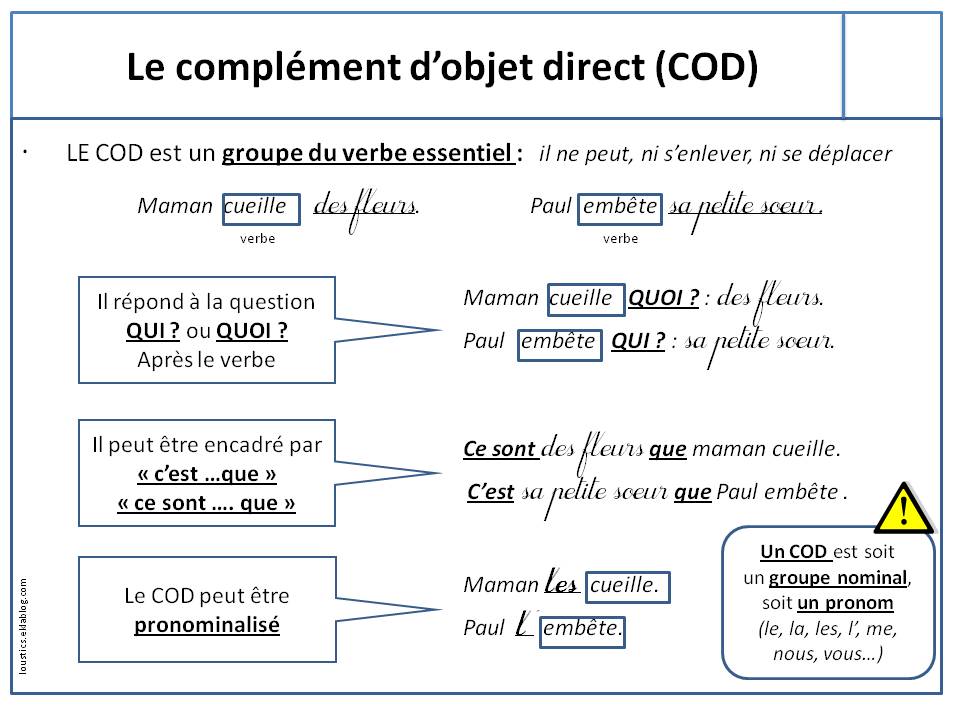
First, let's recap what a direct object is. Think of it this way: it's the thing or person that directly receives the action of the verb. It answers the questions "whom?" or "what?" Let's look at some examples:
- Je mange la pomme. (I eat the apple.) What do I eat? The apple! La pomme is the COD.
- Il regarde Marie. (He looks at Marie.) Whom does he look at? Marie! Marie is the COD.
- Nous aimons le chocolat. (We love chocolate.) What do we love? Chocolate! Le chocolat is the COD.
See? Not so bad, right? Now, the magic happens when the COD is replaced by a pronoun and comes before the verb. This is where the "accord" comes into play!
Pronouns to the Rescue! (And Some Tricky Agreement)
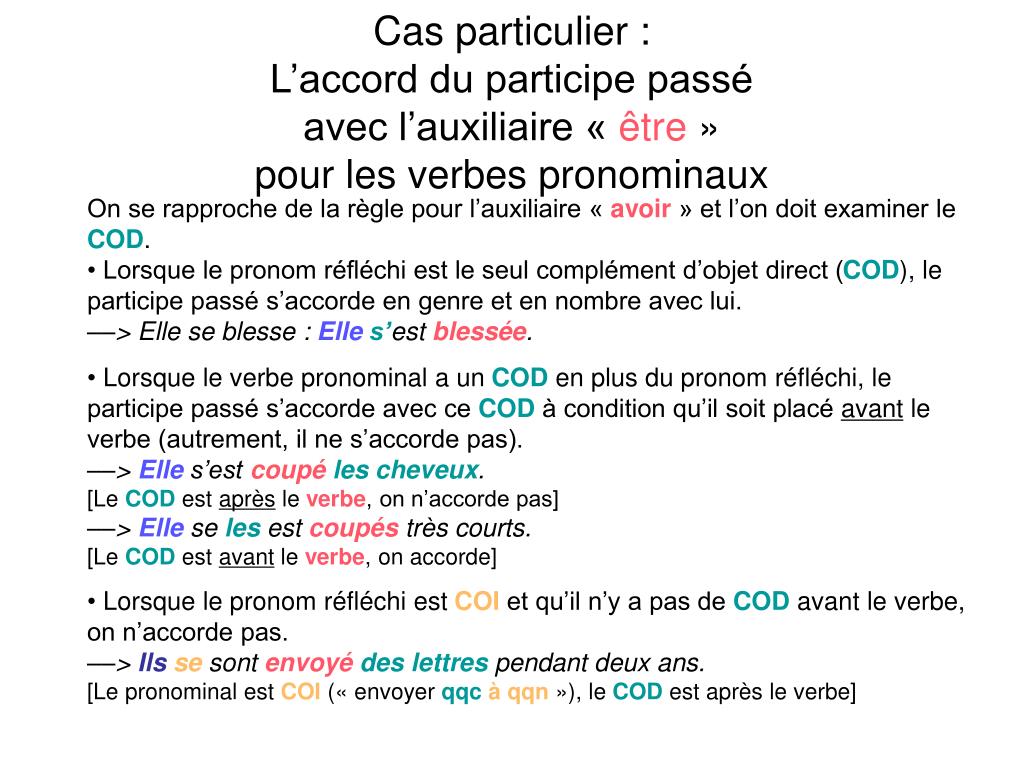
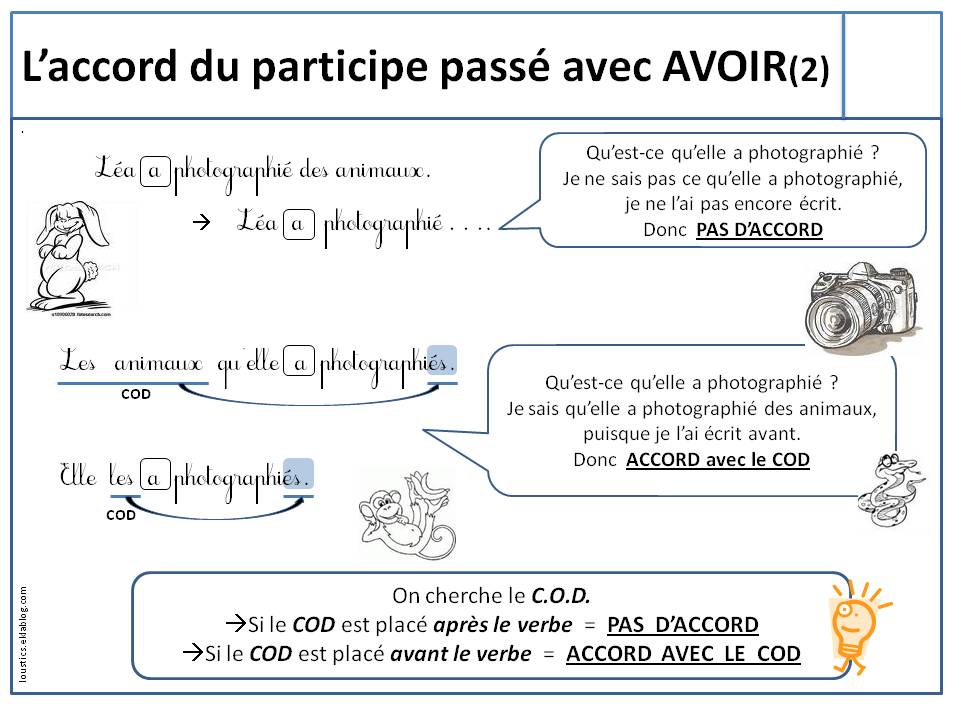
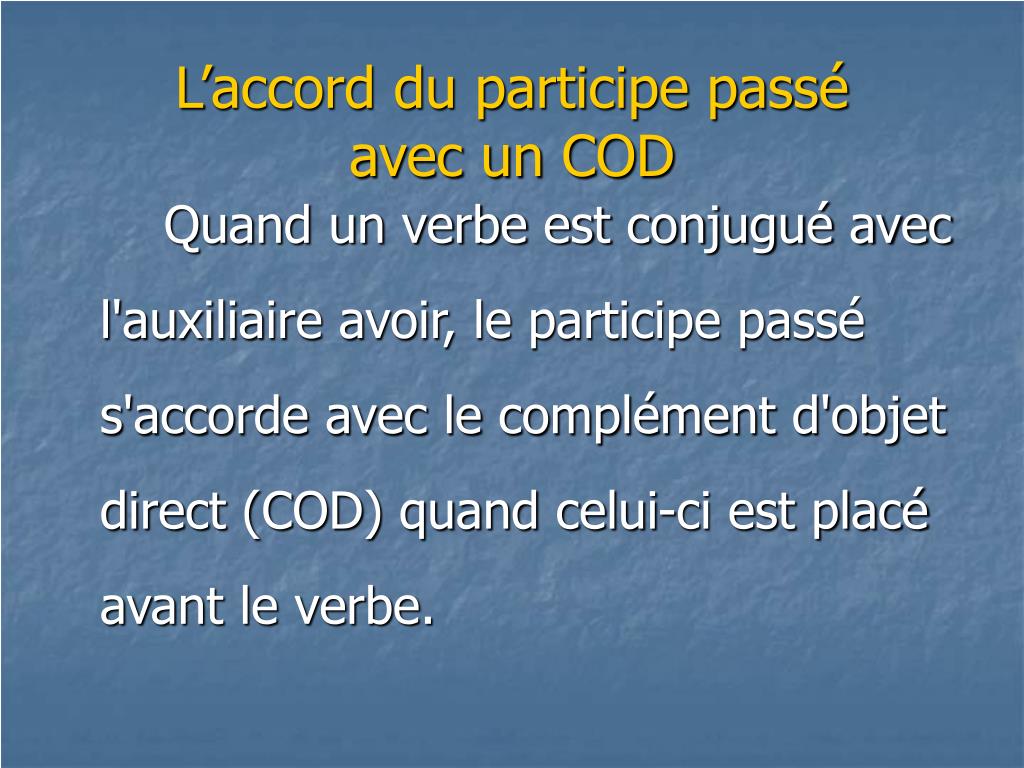
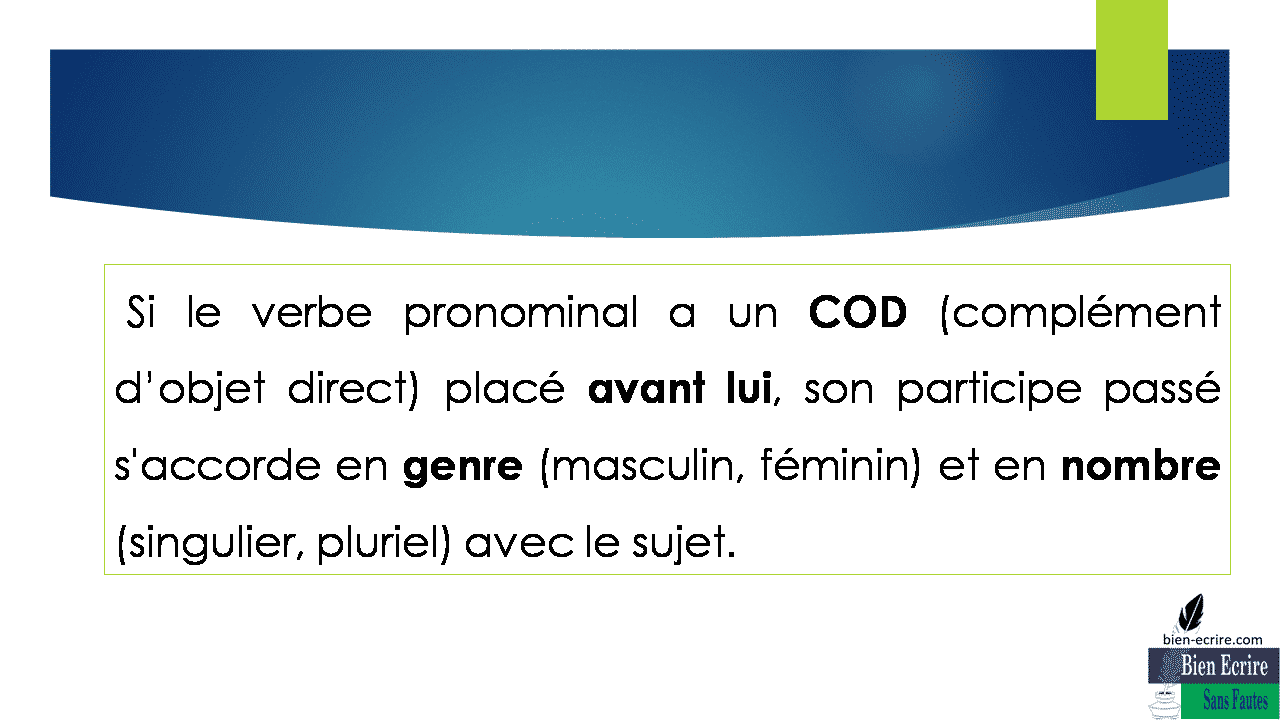
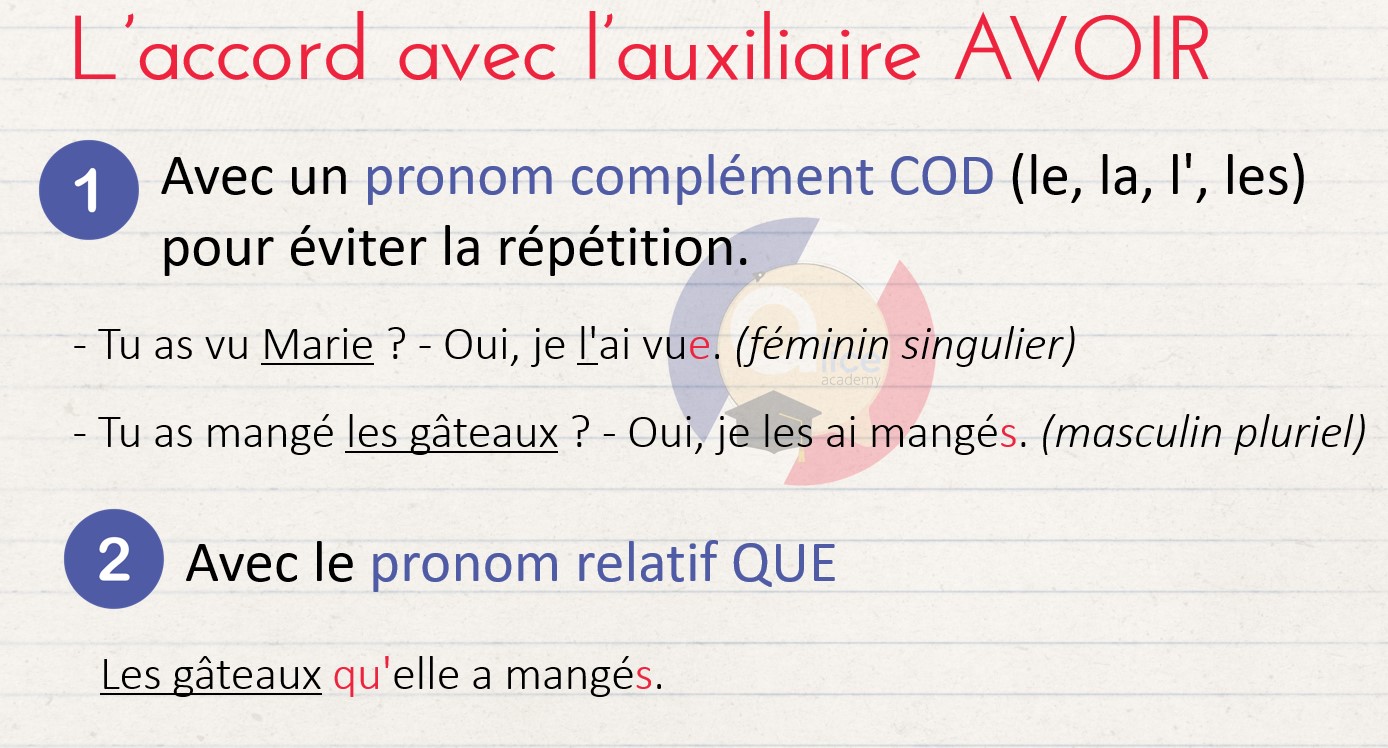
Instead of repeating the noun, we often use pronouns like le, la, les, me, te, nous, vous to replace the COD. Now, pay close attention because here's where it gets interesting. When these pronouns are placed before the verb (which they usually are in French!), the past participle in compound tenses like passé composé has to agree in gender and number with the COD pronoun.
Whoa, hold on! What does that even mean? Let's break it down. Remember that in French, nouns have genders (masculine or feminine) and numbers (singular or plural). When a COD pronoun appears before the verb and you're using a compound tense like the passé composé, you have to make sure the past participle agrees with the gender and number of the COD pronoun, not the subject of the sentence! (I know, French can be extra sometimes.)
Let's look at some examples again. These examples use passé composé which uses "avoir" (to have) as an auxiliary verb, and that is where we have to do the accord!
Examples in Action!
Original Sentence: J'ai mangé la pomme.
Rewritten with COD Pronoun: Je l'ai mangée.

Notice what happened? La pomme (the apple) is feminine singular. So, the COD pronoun replacing it is la (becomes l' before a vowel). Because l' represents a feminine singular noun, we add an "e" to the past participle, mangé! Boom! You've just mastered COD avant le verbe accord! (Almost...we have more examples!)
Original Sentence: Il a regardé Marie.
Rewritten with COD Pronoun: Il l'a regardée.
Same thing here! Marie is feminine singular, so we add an "e" to regardé.
Original Sentence: Nous avons aimé les chocolats.
Rewritten with COD Pronoun: Nous les avons aimés.
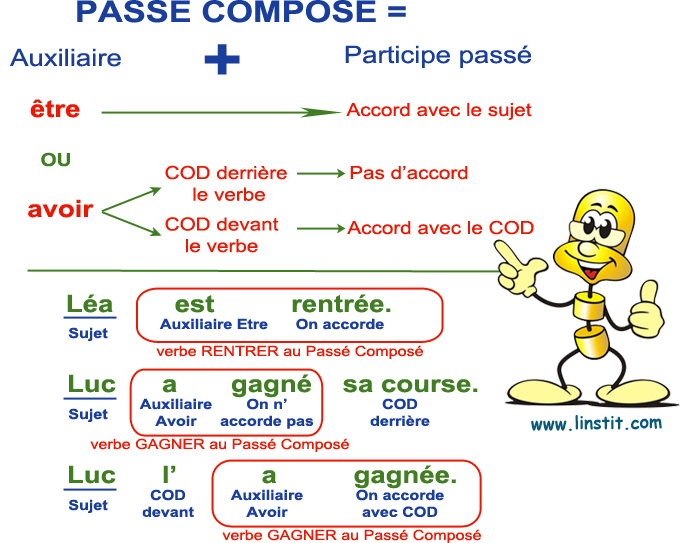
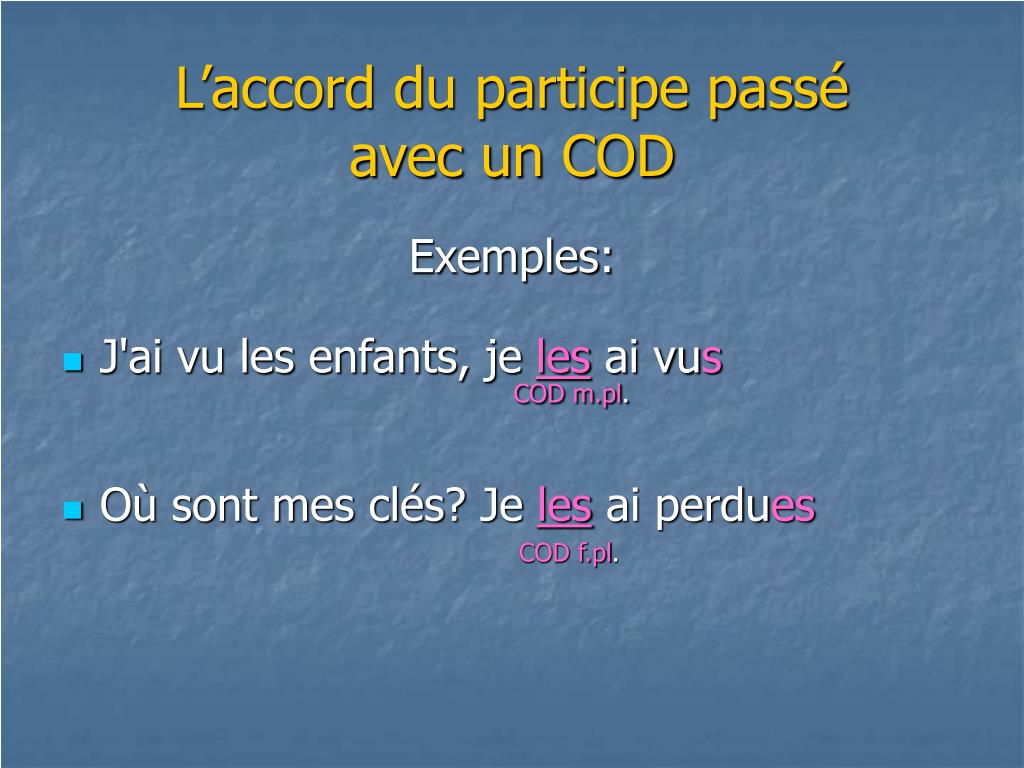
This time, les chocolats (the chocolates) is masculine plural. So, we use the pronoun les. Because les represents a masculine plural noun, we add an "s" to aimé!
Original Sentence: J'ai lu les livres.
Rewritten with COD Pronoun: Je les ai lus.
Same! Les livres (the books) is masculine plural, so we add an "s" to lu.
Original Sentence: Elle a vu ses amis.
Rewritten with COD Pronoun: Elle les a vus.
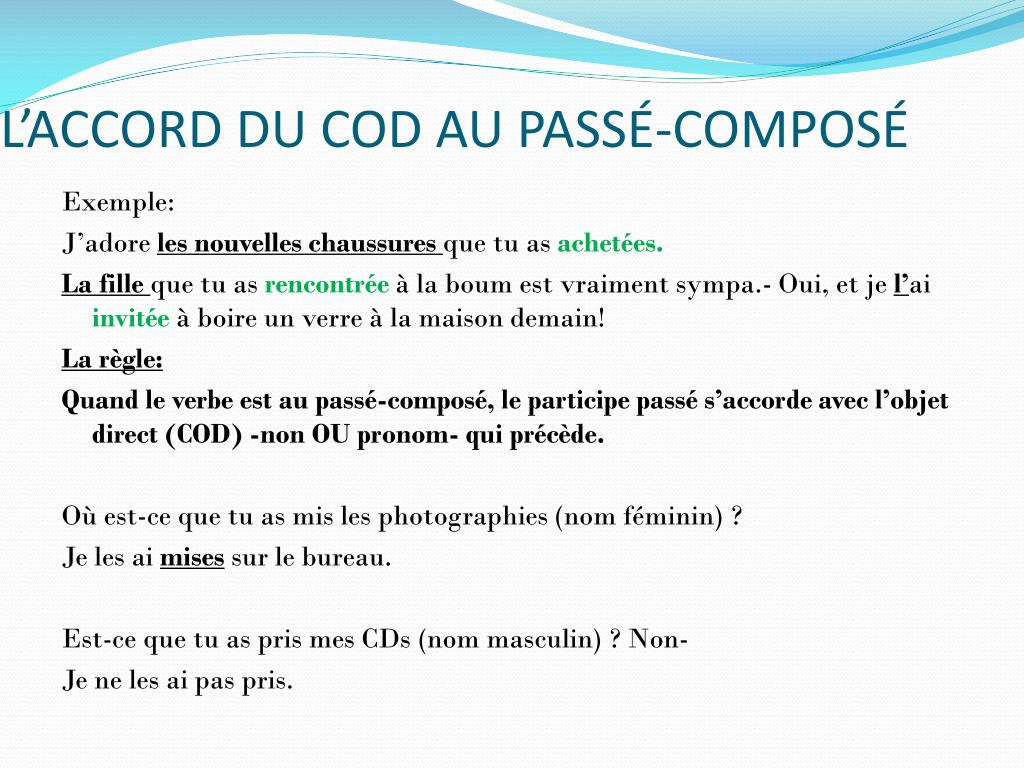
Again! Ses amis (her friends) is masculine plural, so we add an "s" to vu.
A Little Trickiness: "Me," "Te," "Nous," "Vous"
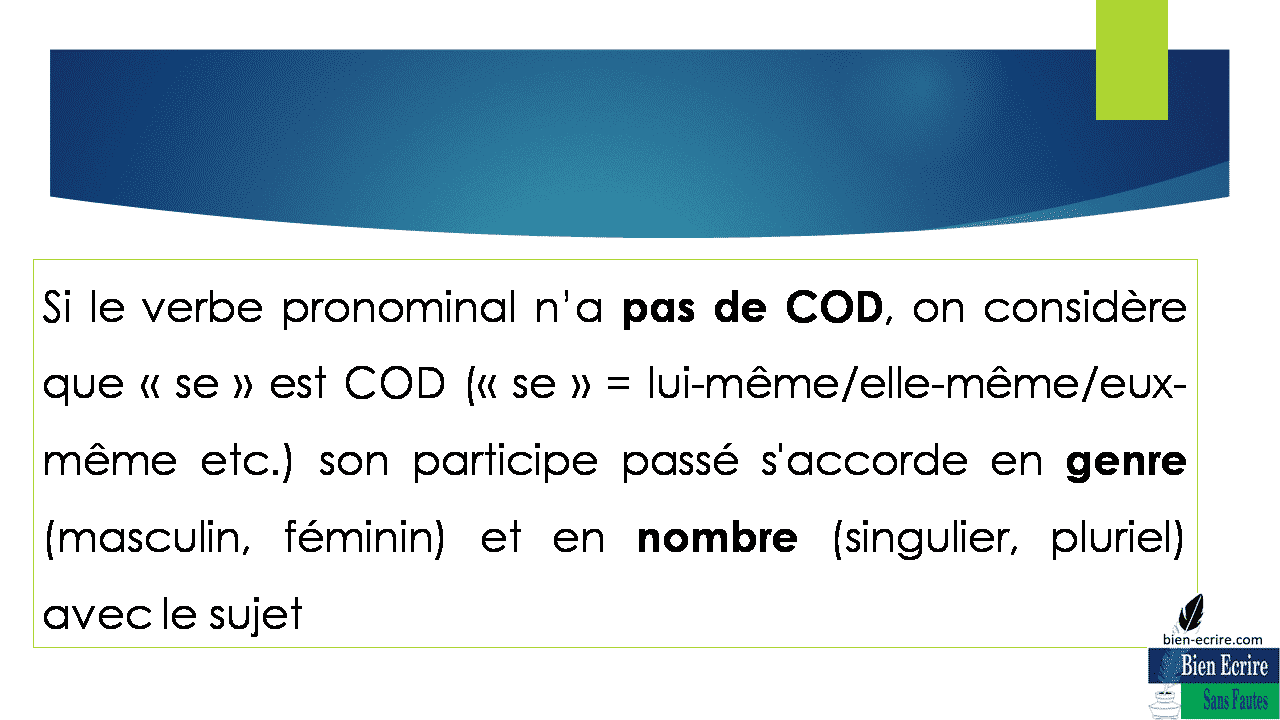
Now, things get a tiny bit more nuanced when you're dealing with pronouns like me (me), te (you - informal), nous (us), and vous (you - formal or plural). Why? Because these pronouns can refer to both masculine and feminine subjects! So, how do you know when to add an "e" or an "s"?
Well, you have to look at the actual person the pronoun is referring to! Let's see...
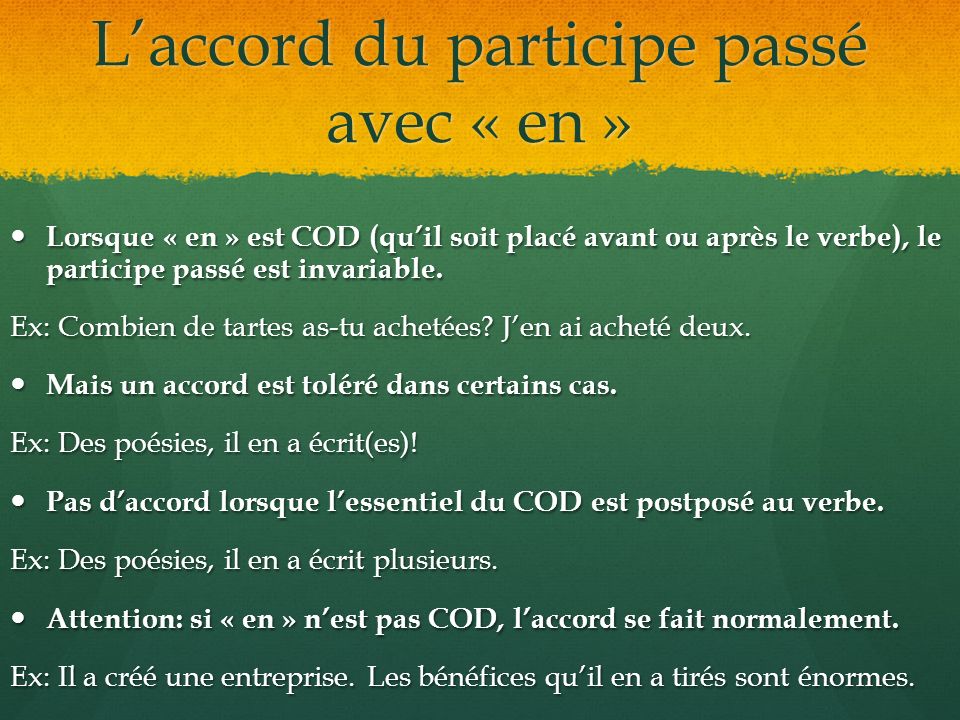
Example: Sophie, tu m'as vue! (Sophie, you saw me!) (Assuming I, the speaker, am female.)
Example: Pierre, tu m'as vu! (Pierre, you saw me!) (Assuming I, the speaker, am male.)
See the difference? If the person being referred to by "me" is female, you add the "e." If the person is male, you don't add anything!
Why Bother? (Besides Impressing Your French Teacher)
Okay, I get it. This might seem like a lot of rules for something that, at first glance, seems unnecessary. But trust me, mastering COD avant le verbe accord is a game-changer for a few reasons:
- Clarity: While you can often get away without it, the accord adds a layer of clarity and precision to your French. It shows you understand the nuances of the language.
- Fluency: Once it becomes second nature, you won't even have to think about it! It'll just flow naturally. (Okay, maybe after lots and lots of practice!)
- Confidence: Nothing beats the feeling of knowing you're speaking or writing correctly. This knowledge will make you feel much more confident.
- Unlock Deeper Understanding: By learning COD avant le verbe accord, you solidify all the other concepts and rules of grammar. You will find other areas of grammar get easier as well.
And frankly, it's just elegant. It's like adding the perfect finishing touch to a masterpiece. (Okay, maybe I'm getting a little carried away, but you get the idea!). Plus, people will be impressed when you drop this gem of French grammatical wizardry, and you will get to show off all your hard work.
Practice Makes Perfect (and Imperfectly Fun!)
The key to mastering COD avant le verbe accord is...you guessed it...practice! Don't be afraid to make mistakes. That's how we learn! Write sentences, read French texts, and pay attention to how native speakers use this rule. Try converting sentences into the COD avant le verbe construction.
Start small, focus on the basics, and gradually increase the complexity. Remember to be patient with yourself. Learning a language is a journey, not a race!
So, go forth and conquer COD avant le verbe accord! Embrace the challenge, celebrate your progress, and most importantly, have fun with it! I guarantee that as you learn this, you’ll unlock a deeper level of understanding and appreciation for this beautiful language.
Want to learn more? There are tons of resources online, including websites, apps, and even French tutors who can help you along the way. Bonne chance, and happy learning!




.jpg)
+Accord+du+verbe+avec+le+sujet.jpg)